

Table of Contents
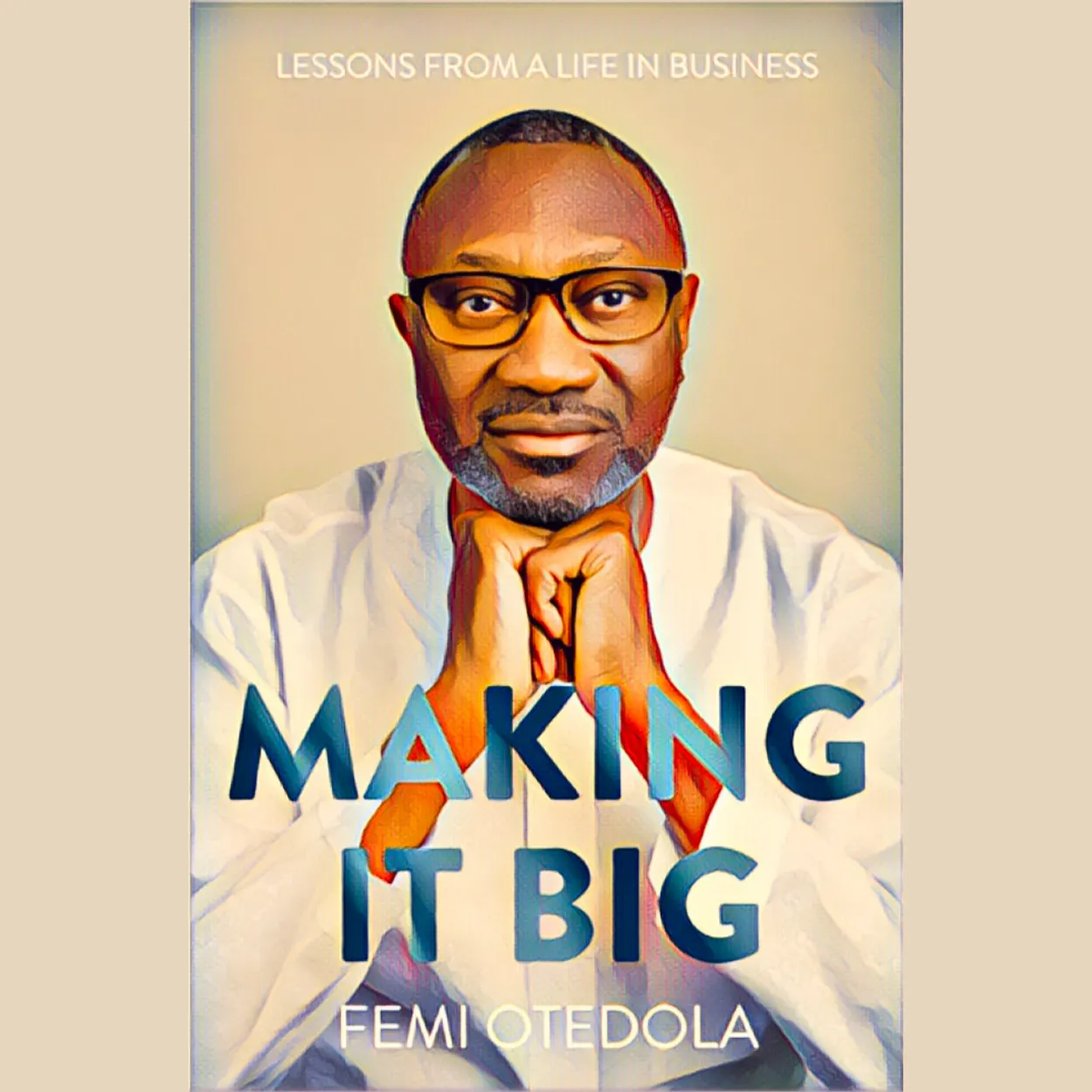
Nigerian billionaire Femi Otedola released his bestselling memoir Making It Big to the public on Aug. 18, 2025. Twelve months on it has an American gold medal, a London runner-up prize and a sequel already under way.
He confirmed the second book on July 13, posting from Geneva that he had spent the morning writing pages of something called Making It Bigger. He gave no release date and said nothing about what it covers.
The international bestseller won the Business Book Gold medal at the 2026 Axiom Business Book Awards in March, a prize run by the Jenkins Group of Traverse City, Michigan that drew more than 600 entries from 31 countries. Past gold medallists include Robert Shiller, Ray Dalio and Doris Kearns Goodwin. On July 3 at the Institute of Directors in London, it was named first runner-up for the Business Council for Africa's African Business Book of the Year, taking second from a shortlist of nine and a $5,000 award. Arnold Ekpe, the former Ecobank chief executive, chaired the judging panel.
The 286-page memoir was unveiled in London with a simultaneous global launch and reached Amazon bestseller status within 24 hours. Otedola started writing it in 2017, so it took eight years.
Ngozi Okonjo-Iweala set out the case for it in her preface, noting how few successful African business leaders document their journeys and record what they learned, particularly for a younger generation. Aliko Dangote and Akinwumi Adesina also endorsed it.
The book has been reviewed in several international publications and picked apart in a steady run of independent reader notes published since release. These are eight lessons among the many that recur across those accounts:
1. Start with whatever you have
The book opens with Otedola at 11, running a nail-trimming service he called Femco for his parents' guests, including his father's boss, the managing director of Mobil. Readers seized on it because it establishes his method before it establishes his money: spot the opportunity, keep a receipt book, and never be too proud to begin with small work.
2. Politics is not optional in Nigeria
This is the lesson that gave the book its reputation for candour, and the one commentators return to most. Otedola states plainly that engaging with political authority is a necessity rather than a choice for anyone trying to build at scale in Nigeria. Osmund Agbo, writing in Premium Times, said Otedola offers the truth as he sees it rather than a fairy tale of meritocracy, and that success there means navigating politics and privilege as much as markets.
3. His fortune came from a country that did not work
Otedola tells readers that Zenon reached the heights it did because Nigeria was malfunctioning, and that if the government had fixed the power sector, the demand for diesel to run homes and factories would not have existed. One reviewer, Oludele Folarin, called that admission the thing that gives the book its credibility.
4. Debt built the business and nearly destroyed it
Growth at scale is difficult without borrowing, but leverage without risk management can take down a healthy company quickly. Otedola's account of Zenon is the case study. Weak risk management met a collapse in crude prices, and the position unravelled.
5. Structure is what he lacked
He is direct about a specific failure. Buying boatloads of diesel without a proper management structure meant nobody was positioned to ask what happens if oil prices fall and at what price the cargo gets sold. Better governance, he writes, would have produced better advice and better decisions.
6. Reinvention beats persistence in one lane
Otedola has moved through oil and gas, shipping, power, real estate and finance, with some ventures succeeding enormously and others failing badly. Readers took the pattern rather than any single venture as the point.
7. Small habits protect big decisions
The practical section drew attention out of proportion to its length. Otedola describes adopting a minimalist personal uniform specifically to eliminate trivial daily choices and conserve mental energy for consequential ones, and notes that his instincts turned out to match established business theory.
8. Giving is not reserved for the wealthy
His philanthropy chapter argues that anyone can give according to their means, that people spared calamity carry a responsibility toward those who were not, and that giving benefits the giver's own health. He credits Aliko Dangote, Wahab Folawiyo and Mobolaji Bank-Anthony, whose funding built the Igbobi Orthopaedic Hospital and Ayinke House.
The intelligence satisfies curiosity. The paid briefings satisfy strategy.
Every Monday, Elite subscribers receive an Investor Memo breaking down the deal, the structure and the positioning behind the week's most consequential African wealth story — the kind of analysis that doesn't appear anywhere else.
Twice a month, a Wealth Intelligence brief profiles a single billionaire's holdings, cash flows and expansion pipeline in detail no public source matches.
→ Executive ($25/mo): Daily newsletter + Deep-Dive Reports
→ Elite ($75/mo): Everything above + Investor Memos + Wealth Intelligence + Quarterly Analyst Briefings
Subscribe now