


Table of Contents
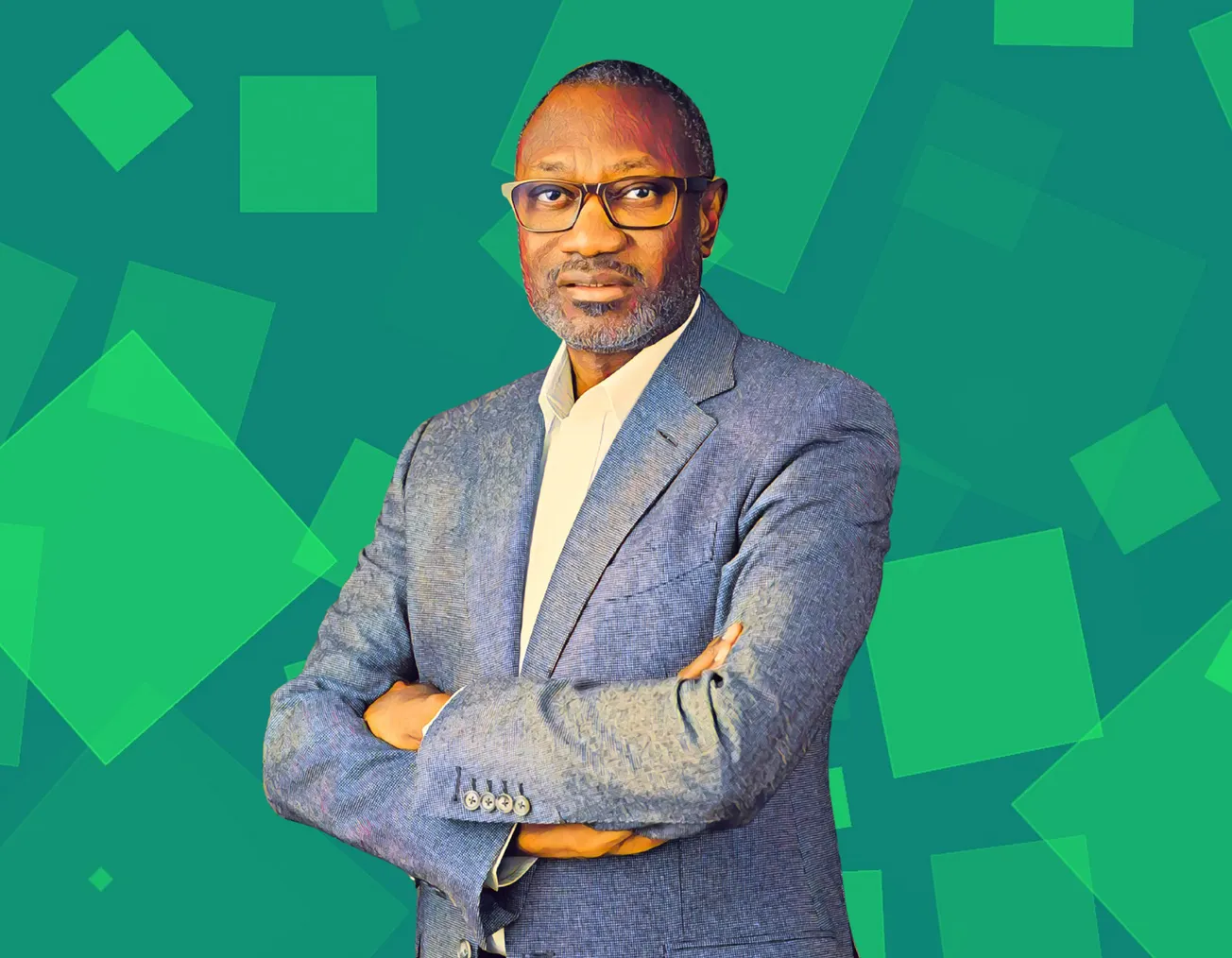
Companies controlled by Forbes-ranked Nigerian billionaires Femi Otedola and Aliko Dangote have been admitted to the FTSE Frontier 50 Index, a list of 50 stocks drawn from 26 countries and the most selective benchmark the London index provider FTSE Russell operates for frontier markets.
FirstHoldCo and Dangote Cement join at the close of trading on Friday, Sept. 18, and begin trading as constituents on Monday, Sept. 21, according to FTSE Russell's September 2026 semi-annual review.
Ten Nigerian large-cap companies qualified for FTSE Russell's broad frontier benchmark days earlier. Only six made the Frontier 50. Nestlé Nigeria, Nigerian Breweries, Presco and Stanbic IBTC Holdings were left out, despite being large enough for the wider list.
That is the measure of what the Frontier 50 is. It takes 50 stocks from 26 countries, and being big is not sufficient to get in.
Aradel Holdings, Guaranty Trust Holding Company, MTN Nigeria Communications and Zenith Bank joined FirstHoldCo and Dangote Cement on the list.
Two indices, not one
FTSE Russell announced two separate things about Nigeria within days of each other, and the difference between them matters.
The first was the FTSE Frontier Index Series, the broad benchmark covering large, medium and small companies across every eligible frontier market. Thirty-one Nigerian companies were included in that, of which ten were classified as large-cap: Aradel Holdings, Dangote Cement, FirstHoldCo, GTCO, MTN Nigeria, Nestlé Nigeria, Nigerian Breweries, Presco, Stanbic IBTC Holdings and Zenith Bank. Together the ten are worth 67.14 trillion naira.
The second is the FTSE Frontier 50, which takes only the 50 most heavily traded stocks from the entire frontier universe.
The test is liquidity rather than size. An index fund that buys a stock has to be able to sell it again without moving the price, which means the shares must trade in volume every day. Nestlé Nigeria and Nigerian Breweries are both worth more than 2.3 trillion naira and both failed that test, because their shares are closely held and change hands rarely.
Nigeria took six of the 13 places awarded worldwide in this review, 46 percent of all new entrants.
What index inclusion actually does
An index is a list of shares used to measure how a market is performing. Fund managers running passive products, which are designed to mirror a market rather than beat it, are required to hold whatever sits on the list. When a company is added, those funds must buy it, regardless of what they think of the business.
FTSE Russell sorts the world's stock markets into four tiers: developed, advanced emerging, secondary emerging and frontier. Frontier covers the smallest and least liquid markets still open to foreign investors, and Nigeria sits there alongside 25 other countries.
The Frontier 50 is the highest recognition available to a Nigerian listed company. South African, Egyptian and Moroccan companies sit in the higher emerging market indices, which draw from a considerably larger pool of institutional money.
A study by Ernest N. Biktimirov and Pyemo N. Afego published in the International Review of Economics and Finance this month found that shares in frontier markets tend to rise persistently after index inclusion and fall after exclusion, driven by sustained institutional demand rather than by temporary trading pressure.
Otedola's timing
Otedola chairs FirstHoldCo, the parent company of First Bank of Nigeria, and has spent this year buying its shares almost weekly.
He held 12,242,368,428 shares, roughly 27.5 percent of the company, after a purchase disclosed to the Nigerian Exchange on Aug. 17. That transaction cost 20.68 billion naira, about $14.9 million, for a further 147,737,699 shares at 140 naira each, bought through Calvados Global Services Limited.
His position has been built at rising prices. He paid around 125 naira at the end of July, 131.20 naira a week later and 140 naira in mid-August. FirstHoldCo shares gained 131.13 percent during July alone, closing the month at 129.55 naira against 56.05 at the end of June.
FirstHoldCo was worth 6.82 trillion naira, about $5.16 billion, at the close on Sept. 3, making it the third most valuable of the ten Nigerian large-caps.
Index inclusion now means global passive funds are buying the same shares Otedola has been accumulating, on a deadline he does not control.
He took the chairmanship in January 2024 after a four-year contest for control of Nigeria's oldest bank, which ended in July last year when Oba Otudeko and Tunde Hassan-Odukale sold their combined 10.43 billion shares, 25 percent of the company, to RC Investment Management at 31 naira apiece.
Dangote Cement
Dangote controls Dangote Cement through Dangote Industries. It is the largest cement producer in Africa, operates across ten countries on the continent, and was worth 17.45 trillion naira, about $13.2 billion, on Sept. 3, the most valuable company on the Nigerian Exchange.
That combination of scale and daily trading volume is exactly what the Frontier 50 selects for.
Forbes ranks Dangote as the wealthiest person in Africa, a position he has held for more than a decade. The Bloomberg Billionaires Index tracked his fortune at $34.8 billion in July, up $4.86 billion for the year, driven largely by his refinery at Ibeju-Lekki rather than by cement.
Why Nigeria qualified again
Nigeria was removed from frontier market status in September 2023, after continuing delays left international institutional investors unable to repatriate capital or execute foreign exchange transactions.
The naira had been fixed at a rate the central bank could not defend, and a queue of unfilled dollar requests built up over several years. President Bola Tinubu's government floated the currency in June 2023, and the Central Bank of Nigeria subsequently cleared the backlog, restoring the conditions index providers require before they will classify a market at all.
FTSE Russell confirmed the reclassification on Aug. 27 after engagement involving NGX Group, the Securities and Exchange Commission, global custodians and international institutional investors.
The Nigerian Exchange has already run hard this year. Its banking index closed at 2,546.57 points on Aug. 3, up 68 percent for the year, and combined market capitalisation across the twelve listed lenders reached 27.4 trillion naira at the end of July.
The intelligence satisfies curiosity. The paid briefings satisfy strategy.
Every Monday, Elite subscribers receive an Investor Memo breaking down the deal, the structure and the positioning behind the week's most consequential African wealth story — the kind of analysis that doesn't appear anywhere else.
Twice a month, a Wealth Intelligence brief profiles a single billionaire's holdings, cash flows and expansion pipeline in detail no public source matches.
→ Executive ($25/mo): Daily newsletter + Deep-Dive Reports
→ Elite ($75/mo): Everything above + Investor Memos + Wealth Intelligence + Quarterly Analyst Briefings
Subscribe now