

Table of Contents
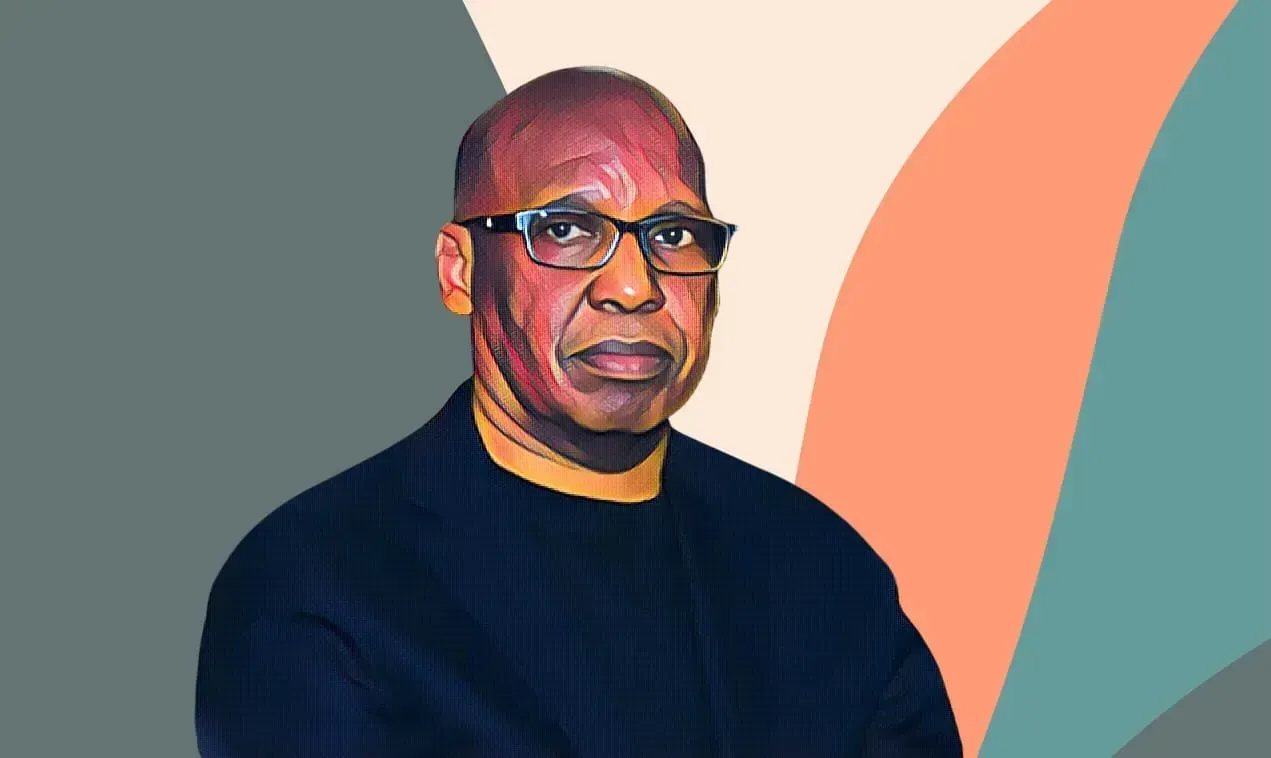
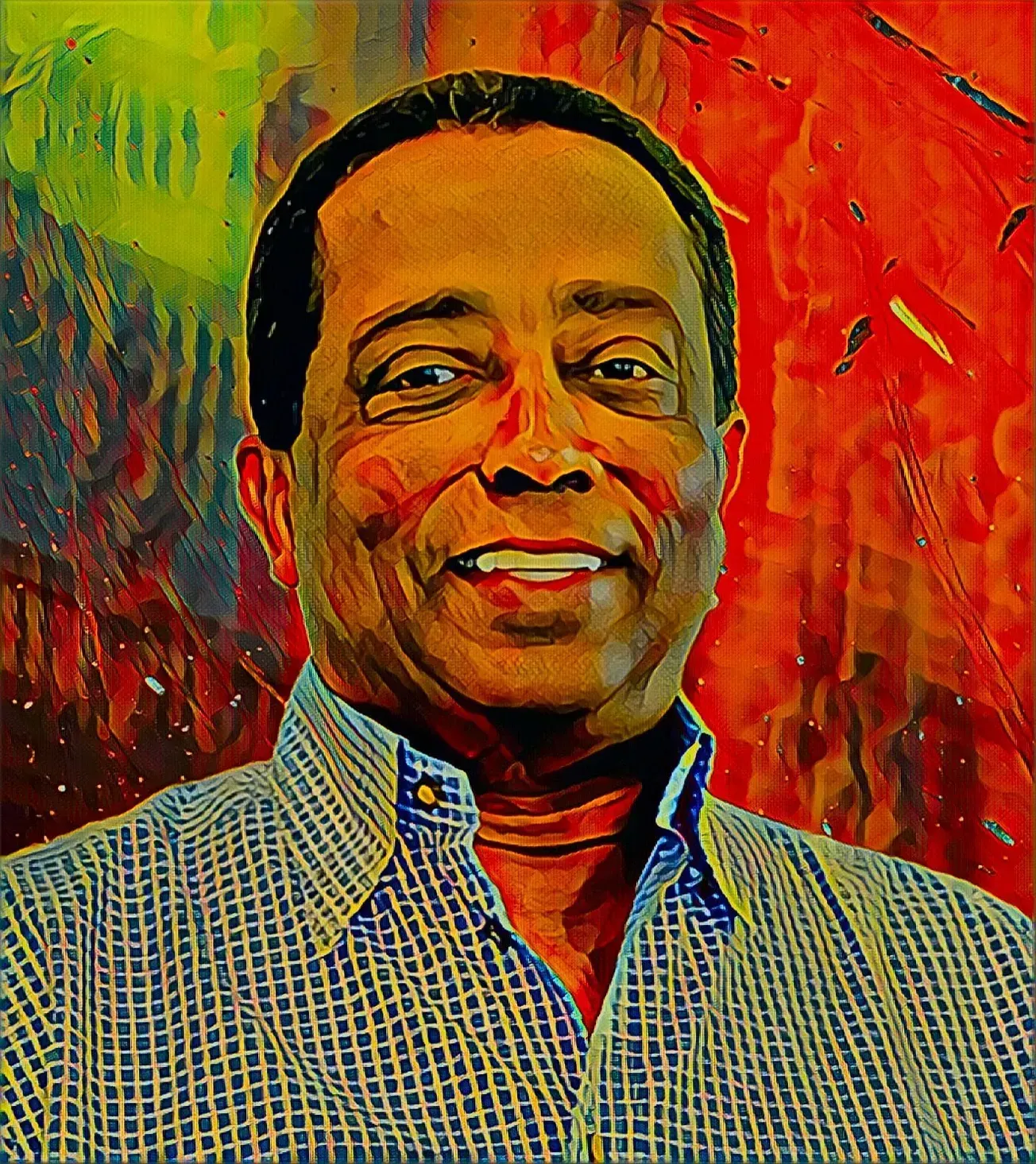
Osama Daoud Abdellatif started at his father's company selling tractors. Fifty-one years later he chairs a business turning over more than $600 million a year, and he runs a growing part of it from Dubai because the country he built it in is at war.
DAL Group employs more than 8,200 people across food manufacturing, engineering, vehicle distribution, agriculture, property, education and financial services. It mills much of the flour Sudanese households buy, bottles Coca-Cola, sells Mercedes and Mitsubishi, holds the Caterpillar franchise, and built the commercial district where the White and Blue Niles meet.
Abdellatif was born on Jan. 1, 1951 in Wadi Halfa, in Sudan's far north near the Egyptian border, and took a business management degree at Manchester University in 1972. He came home to a country three years past a military coup and joined his father's company in 1975.
A British firm, a Caterpillar franchise and a nationalisation
The business he inherited had belonged to someone else twice over.
Two British partners founded the engineering firm Sayer & Colley in 1951, when Sudan was still under Anglo-Egyptian rule, and it later won the Caterpillar franchise for the country. In 1966, a decade after independence, Caterpillar moved that franchise to the Sudanese Tractor Company, known as SUTRAC, which Daoud Abdellatif owned, with Sayer & Colley keeping a minority stake.
The government nationalised both companies in 1970 under Jaafar Nimeiri's socialist programme, then reversed itself a year later while holding on to minority stakes in each.
Osama joined SUTRAC as a salesman in 1975 and became sales manager in 1978. The following year the state sold its remaining share, and he persuaded his father to buy out Sayer & Colley as well. His father fell ill the same year and Osama took over as chief executive at 28.
He renamed the company DAL Engineering, using his father's initials.
He became managing director of the wider group in 1985 and chairman of the board in 1989, the year Omar al-Bashir seized power in the coup that shaped the next three decades of Sudanese business.
Building a conglomerate under sanctions
The United States imposed comprehensive sanctions on Sudan in 1997, cutting Sudanese companies out of the dollar system, restricting access to foreign equipment and making most international partnerships impossible.
DAL grew through it, and the Coca-Cola arrangement shows how. DAL Food Industries has been the official bottler and retailer for Coca-Cola in Sudan, a licence held continuously through a period when American companies were barred from most Sudanese trade.
Food became the largest part of the group. Abdellatif started Sayga Investment Company, which grew into one of the biggest flour millers in Africa and the market leader in Sudanese wheat products. He added Nobo Pasta, and DAL Food Industries expanded beyond Coca-Cola into other soft drinks.
The dairy business began with medical advice. Doctors told Abdellatif to slow down and tend cattle to settle an ulcer. Within months he had started what became the largest and most successful dairy operation in Sudan. Capo Dairy, also known as Blue Nile Dairy, is now the market leader in processed dairy products, and DAL supplies milk to schoolchildren in Red Sea state through a programme run with USAID.
Engineering and vehicles ran alongside it. DAL Engineering, which the group dates to 1952, holds the Caterpillar dealership through SUTRAC and supplies heavy equipment across construction, mining and agriculture. DAL Motors took exclusive dealerships for Mitsubishi, Mercedes-Benz and Kia, and the group distributes JVC electronics. Sudanese Liquid Air handles industrial gases.
DAL Agriculture farms directly and DAL Property Development builds.
The property arm produced the most visible thing Abdellatif has done. Through Alsunut Company he developed the land between the White and Blue Niles into Khartoum's commercial centre, laying infrastructure to international standards on ground that had been undeveloped riverfront in the middle of the capital.
He also founded the Khartoum International Community School, and the group funds the Sudan Traditional Food Festival and festivals built around Sudanese musical traditions.
The company's approach to the Bashir government was to stay useful without becoming political. DAL held supply contracts with state bodies including the Military Industry Corporation while maintaining an apolitical public position, which mattered during periods when the regime pressed businesses for money, including funding for the Darfur campaign from 2003.
Abu Dhabi money and 100,000 acres
The years immediately before the war brought the largest outside investment DAL had ever attracted, and it came from the Gulf.
The African Development Bank agreed a loan of up to $75 million in March 2020 to improve Sudanese food security and create agricultural jobs.
Seven months later, IHC Food Holding, a wholly owned subsidiary of Abu Dhabi's listed International Holding Company, agreed to invest more than $225 million alongside DAL over five years to develop and cultivate over 100,000 acres at Abu Hamad in River Nile State. The plan targeted maximum annual output above 400,000 metric tonnes of crops for domestic use and export, using automated pivots and drip irrigation, and projected roughly $1 billion in export earnings for Sudan across a decade alongside more than 5,000 jobs.
"We are excited about this partnership and what it will bring to Sudan," Abdellatif said. "It will create local community development opportunities in rural areas and invest in technologies specific for our country that optimize agricultural methods."
Mamoon Othman, chief executive of IHC Food, framed it as supply chain security for Abu Dhabi rather than aid, saying the investment would secure high quality agricultural output and drive further integration into the group's vertical supply chain.
It was among the largest agribusiness investments ever made in Sudan. It was also signed thirty months before the country's two armies started shooting at each other.
Building outside Sudan before the money had to leave
Abdellatif had been constructing a position beyond Sudanese jurisdiction well before the war, and that now looks like the most consequential decision of his career.
Invictus Investment Company trades agricultural commodities from Dubai and is listed on the Abu Dhabi Securities Exchange, giving the family a hard currency, publicly traded vehicle entirely outside Sudan. Invictus Trading operates from the Dubai Airport Free Zone. Abdellatif chairs both.
British International Investment, the United Kingdom's development finance institution, committed $50 million to Invictus Trading and DAL Group to support staple food supply into Sudan, in a deal framed around wheat availability as the war in Ukraine disrupted global grain markets.
"This investment is crucial to supporting sustainable food supply," Abdellatif said. "This investment by BII reiterates our decades long work in advancing the agenda of food safety for the people of Sudan."
He then went deeper into the Gulf. Abdellatif launched Africa Gulf Bank with International Holding Company, the Abu Dhabi conglomerate chaired by Sheikh Tahnoun bin Zayed Al Nahyan, one of the most powerful figures in the Emirati state and its national security adviser.
Invictus also partnered with AD Ports Group, the Abu Dhabi port operator, on a preliminary agreement to develop a container terminal on Sudan's Red Sea coast, sited opposite the Saudi commercial port of Jeddah. Reports put the agreement at around a billion dollars.
April 2023
Fighting broke out between the Sudanese Armed Forces and the Rapid Support Forces on April 15, 2023, and Khartoum became the front line.
That mattered more for DAL than for almost any other Sudanese company, because the capital held its factories, its warehouses, its head office and the commercial district it had built. Khartoum has historically been the wealthiest part of Sudan and, unusually in the country's history, sat at the centre of the fighting from the first week.
Looting followed the shelling. Markets selling goods stripped from Khartoum homes and businesses appeared across the metropolitan area, in Kordofan and in Darfur. Reuters photographers who reached the industrial districts later found factory floors littered with twisted metal and rubble, lit through holes left in ceilings and walls by shells and looters.
DAL moved its main distribution hub out of Khartoum to Wad Madani in Gezira state, then held by the army, completing the relocation by November 2023. Other Sudanese companies followed the same route out of the capital.
The group kept operating. Since the war began it has been among the very few businesses able to bring hard currency into Sudan and circulate it, which has made it central to how the functioning parts of the economy still function.
That position has drawn scrutiny alongside reliance. Sudanese analysts including Kholood Khair have questioned how companies of DAL's scale have operated during the conflict, and its wartime role has been the subject of published criticism. Abdellatif and the group have not addressed those accounts in detail publicly.
Everything he owns
The portfolio runs to more than a dozen operating businesses.
DAL Food covers Sayga Flour Mills, Capo and Blue Nile Dairy, Nobo Pasta and DAL Food Industries with the Coca-Cola franchise. DAL Engineering runs SUTRAC and the Caterpillar dealership. DAL Motors holds Mitsubishi, Mercedes-Benz and Kia. DAL Agriculture farms, including the Abu Hamad project with IHC, and DAL Property Development builds, with Alsunut behind the Khartoum commercial district. Sudanese Liquid Air handles industrial gases and the group distributes JVC. The Khartoum International Community School sits alongside them.
Outside Sudan, Invictus Investment trades commodities from Dubai and lists in Abu Dhabi, Invictus Trading operates from the free zone, and Africa Gulf Bank runs with Emirati backing. The group also holds interests in the United Kingdom and across East and North Africa. Abdellatif sits on the board of trustees of Global Studies University in the Emirates.
He remains chairman of all of it, fifty-one years after he started selling tractors and thirty-seven years after he took the board seat.
What he built now sits in two halves. One is in a country where much of the physical infrastructure has been shelled or stripped and where a $225 million farm project signed with Abu Dhabi money in 2020 has spent three years inside a war zone. The other is a listed vehicle, a bank and a port agreement in the Gulf, all of them intact.
Which half eventually carries the group is the question the fighting has not yet settled.
The intelligence satisfies curiosity. The paid briefings satisfy strategy.
Every Monday, Elite subscribers receive an Investor Memo breaking down the deal, the structure and the positioning behind the week's most consequential African wealth story — the kind of analysis that doesn't appear anywhere else.
Twice a month, a Wealth Intelligence brief profiles a single billionaire's holdings, cash flows and expansion pipeline in detail no public source matches.
→ Executive ($25/mo): Daily newsletter + Deep-Dive Reports
→ Elite ($75/mo): Everything above + Investor Memos + Wealth Intelligence + Quarterly Analyst Briefings
Subscribe now