

Table of Contents
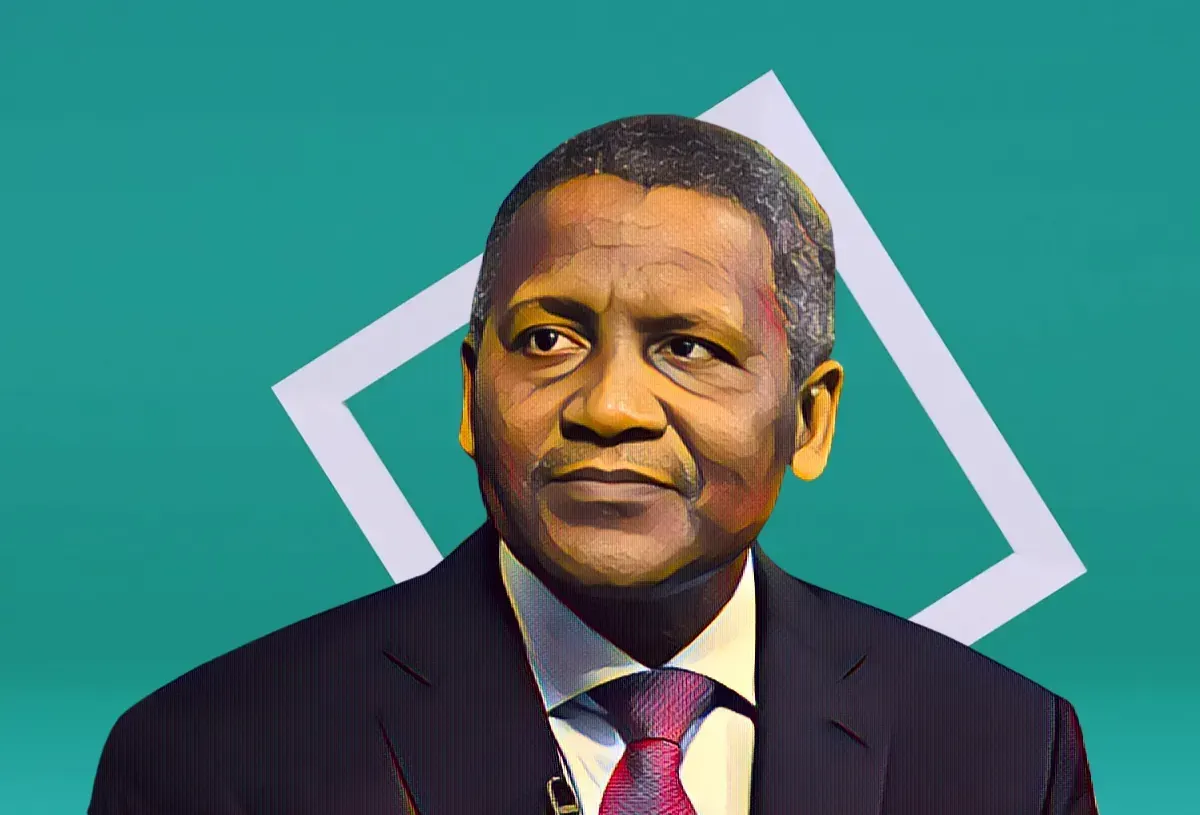
Aliko Dangote breaks ground on Sept. 30 on a 700,000 barrel-a-day refinery at Lamu on Kenya's coast, a project he now costs at about $16 billion and expects to finish in under four years. Kenya has no commercial oil production.
The plant would match the nameplate capacity of the refinery he built outside Lagos, making it the largest in East Africa and the second largest on the continent. He confirmed the date to investors and analysts during a visit to Botswana this month, bringing it forward from an earlier plan to start in October.
Where the crude comes from is the unresolved question.
David Ndii, chief economic adviser to President William Ruto, has put the region's potential production above 600,000 barrels a day, breaking it down as roughly 350,000 from South Sudan, 250,000 from Uganda and 120,000 from Kenya. Each of those has a problem attached.
Kenya holds proven reserves in the Lokichar Basin in its northwest but has struggled for years to bring them into production, with small-scale output expected later this year. A pipeline linking South Sudan's fields and Lokichar to Lamu has been proposed and remains, Reuters reports, a distant prospect.
Uganda's barrels are already committed elsewhere. They run south through the East African Crude Oil Pipeline to Tanzania's coast, a route built and financed for that purpose. South Sudan's exports leave through Sudan, where fighting has repeatedly cut the flow.
That leaves the sea.
"That leaves the coastal facility dependent on a volatile international seaborne market," said Maximillian Ezeude, an oil and gas lawyer in Lagos. The nearest large seaborne source is the Middle East, where the war involving Iran is disrupting exports and Brent crude has pushed past $100 a barrel.
The money is the second question.
Dangote Group intends to fund Lamu through internal cash flow, bonds and a share sale, with roughly 70% of the cost carried as debt, around 1.45 trillion shillings, and the balance as equity. Commercial bank loans and development finance institutions including Afreximbank are also expected to feature.
It is raising in two other places at the same time. The Lagos refinery's public offering opens on Sept. 14, seeking about $1.63 billion, and on Monday the group said it would spend $14.3 billion doubling that plant's capacity to 1.4 million barrels a day.
"Given that the group is seeking some $40 billion including Lamu between 2025 and 2030 for announced energy projects, raising the capital for Lamu could become a formidable challenge," said Kaase Gbakon, a petroleum economist formerly with the Nigerian National Petroleum Corporation.
Dangote has offered governments a way in. Kenya, Ethiopia and Rwanda have been offered a combined 30% equity stake, which Ndii valued at about 194.2 billion shillings, roughly $1.5 billion. Countries unwilling to commit to buying the refinery's output could be accommodated through a backstop arrangement. No agreements have been detailed.
Devakumar Edwin, vice-president of Dangote Industries, was asked about the regulatory, financing and feedstock challenges. He said there were none to overcome.
Others are less certain. "If not successfully implemented, it runs the risk of becoming a very expensive white elephant," said Brendon Verster, senior economist at Oxford Economics.
The site itself is not ready. It sits inside the special economic zone attached to the Lamu Port South Sudan Ethiopia Transport corridor, a Kenyan infrastructure programme running from the coast toward the interior. Lamu Port has no operational oil storage terminals. The corridor plan provides for between 1 million and 1.5 million barrels of storage and loading facilities capable of handling Suezmax tankers, the class of vessel sized to pass through the Suez Canal fully laden. That infrastructure is largely unbuilt.
Lamu Old Town, a UNESCO World Heritage site and the oldest continuously inhabited Swahili settlement in East Africa, lies about 10 kilometres away. Greenpeace Africa has called for the project to be halted over its effects on habitat and marine life.
The Kenyan government's case rests on what the country currently pays. Its only refinery, at Mombasa, closed in 2013, and Kenya spent about $4 billion on imported petroleum products last year, its largest single import.
"We have to make those decisions that will change our country," Ruto said.
The intelligence satisfies curiosity. The paid briefings satisfy strategy.
Every Monday, Elite subscribers receive an Investor Memo breaking down the deal, the structure and the positioning behind the week's most consequential African wealth story — the kind of analysis that doesn't appear anywhere else.
Twice a month, a Wealth Intelligence brief profiles a single billionaire's holdings, cash flows and expansion pipeline in detail no public source matches.
→ Executive ($25/mo): Daily newsletter + Deep-Dive Reports
→ Elite ($75/mo): Everything above + Investor Memos + Wealth Intelligence + Quarterly Analyst Briefings
Subscribe now