

Table of Contents
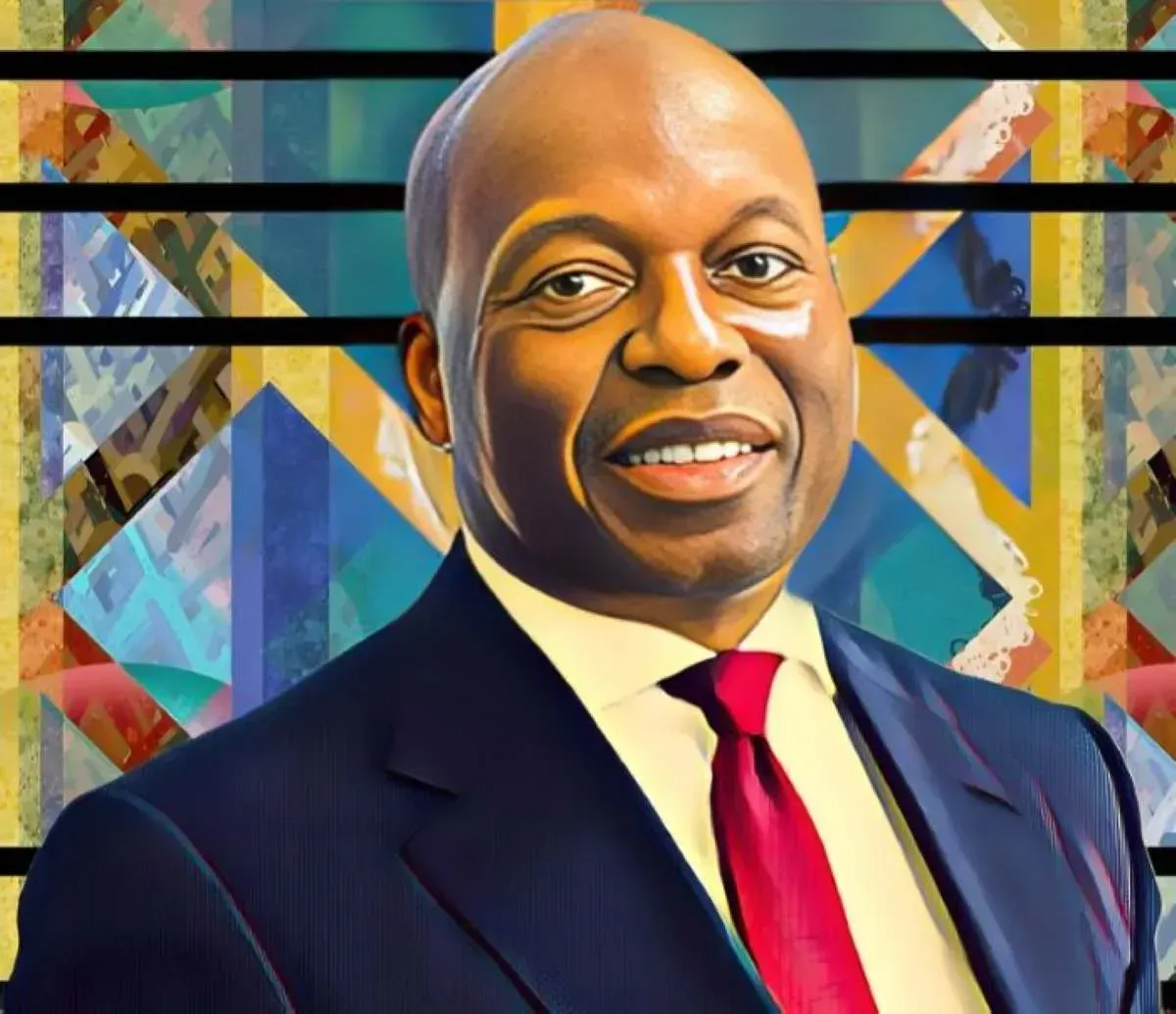
Oando shareholders authorised Wale Tinubu and his board on Thursday to list the company on any stock exchange they choose. Its liabilities exceed its assets by 530.4 billion naira.
The resolution passed at the 47th annual general meeting on Sept. 17 permits directors to take whatever steps and execute whatever documents are needed to meet the requirements of any exchange, subject to regulatory approval. Shareholders also approved the 2025 audited accounts and an amendment to the company's founding documents.
Oando trades on the Nigerian Exchange with a secondary listing in Johannesburg, where in 2005 it became the first African company to complete a cross-border inward listing.
The half-year results show why it wants more places to raise money.
Revenue rose 19.9% to 2.06 trillion naira, about $1.56 billion, and gross profit rose 331% to 101.19 billion naira. That lifted the gross margin to 4.91%. Administrative expenses fell to 77.79 billion naira from 81.42 billion, helped by a 10.2 billion naira foreign exchange gain, and the company recorded a 55.92 billion naira reversal of impairment on financial assets.
Oando swung from an operating loss of 158.7 billion naira in the first half of 2025 to an operating profit of 127.84 billion naira.
The debt took all of it.
Finance costs came to 167.58 billion naira, down 13.67% from 194.12 billion a year earlier. Finance income collapsed to 6.28 billion naira from 158.99 billion, leaving a net finance cost of 161.30 billion naira against net finance income of 12.97 billion in the comparable period.
That net cost equals 126.17% of the operating profit. Every naira Oando earned from operations went to its lenders, and then some.
The company reported a pre-tax loss of 32.84 billion naira, narrower than the 145.74 billion loss a year earlier but a loss all the same.
What turned that into a profit was tax. Oando reported profit after tax of 68.56 billion naira, up 8.3%, which means a tax credit of about 101.4 billion naira did the work the business could not. Earnings per share rose to 8 naira from 5.
The borrowings have not moved. Total debt stands at about 2.70 trillion naira, roughly $2.05 billion, broadly unchanged over the period. Current borrowings fell 346.12 billion naira while non-current borrowings rose 352.39 billion, which is refinancing rather than repayment. Net debt remains above 2.16 trillion naira.
Interest paid of 98.9 billion naira consumed 55% of the cash the business generated from operations.
Total assets stood at 7.89 trillion naira against total liabilities of 8.42 trillion, leaving a shareholders' equity deficit of 530.4 billion naira, narrowed from 566.9 billion at the end of 2025. A company in that position owes more than everything it owns is worth, and it is an unusual balance sheet to take to a new exchange.
The fix is equity. Oando has a 200 billion naira rights issue and a $1.5 billion multi-instrument issuance programme in progress, both of which Coronation Research described in an August note as explicitly designed to substitute equity for debt, and the firm said they matter more to the share price over the next two quarters than the operating performance.
The rights issue alone does not close the hole. Raising 200 billion naira against a deficit of 530.4 billion leaves the company 330.4 billion naira short of positive equity.
There is 1.2 trillion naira of outstanding legal claims against the group.
Oando is selling assets as well. It has agreed to dispose of its 95% interest in Oando Production and Development Company for $48.45 million, and it closed the half with 544.9 billion naira in cash, more than double the 194.2 billion held a year earlier.
The business underneath is still mostly trading. Supply and trading generated 1.717 trillion naira, or 83.2% of external revenue, against 344.2 billion naira from exploration and production at 16.7%.
Tinubu bought Nigerian Agip Oil Company from Eni in 2024, taking on the OMLs 60 to 63 that produced the operational turnaround and the borrowing that now consumes it. He has since signed a production sharing contract for Block KON 13 in Angola, where Oando holds 45% and operates.
The intelligence satisfies curiosity. The paid briefings satisfy strategy.
Every Monday, Elite subscribers receive an Investor Memo breaking down the deal, the structure and the positioning behind the week's most consequential African wealth story - the kind of analysis that doesn't appear anywhere else.
Twice a month, a Wealth Intelligence brief profiles a single billionaire's holdings, cash flows and expansion pipeline in detail no public source matches.
→ Executive ($25/mo): Daily newsletter + Deep-Dive Reports
→ Elite ($75/mo): Everything above + Investor Memos + Wealth Intelligence + Quarterly Analyst Briefings
Subscribe now