

Table of Contents
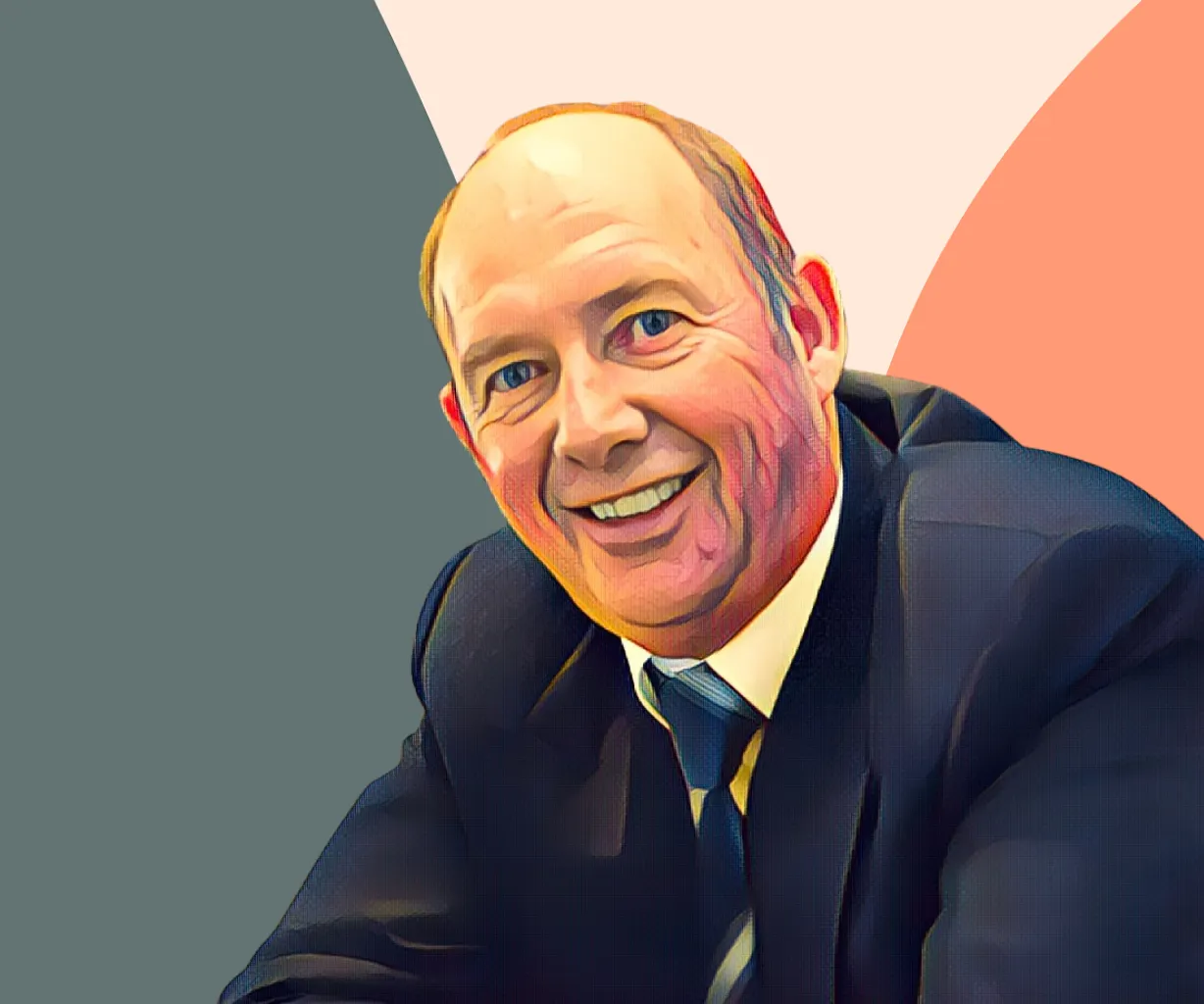
Kevin James built Country Bird Holdings out of a small, struggling South African chicken business he bought in 2003. Two decades later it is one of the biggest poultry groups in Africa, operating in seven countries, with capacity to process about 1 million birds a week at its main South African plant and running more than two dozen KFC restaurants.
James, a Zimbabwean poultry farmer who moved his base to South Africa, controls the group through Synapp International, a family investment company registered in the British Virgin Islands. Country Bird has been private since it left the Johannesburg Stock Exchange in 2014. Its other shareholders include the International Finance Corp., the World Bank's private sector arm, and Proterra Investment Partners, a private equity firm spun out of the agricultural trader Cargill.
The company publishes no accounts, and no credible estimate of James's fortune exists. In 2013, before the group went private, the IFC disclosed that the James family owned 81.9% of a company then valued at about $90 million. Since then Country Bird has expanded into Nigeria, Tanzania and Mozambique, built a large processing plant near Johannesburg and spent hundreds of millions of rand buying stakes in its rivals.
His path started in Zimbabwe, ran through a hostile takeover that regulators threw out, and led to one of South African agriculture's most public boardroom fights.
A Zimbabwean start
James was born in the mid-1950s, according to the age given in Country Bird's 2008 annual report. He began his career managing a small egg-laying operation in Zimbabwe.
From there he moved into breeding, the most technical end of the poultry business. Breeders supply the parent stock and day-old chicks that broiler farmers raise for meat. James founded Ross Breeders Zimbabwe, named for the Ross breed of broiler chicken, and later merged it with Crest Breeders International. He then took the combined company onto the Zimbabwe Stock Exchange through a reverse merger with Consolidated Farming Investments, a listed agricultural group. At the same time he set up Ross Zambia, a breeding business across the border.
Two men who would run his businesses for decades joined him in those years. Geoff Heath, a chartered accountant and former chairman of the Poultry Association of Zimbabwe, came on board in 1994. Country Bird's 2008 annual report describes him as one of the group's founders. Robbie Taylor, also a chartered accountant, joined in 1997, served as Crest Breeders' group finance director until 2002 and later held the same role at Country Bird.
Zimbabwe's economy collapsed in the early 2000s after the government seized thousands of white-owned commercial farms. Like many Zimbabwean farmers and agribusiness owners, James moved his base south, according to The Insider, a Zimbabwean publication. He kept the breeding business in Zambia.
Building Country Bird
In 2003, Synapp bought Country Bird (Pty) Ltd. from Senwes, the agricultural group that grew out of a grain cooperative. It was a small chicken producer with operations at Tigane and Botshabelo, selling under the Supreme brand. Business Excellence, a trade publication, later described the business James and his partners bought as "small, struggling."
He expanded quickly. Between 2003 and 2005 the group bought Agri Chicks and Senwes Voere, a feed business. It then restarted the Agri Chicks plant at Mahikeng in North West province. Supreme Poultry says the Mahikeng acquisition took its output to 2.2 million birds a week, though other accounts from the period give lower figures.
On May 3, 2007, Country Bird listed on the Johannesburg Stock Exchange through a private placement of 65.5 million shares at an indicated price of 4.85 rand to 5.35 rand each. As part of the listing, Synapp folded in the Zambian breeding business it had owned for more than two decades and a 60% stake in Ross Breeders Botswana. Under South Africa's black economic empowerment rules, Jacinda Trading, a company 60% owned by black investors, held 25% of Supreme.
James was chief executive at the listing and won the South African Poultry Association's "Mover and Shaker" award in 2006. In August 2008 he handed the chief executive role to Jeff Wright and stayed on as an executive director. Financial Mail later called him the group's "prime mover."
The first years as a public company were uneven. Revenue reached 1.69 billion rand in the year to June 2008, but operating profit fell to 41.1 million rand from 147.9 million rand a year earlier. By 2010 revenue had grown to 2.43 billion rand and operating profit had recovered to 122.2 million rand.
The group kept adding businesses. In 2009 it took full control of Nutri Feeds, its animal feed arm, and bought a feed mill in Gaborone and a farm at Francistown in Botswana. It built a feed mill in Zambia in 2010. It also bought 22.7% of Sovereign Foods, a listed rival, in 2009, and sold the stake a year later.
KFC, Zimbabwe and a ban
James's ties to Zimbabwe brought both opportunity and trouble.
In 2010 and 2011, Zimbabwe blocked about 600 tonnes a month of Country Bird chicken exports after it emerged that Supreme had thawed, brine-injected and refrozen chicken, a practice known as reworking, according to industry publication The Poultry Site.
In 2011, Country Bird won the KFC franchise for Zimbabwe. James's plan to supply the restaurants with South African chicken angered Saviour Kasukuwere, then Zimbabwe's minister responsible for indigenization, who vowed in 2012 to block the imports. The first Zimbabwe KFC opened in July 2014. Country Bird now owns 28 KFC restaurants in Zimbabwe and Zambia.
The Insider also reported that James co-founded the Global Alliance for Zimbabwe, a nonprofit registered in Washington in 2011 with Roy Bennett, the treasurer of the opposition Movement for Democratic Change. Billionaires.Africa could not confirm that account independently.
Going private
By the early 2010s Country Bird needed capital to grow outside South Africa. In 2013, the IFC lent it $25 million through a convertible loan that would give the World Bank lender about 18% of the company if converted. At the time, Country Bird had more than 900 minority shareholders, and the James family controlled the rest through Synapp.
The next year was hard. In the year to June 2014, turnover rose 13%, but the group swung to an operating loss of 108 million rand. It breached covenants on 358 million rand of loans from the IFC and Investec, which waived the breaches. The same year the Black River Food Fund, a Cargill offshoot later renamed Proterra, invested in the company, and Country Bird delisted from the JSE. The IFC converted its loan into shares in 2015.
As a private company, Country Bird pushed further into Africa. In 2015 it opened a grandparent breeding farm at Mazabuka in Zambia, an Africa Chicks hatchery in Eswatini and the Escolha do Povo feed mill in Mozambique. It also bought a majority stake in Valentine Chickens in Kwara State, Nigeria, giving it a foothold in Africa's most populous country. In 2022 it formed Ross Central Africa, a joint venture with Aviagen, the owner of the Ross breed.
The African business now carries the group. According to Rand Merchant Bank, which arranged Country Bird's multi-country debt facilities, South Africa accounts for about 80% of revenue but only 38% of earnings before interest, taxes, depreciation and amortization. The rest of Africa brings in 20% of revenue and 62% of EBITDA. The bank ranks Country Bird among the top three producers in South Africa and Nigeria and the largest in Zambia and Botswana.
How the business works
Country Bird is built around a model that James learned in Zimbabwe: own as much of the chain as possible. The group breeds its own parent stock, hatches the chicks, mills the feed the birds eat, raises them, slaughters them and sells the meat, some of it through its own restaurants.
Feed is the single biggest cost in raising a chicken, which is why Nutri Feeds and the mills in Botswana, Zambia and Mozambique matter as much as the processing plants. Breeding is where the margins are highest, because a small number of grandparent and parent birds supply the chicks for an entire industry. The Ross franchise James built in Zimbabwe and Zambia gave him that position long before he owned a slaughterhouse in South Africa.
The group's size has grown steadily. In July 2012, according to an IFC environmental review, Country Bird employed 4,623 people, and Supreme was slaughtering about 6 million birds a month. By about 2014 the workforce had reached 5,379, and the group described itself as South Africa's third-largest chicken producer, with about 12% of the market for chicken sold to restaurants and caterers. A 2016 World Bank case study put Supreme's share of the South African market at about 9% and said its Tigane plant processed 48 million birds a year.
South Africa remains a hard market. Producers there compete with cheap imported chicken from Brazil, the United States and Europe, and the industry has spent years lobbying for higher tariffs and anti-dumping duties. Country Bird listed dumped imports and the rules on brining chicken as risks in its 2016 offer for Sovereign Foods.
Two takeover fights
James has twice tried to buy his way to the top of South Africa's chicken industry.
In July 2016, Country Bird offered 9 rand a share in cash for Sovereign Foods, the Eastern Cape producer it had invested in earlier, with the Land Bank and Investec guaranteeing the money. It built a stake of more than 25%. The bid then fell apart. South Africa's Takeover Special Committee ruled in November 2016 that Country Bird's decision to waive its minimum acceptance condition was invalid, and the offer lapsed. In September 2017, the Competition Tribunal set aside the Competition Commission's conditional approval of the deal. Country Bird walked away, and the private equity firm Capitalworks later bought Sovereign for about 907 million rand.
In June 2020, Country Bird paid 308 million rand for investment group Zeder's 32.1% stake in Quantum Foods, an egg and broiler producer based in Wellington. Its attempt to take control was blocked, and it sold most of the stake to Braemar, a company linked to the Rudland family, at a profit.
It came back four years later. In March 2024, Country Bird bought Astral Foods' 9.8% stake in Quantum at 7.25 rand a share, lifting its holding to about 16%. By September it held about 18% and called a shareholder meeting to remove Quantum's chairman and several directors. The motion narrowly failed, according to News24.
Where Country Bird stands now
The company has grown its home base as well. In October 2021 it opened a further processing plant, known as Poultry Palace, in Germiston, east of Johannesburg. In 2022 it completed a 180 million rand expansion at Tigane, lifting the plant's capacity to about 1 million birds a week from about 700,000. The group now operates in South Africa, Zambia, Botswana, Nigeria, Tanzania, Mozambique and Zimbabwe and exports to about 20 countries.
James, who is about 70, has stepped back from day-to-day management. Brendon de Boer led the group as chief executive during the Quantum fight. Country Bird's investor page, updated in 2025, still lists Synapp as its majority shareholder alongside Proterra and the IFC, and calls James "the driving force" behind Synapp.
The industry faces new pressure. South Africa's poultry farmers have culled millions of birds in repeated outbreaks of avian influenza since 2017, and the South African Poultry Association said this month that only the country's largest producer had cleared the government's protocols to vaccinate against the disease.
The intelligence satisfies curiosity. The paid briefings satisfy strategy.
Every Monday, Elite subscribers receive an Investor Memo breaking down the deal, the structure and the positioning behind the week's most consequential African wealth story - the kind of analysis that doesn't appear anywhere else.
Twice a month, a Wealth Intelligence brief profiles a single billionaire's holdings, cash flows and expansion pipeline in detail no public source matches.
→ Executive ($25/mo): Daily newsletter + Deep-Dive Reports
→ Elite ($75/mo): Everything above + Investor Memos + Wealth Intelligence + Quarterly Analyst Briefings
Subscribe now