


Table of Contents
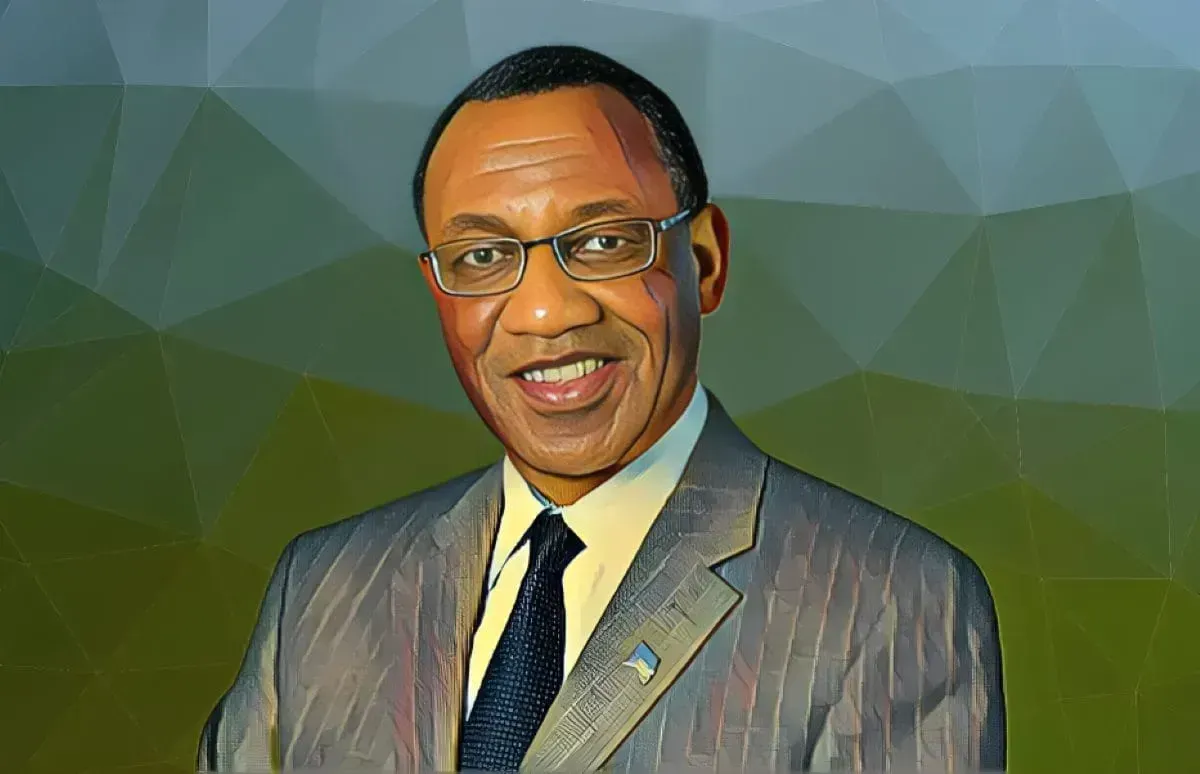
Sudanese-British billionaire Mo Ibrahim has urged African governments to take greater responsibility for financing the continent's development, arguing that declining foreign aid should push countries to mobilise domestic resources and reduce their dependence on external assistance.
Ibrahim, who made his fortune building telecommunications company Celtel before turning to philanthropy, said African governments could offset some of the impact of reduced development assistance by addressing capital flight, closing tax loopholes and improving revenue collection.
His comments come as international development funding faces significant pressure following cuts by major donor countries. Official development assistance from the world's richest nations fell by 23.1% in 2025, marking its largest annual decline, according to figures cited in the latest assessment.
Ibrahim warned that abrupt reductions in aid could have serious consequences for vulnerable populations, particularly people receiving medical treatment and communities dependent on externally funded health and education programmes. However, he argued that African countries must also confront the structural weaknesses that have left their economies reliant on outside financing.
A major concern is the amount of money leaving the continent through illicit financial flows and capital flight. The Mo Ibrahim Foundation has cited estimates that Africa loses approximately $90 billion annually through capital flight, exceeding the development assistance it receives. A substantial portion of those losses is linked to extractive industries, including gold and other natural resources.
Ibrahim said governments could recover significant resources by strengthening tax administration, limiting multinational companies' ability to shift profits to lower-tax jurisdictions and reconsidering tax holidays and other incentives that reduce public revenue. He also called for African pension funds and sovereign wealth funds to play a greater role in financing investment across the continent.
The billionaire's intervention follows the release of the 2026 Ibrahim Index of African Governance, which assessed governance performance across all 54 African countries over the decade to 2025. The index found modest overall improvement, driven by progress in economic opportunity and human development, but warned that deterioration in security, the rule of law and political rights continued to undermine the gains.
As Billionaires.Africa previously reported, Ibrahim's 2026 governance index found that 23 African countries recorded a deterioration in governance over the decade. The findings highlighted the widening gap between improvements in infrastructure, health and education and setbacks in security and democratic accountability.
Nigeria was among the countries facing particularly serious challenges. Ibrahim said the country's performance had deteriorated across all four major categories measured by the index, covering security and the rule of law, participation and rights, economic opportunity, and human development. South Africa also continued to record a declining governance trend.
He further warned that parts of Africa stretching from the Atlantic coast through the Sahel towards the Horn of Africa were becoming increasingly difficult to govern because of conflict and institutional instability.
Ibrahim built his fortune through Celtel, which he founded in 1998 and expanded into one of Africa's leading mobile telecommunications operators. He sold the company in 2005 for approximately $3.4 billion and later established the Mo Ibrahim Foundation to promote good governance and leadership across the continent.
Through the foundation, he has become one of Africa's most prominent voices on institutional accountability, public-sector performance and leadership. Its Ibrahim Index provides comparative data on governance across African countries, while its annual leadership prize recognises former heads of state who have demonstrated exceptional leadership and left office in accordance with constitutional limits.
His latest comments place the responsibility for Africa's development financing more firmly on domestic institutions, governments and investors. Rather than treating the decline in foreign assistance solely as a funding crisis, Ibrahim believes it should prompt a broader effort to retain African wealth, strengthen public finances and build economies capable of financing their own priorities.
The intelligence satisfies curiosity. The paid briefings satisfy strategy.
Every Monday, Elite subscribers receive an Investor Memo breaking down the deal, the structure and the positioning behind the week's most consequential African wealth story — the kind of analysis that doesn't appear anywhere else.
Twice a month, a Wealth Intelligence brief profiles a single billionaire's holdings, cash flows and expansion pipeline in detail no public source matches.
→ Executive ($25/mo): Daily newsletter + Deep-Dive Reports
→ Elite ($75/mo): Everything above + Investor Memos + Wealth Intelligence + Quarterly Analyst Briefings
Subscribe now