Table of Contents
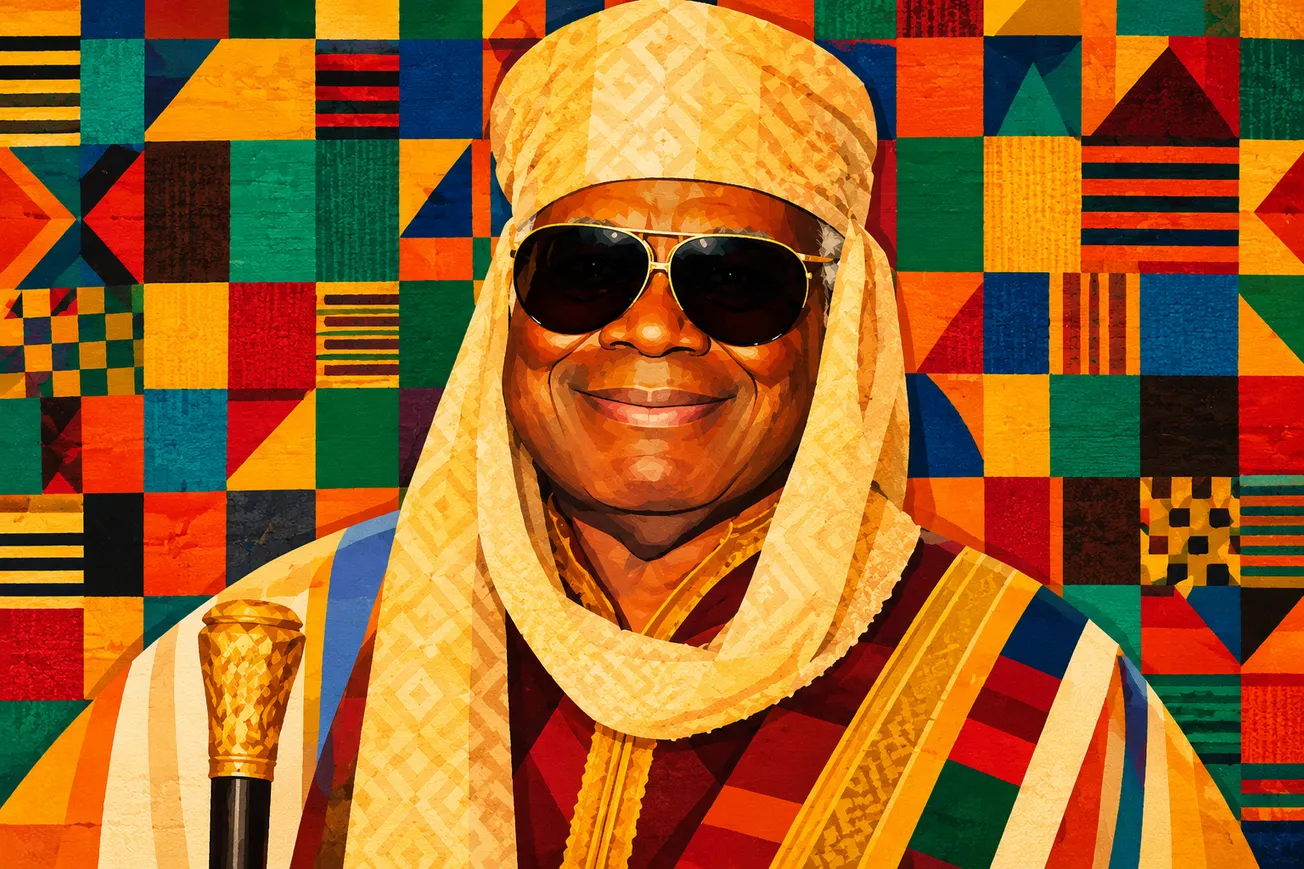
It is said that when Deinde Fernandez walked into a restaurant, everyone else had to leave. Nigerian media reported that he owned at least six private jets, a tower in Lagos and a French château once used by Napoleon, and that he had his favorite Nigerian dish flown across the Atlantic to New York. He carried the diplomatic passport of a country he was not from, sat at the United Nations on its behalf, and bought himself a Scottish barony for good measure. When he died in Belgium in 2015, one obituary put his fortune at $8.7 billion and Forbes called him a multi-millionaire. Nobody ever saw the accounts, and that, by every account, is exactly how he liked it.
Chief Antonio Oladeinde Fernandez lived most of his life far from the city where he was born, and much of it out of sight. He rarely gave interviews and, when the world's newspapers were writing about him in 1999, could not be reached at his New York office. What we know comes from court records, a handful of obituaries and tributes, his children's interviews and the stories that followed him from Lagos to New York to Brussels. Some of those stories can be checked, and many cannot. This is an attempt to set out which is which, and to tell the story of one of the most improbable African fortunes of the twentieth century.
Two birthdays
Even his age is a mystery. Most records, including Wikipedia, give his date of birth as August 12, 1929, in Lagos, but on the French birth certificate of his daughter Abimbola he gave his own birth year as 1936. Obituaries split the difference in their own way: when he died, some called him 86 and others 79. Several Nigerian obituaries and tributes also used 1936, which is why the ages they gave differ from the official record. For a man who guarded his privacy so carefully, a second birthday may simply have been one more door he preferred to keep closed.
An Afro-Brazilian house in Lagos
The Fernandez name itself tells part of the story. His family descended from a Portuguese-Brazilian slave trader who settled in Lagos in the early nineteenth century and raised a family there with an African wife, according to sources cited by Wikipedia, and it became part of the Afro-Brazilian community whose houses, with their arched windows and wrought-iron balconies, still mark the old city. The Cable's obituary gave a different origin, describing the family as coming from Cuba, but most Nigerian accounts, including ThisDay's, trace its roots to Brazil. His father was Canut Akinwale Fernandez, born with the first name Yesufu, and his mother belonged to the Olumegbon noble line of Isale-Eko, Lagos, according to accounts published after his death. He went to Catholic primary school beside the Cathedral of the Holy Cross, then to CMS Grammar School and St. Gregory's College in Lagos, and left before finishing to go to the United States.
The first million
It was in America that the fortune began, though accounts disagree on how. The version most often repeated, recorded on Wikipedia, is that while still a young man in the United States he brokered a deal to ship bauxite from the mining area around Jos, in central Nigeria, to an American buyer, and that it earned him his first million dollars. A tribute published in The Guardian Nigeria after his death told a different story, tracing his wealth to purchases of columbite and galena lead ore in 1956 from a prince who later became the traditional ruler of Ogbomoso. The same tribute said he studied at Brooklyn College and St. John's University, graduated from Columbia University's business school in 1972, and qualified as a stockbroker in England. Whatever the route, everyone agrees on the destination: he was rich young, and he stayed rich.
A diplomat for hire
Then he found his real calling, which was representing countries that were not his own. His diplomatic career began in 1966, when he became consul for Dahomey, now Benin, according to The Guardian of London. From 1982 he spent two years as an economic adviser to the government of Angola, and in 1984 he became deputy permanent representative of Mozambique at the United Nations; from 1992 he spent three years as special adviser on international economic matters to Mozambique's president. In 1997 the Central African Republic made him its permanent representative to the UN and, according to The Cable, its deputy foreign minister. A Nigerian from Lagos, he spent the better part of three decades speaking for other nations in New York.
The peacemaker story
His admirers credited him with far more than paperwork. The Guardian Nigeria's tribute said his negotiating skills helped bring about the 1984 Nkomati Accord between Mozambique and South Africa, which led to his UN appointment, and that he helped put Mozambique's foreign minister, Joaquim Chissano, in touch with American officials in 1982. The Cable listed his friends as Nelson Mandela, Kofi Annan, George H.W. Bush and Angola's long-serving president, José Eduardo dos Santos. None of the peacemaking claims can be confirmed from the public record, and the same tribute also credited him, impossibly, with treaties signed in the seventeenth century, which suggests some of the legend was simply written down rather than checked. What is documented is that he held real posts, for real governments, over a very long time.
The oil man
Fernandez was the rare diplomat who was also an oil man. His company, Petro Inett, took a 50% share, alongside South Africa's Energy Africa, in a 1996 deal with Angola's state oil company for exploration rights to about 4,700 square kilometers off the Angolan coast, according to The Guardian of London and The Cable. Obituaries also linked him to bauxite exports, Angolan gold mines and diamond pits, and The Cable said he owned gold and diamond mines in the Central African Republic. ThisDay remembered him as a mining tycoon. How much any of these businesses earned, and how much of them he owned, was never published.
Living large
He lived as though the larger figures were true. The Cable reported that he owned at least six private jets and homes in Kano, Lagos, New York, Scotland, France, Belgium and the United Kingdom, with bank accounts in the Cayman Islands, Switzerland, Hong Kong, Ireland, France, Scotland and the United States. ThisDay said he owned a French castle once used by Napoleon Bonaparte, along with mansions around the world and yachts. He was believed to have had tuwo, a northern Nigerian dish, flown from Lagos to New York, The Cable reported, describing it as something he was believed to do rather than something anyone had witnessed. And the restaurant story, the one that opens our film, comes from the Nigerian news site Legit.ng, which reported that when he entered a restaurant or boutique, everyone else had to leave.
The Baron of Dudley
Being a Yoruba high chief, with the titles Apesin Ola of the Egba and Bayin of Lagos among others, was apparently not enough. He bought a Scottish feudal title, becoming the Baron of Dudley, for £59,000, and kept it until his death, according to sources cited on Wikipedia. Such baronies were, until Scotland's feudal system was abolished in 2004, among the few genuine British noble titles that could be bought and sold, and the dignity of baron survived the reform. It entitled him to style himself "of Dudley", and the tribute in The Guardian Nigeria listed it alongside his Nigerian titles. Few men have held a Yoruba chieftaincy, a United Nations ambassadorship and a Scottish barony at the same time.
Immunity
The best-documented episode of his life is a divorce. He had married Barbara Joyce in Virginia in 1961, and in 1974 they bought a house at 27 Oakley Lane in Greenwich, Connecticut, in the name of a company called Santa Barbara Estates U.S.A., which she told the court her husband controlled. When she filed for divorce, Fernandez moved to have the whole case dismissed, claiming diplomatic immunity as Mozambique's ambassador to the United Nations. The trial court found that he was a genuine diplomat but refused to dismiss the case, and while the appeal was pending Mozambique waived his immunity for the narrow purpose of ending the marriage. In July 1988, Connecticut's Supreme Court ruled against him on the property question, holding that immunity was meant to protect a diplomat's official business, in a decision later analyzed in the Brooklyn Journal of International Law.
Six wives, nine children
He had six wives or long-term partners and acknowledged nine children, according to Wikipedia's account of Nigerian press reports. His first wife, Princess Ibilola Lipede, was the mother of Olateju Phillips, who later served as Lagos State's commissioner for commerce and industry. In April 1973 he married Abiola Dosunmu, a Lagos princess who later became the Erelu Kuti of Lagos, at the palace of the Oba; the marriage lasted fifteen years. Sandra Inett Price, known as Aduke Fernandez, said they had a tribal wedding in 1982, which he later disputed, and in 2003 she sued him in Scotland for a reported £300 million. Accounts of how that case ended differ: The Cable said the judge dismissed it, while reports in the Scottish press cited by Wikipedia said it settled for 36 monthly payments of £30,000. In the same year he married Halima Maude, a former beauty queen whose father had served as presidential liaison officer for Kano state.
The Mandela mystery
In 1999, several British newspapers chased a story alleging that Nelson Mandela had been offered a kickback from a Nigerian oil deal involving a middleman named Antonio Fernandez, described as a Central African Republic diplomat. South Africa's Mail & Guardian reported that the documents included a contract with Nigeria's state oil company and a $134,000 cheque made out to Mandela's lawyer, Ismail Ayob, and it called the affair an apparent attempt to smear Mandela and the ANC before that year's election. Mandela confirmed meeting several people at Abuja airport, including Nigeria's military leader, but denied discussing any contract, and said any money discussed would have been for his Children's Fund. In the end, the newspaper reported, a London law firm sent two cheques of $134,000 each, $268,000 in all, to the fund. Years earlier, before the 1994 election, Fernandez had offered to give Mandela a house in the United States, then withdrew the offer at the last minute when he learned it would be sold to raise money for the fund.
The worried father
The family's best-known modern face was his daughter Abimbola, born in France in 1989, who set out in 2014 to become, as she told the New York Post, "the next Rihanna". She had already modeled for Vivienne Westwood and appeared on the cover of an album by the band Cobra Starship, and her video for "Let's Take It Naked" drew millions of views online. She said her father worried about her public profile, including the risk of kidnapping, according to The Cable. Even in the twenty-first century, being a Fernandez meant being noticed, and he had spent his life trying not to be. When Barbara died in 2013, he reportedly stopped celebrating his own birthday.
The ghost billionaire
How rich was he? The Cable reported a net worth of $8.7 billion "as at 2014", without naming a source; other Nigerian outlets used similar numbers. Forbes, in its 2015 coverage of his death, called him a multi-millionaire, and The Guardian of London had described him in 1999 as one of the richest men in Africa. A 1960s mention in Time magazine as one of the wealthiest Black people in America, cited in one tribute, has never been traced to a specific issue. With no listed company, no published accounts and assets spread across a dozen countries, the honest answer is that nobody outside his circle ever knew, and his circle never said.
The end
Fernandez died in Belgium on September 1, 2015, after several months of an undisclosed illness, according to Forbes. He was 86 or 79, depending on which birth year you believe. His daughter Abimbola said he had wanted a state funeral in Nigeria, but his widow, Halima, arranged a smaller service in Belgium, and he was buried at Ixelles Cemetery in Brussels on September 18, 2015; Abimbola and Halima later disputed his estate. In 2020 his daughter Teju Phillips gathered friends in Lagos to mark the fifth anniversary of his death, ThisDay reported. Diplomat, oil man, chief, baron and mystery, he left behind a legend larger than any figure anyone could prove, and he seems to have planned it that way.
Our film on Deinde Fernandez is above. For more stories like this, follow Billionaires.Africa Productions on YouTube.
This feature draws on Fernandez v. Fernandez, 208 Conn. 329 (1988), the Mail & Guardian (May 21, 1999), The Cable, The Guardian Nigeria, ThisDay, Legit.ng, Forbes and sources cited on Wikipedia. Claims about his wealth and lifestyle were reported by others and have not been independently verified.
The intelligence satisfies curiosity. The paid briefings satisfy strategy.
Every Monday, Elite subscribers receive an Investor Memo breaking down the deal, the structure and the positioning behind the week's most consequential African wealth story — the kind of analysis that doesn't appear anywhere else.
Twice a month, a Wealth Intelligence brief profiles a single billionaire's holdings, cash flows and expansion pipeline in detail no public source matches.
→ Executive ($25/mo): Daily newsletter + Deep-Dive Reports
→ Elite ($75/mo): Everything above + Investor Memos + Wealth Intelligence + Quarterly Analyst Briefings
Subscribe now