

Table of Contents
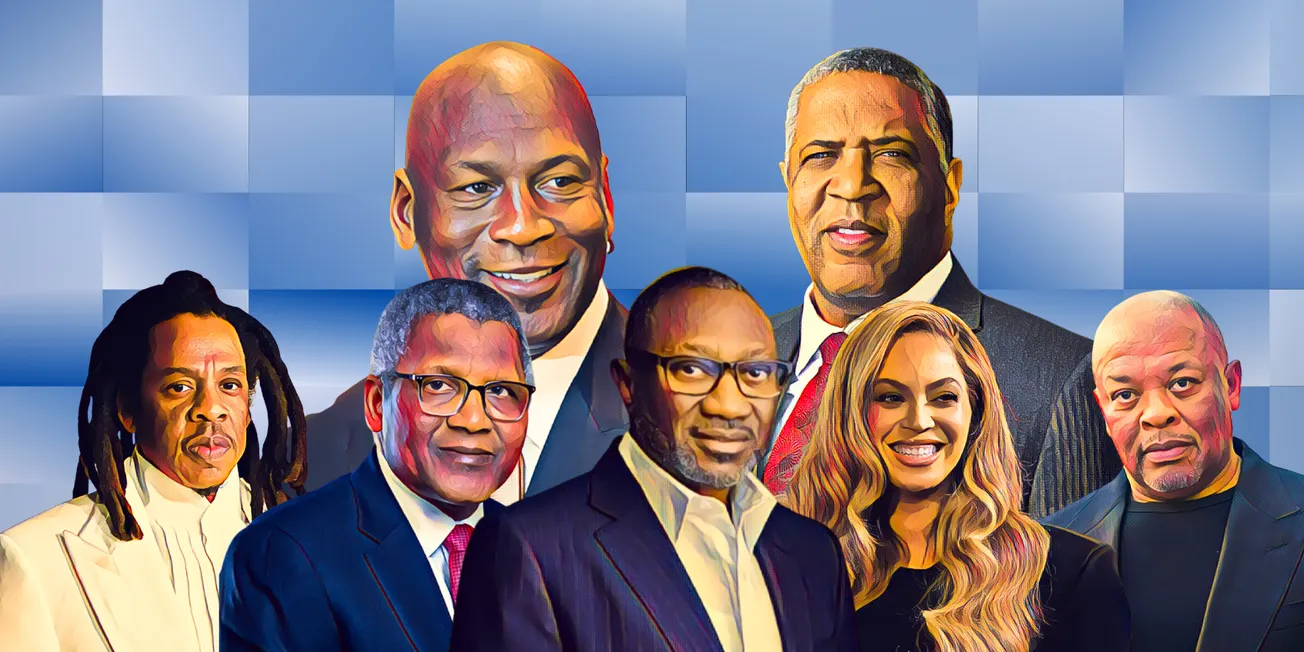
There are 3,428 billionaires on the Forbes 2026 list. A record $20.1 trillion in combined wealth. And of all those names, fewer than 30 are Black.
The number is growing. Beyonce Knowles-Carter and Dr. Dre both crossed the billion-dollar threshold in 2026 as official Forbes newcomers. Africa's richest added more than $20 billion in a single year. The wealth is real, it is diverse, and it spans cement plants in Kano, private equity firms in Austin, refinery towers in Lagos, and recording studios in Los Angeles.
But the ratio has not changed much. Black billionaires remain a fraction of a fraction of the global list, making each name on it worth knowing. Here is every one of them.
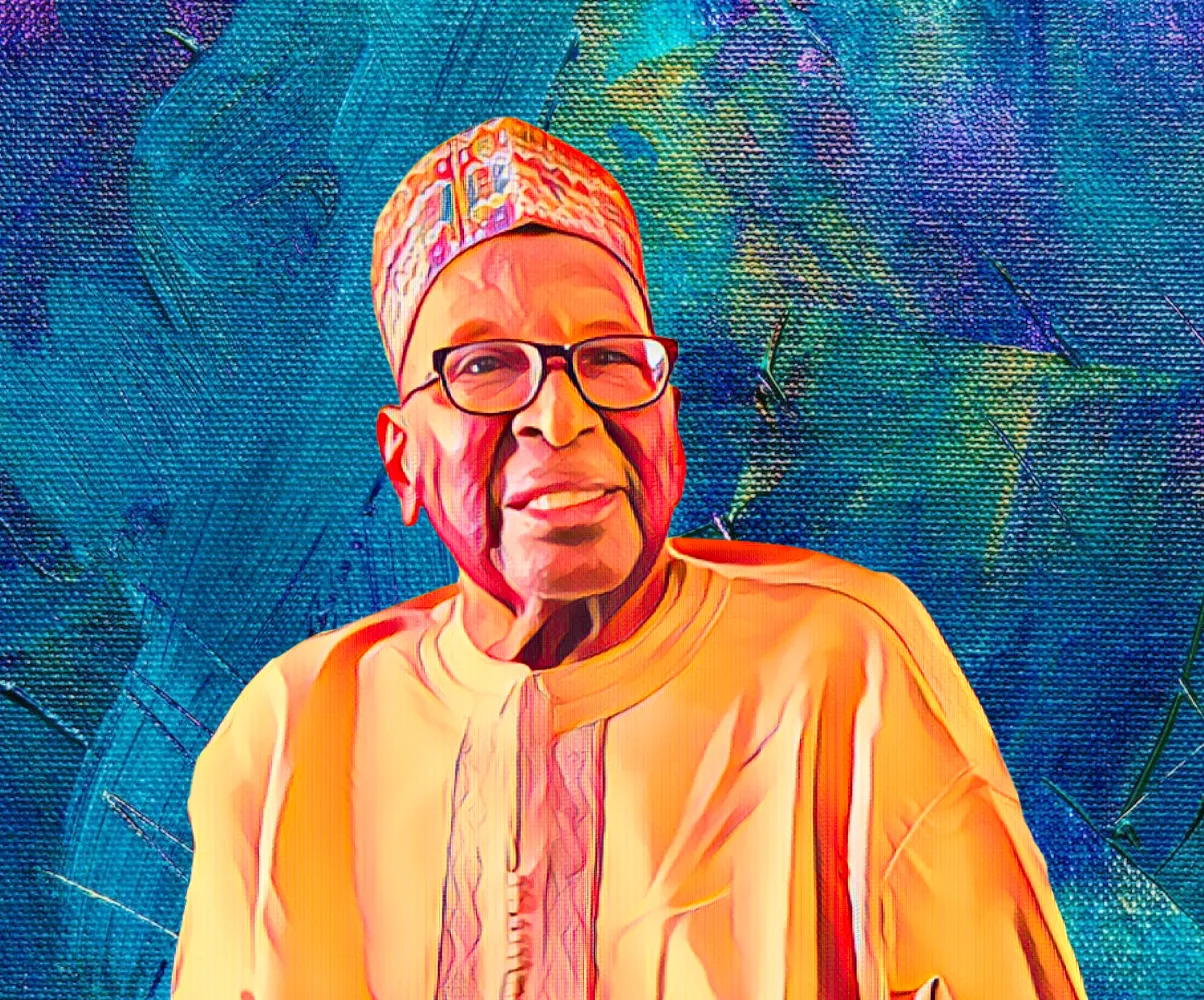
1. Aliko Dangote, Nigeria — $28.5 billion
The richest Black person on earth, and it is not particularly close. Dangote has held the top spot for more than 15 consecutive years. His Dangote Group controls the biggest cement business in Africa and his 650,000-barrel-per-day refinery in Lagos, the largest single-train refinery in the world, has pushed his fortune to new heights. He added $4.6 billion in the past year, driven largely by a near-70% rally in Dangote Cement shares on the Nigerian Exchange. He is 68 years old and still expanding.
2. Alexander Karp, United States — est. $14.3 billion
Karp is the co-founder and CEO of Palantir Technologies, an AI and data analytics company whose clients include the U.S. Department of Defense and the FBI. His mother is African-American. Palantir's stock surged more than 100% over the past year as AI-linked defense spending accelerated globally, and the Hurun 2026 Rich List put his fortune at $16 billion, up sharply from $8.4 billion on the 2025 Forbes list.
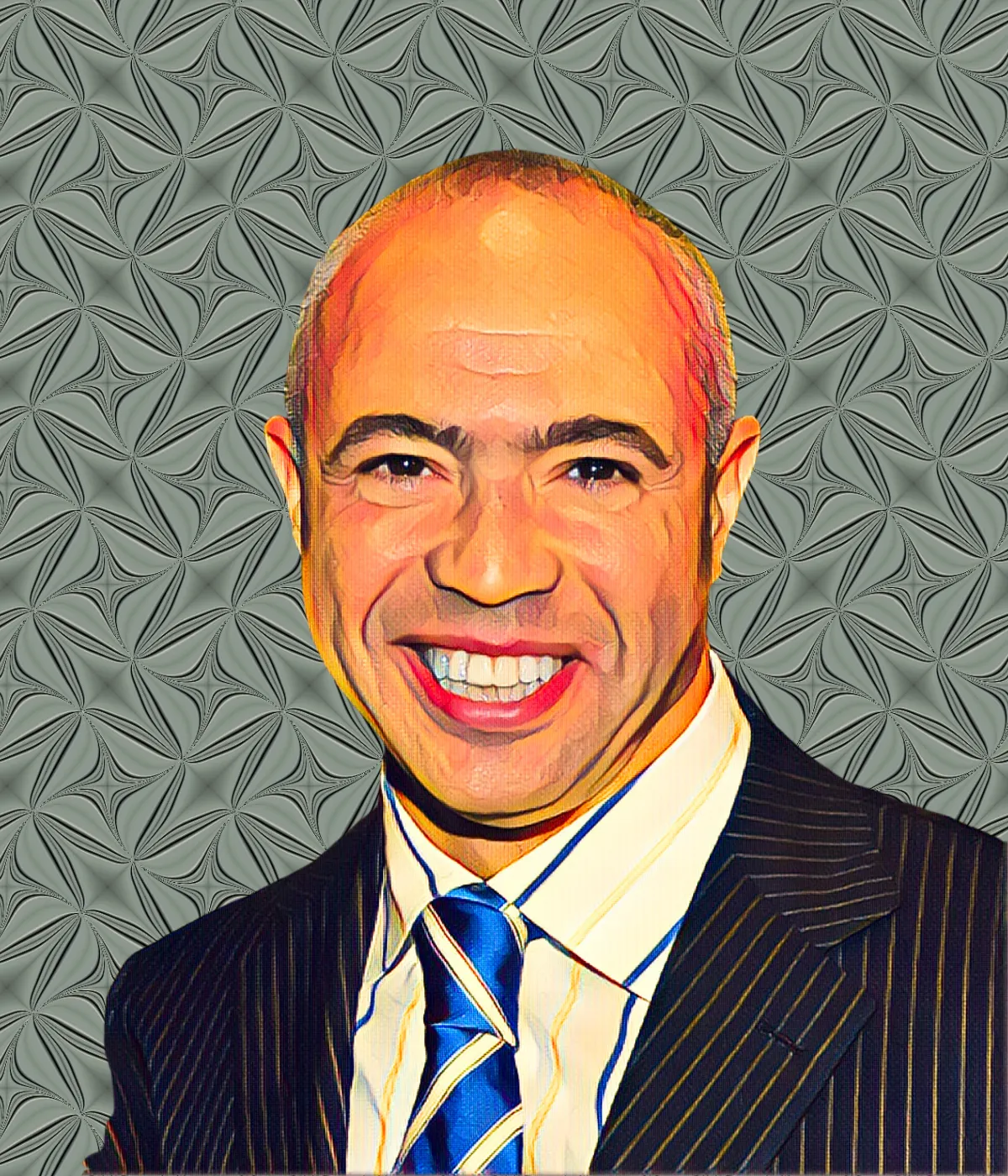
3. David Steward, United States — est. $12.4 billion
The richest Black American is a man most people could not pick out of a lineup. Steward co-founded World Wide Technology in 1990, an IT solutions company headquartered in St. Louis with annual revenues approaching $20 billion. Its clients include Verizon, Citi and the U.S. federal government. He was born in Chicago and grew up in Missouri. He built his wealth in corporate technology, not entertainment.
4. Abdulsamad Rabiu, Nigeria — $11.2 billion
Rabiu was the biggest individual mover on the entire Forbes Africa 2026 list, with his fortune jumping 120% in a single year. His main asset, BUA Cement, rose 135% on the Nigerian Exchange as the broader market hit record highs. He is now Africa's third-richest person, up from sixth a year ago. His BUA Group spans cement, sugar, flour and pasta production across Nigeria, with combined revenues exceeding $2.6 billion. He is 64 years old and still investing aggressively.
5. Robert F. Smith, United States — est. $10 billion
Smith runs Vista Equity Partners out of Austin, Texas. It is the largest Black-owned private equity firm in the United States and manages more than $100 billion in assets, focused entirely on enterprise software companies. Smith earned his MBA from Columbia and worked as a chemical engineer before pivoting to finance. He made national headlines in 2019 when he stood up at Morehouse College's commencement and pledged to pay off the student debt of every graduate in the room.
6. Mike Adenuga, Nigeria — $6.5 billion
Adenuga made his first million at 26, selling lace and distributing soft drinks on the streets of Lagos. He went on to build Globacom, Nigeria's second-largest telecoms operator, and Conoil Producing, an upstream oil company. He rarely speaks to journalists and almost never appears on business panels. His $6.5 billion says everything that needs to be said.
7. Michael Jordan, United States — est. $4.3 billion
Jordan has not played professional basketball in more than two decades. He has been adding to his net worth ever since. The bulk of his current fortune traces to his ownership stake in the Charlotte Hornets, which he sold in 2023 in a transaction that valued the franchise at $3 billion. His Jordan Brand deal with Nike continues to generate an estimated $150 million a year in royalties.
8. Patrice Motsepe, South Africa — est. $3.9 billion
Motsepe became the first Black African on the Forbes Billionaires list when he crossed the threshold in 2008. He built his fortune buying marginal gold shafts from AngloGold in 1997 at a time when nobody else wanted them. His African Rainbow Minerals reported a doubling of profit in the first half of fiscal 2026, powered by surging platinum, palladium and rhodium prices. He is also the founder of African Rainbow Capital and serves as president of the Confederation of African Football.
9. Oprah Winfrey, United States — est. $3.2 billion
Winfrey was the first Black woman to become a billionaire in the United States. The foundation of her wealth is Harpo Productions, the company she built around her television show, which she negotiated ownership of from the start. She expanded into OWN network, invested in WeightWatchers and has donated nearly half a billion dollars to charitable causes during her lifetime.
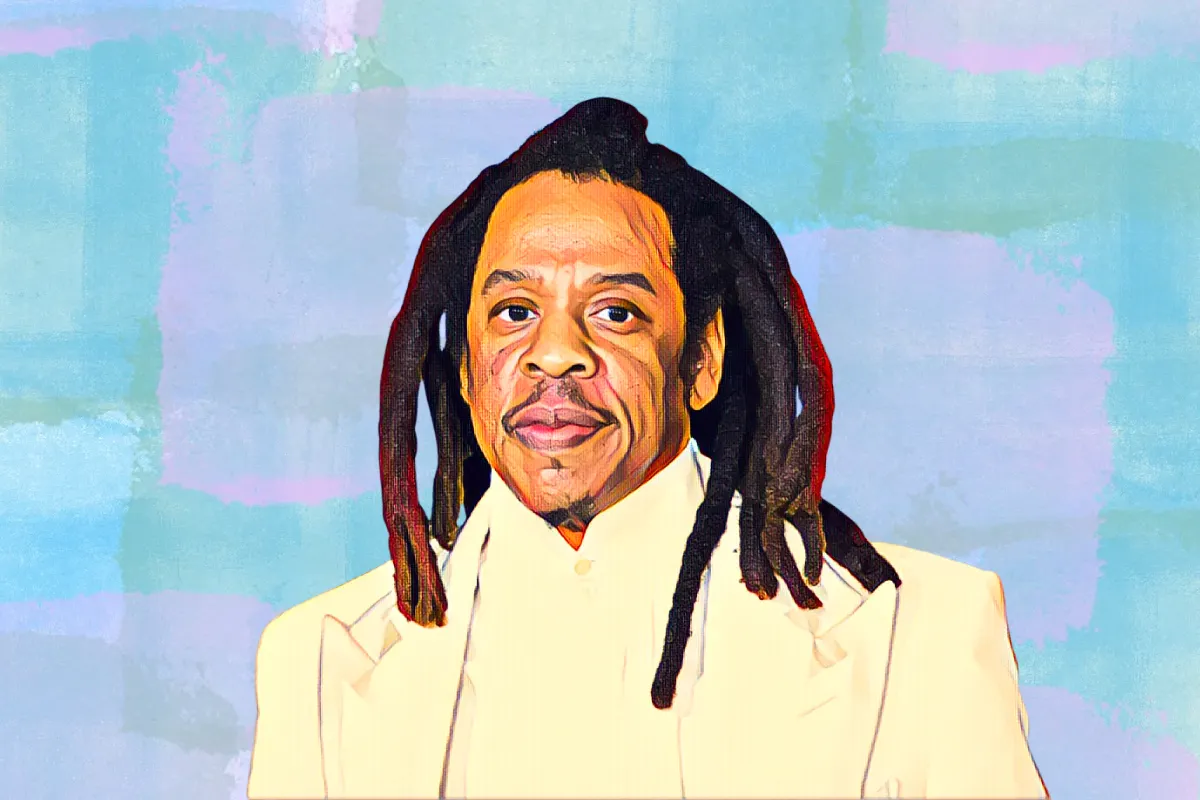
10. Jay-Z, United States — est. $2.8 billion
Shawn Carter became hip-hop's first confirmed billionaire in 2019. His wealth is spread across music rights, fine art, the Roc Nation entertainment company, equity in D'Usse cognac and Armand de Brignac champagne, and real estate. He is married to Beyonce, meaning the Carter household has produced two billionaires. That is a first in music history.
11. Adebayo Ogunlesi, United States/Nigeria — est. $2.4 billion
Ogunlesi was born in Lagos and built one of the most powerful infrastructure investment firms on the planet. His Global Infrastructure Partners owned airports, energy assets and transportation networks before BlackRock acquired it in 2024 in a deal valuing GIP at $12.5 billion with more than $100 billion in assets under management. He also served on Apple's board. His is the sort of wealth that rarely makes the entertainment pages.
12. Strive Masiyiwa, Zimbabwe — est. $2.2 billion
Masiyiwa spent years fighting the Zimbabwean government through the courts before winning the right to launch Econet Wireless in 1998. The company became the foundation of a telecoms empire now active across Africa, South America and Asia. He sits on the boards of Netflix and the Gates Foundation and has funded scholarships for more than 250,000 young Africans through his Higherlife Foundation.
13. Magic Johnson, United States — est. $1.6 billion
Earvin Johnson earned around $40 million during his playing career with the Los Angeles Lakers. His current wealth was built almost entirely after retirement. Johnson became a billionaire through Starbucks franchises, real estate, film production and a web of joint venture partnerships. He is also a part-owner of several professional sports franchises.
14. Tiger Woods, United States — est. $1.5 billion
Woods is a billionaire golfer who earned relatively little of his fortune on the course. His long-term Nike partnership, plus deals with Gatorade and Rolex, provided the financial backbone. He also built a golf course design firm and co-founded TGL, a technology-forward golf league. He is the second active professional athlete, after LeBron James, to appear on the Forbes Billionaires list.
14. Herriot Tabuteau, United States/Haiti — est. $1.5 billion
Tabuteau is a Haitian-born physician who became a billionaire through Axsome Therapeutics, a biopharmaceutical company focused on central nervous system disorders. He founded the company, took it public and built his fortune as its value climbed. He joined the Forbes list for the first time in 2025.
16. Tyler Perry, United States — est. $1.4 billion
Perry broke into Hollywood with no connections and no studio infrastructure behind him. He built his Madea franchise independently, then bought and developed a 330-acre studio in Atlanta on the grounds of a former military base. Tyler Perry Studios is one of the largest production facilities in the United States. He owns it outright.
16. Tope Awotona, United States/Nigeria — est. $1.4 billion
Awotona moved from Lagos to the United States as a teenager and spent years trying different businesses before founding Calendly, a scheduling platform that became embedded in corporate workflows worldwide. He once tried selling gardening tools. He learned from it and kept going. Calendly is now valued in the billions.
16. LeBron James, United States — est. $1.4 billion
James is the first active NBA player to appear on the Forbes Billionaires list. He surpassed 50,000 career points in March 2025, a record no player in league history had reached. His wealth draws on Nike endorsements, a stake in Beats by Dre, investments in Blaze Pizza and SpringHill Entertainment, the media company he co-founded. He is still playing.
19. Femi Otedola, Nigeria — $1.3 billion
Otedola built his energy empire through Zenon Petroleum and later Geregu Power, Nigeria's first power company to list on the stock exchange. His fortune dipped slightly on the 2026 list after he sold a majority stake in Geregu at a discount to market price. He retains holdings in Zenith Bank and FBN Holdings and has property in Lagos, London, Dubai and Monaco.
19. Mo Ibrahim, United Kingdom/Sudan — est. $1.3 billion
Ibrahim founded Celtel International in 1998, one of the first mobile networks to bring coverage to sub-Saharan Africa. He sold it in 2005 for $3.4 billion. Since then he has dedicated much of his time and money to African governance through the Mo Ibrahim Foundation, which ranks African governments annually and offers a $5 million prize to former heads of state who governed well and stepped down voluntarily.
21. Sheila Johnson, United States — est. $1.2 billion
Johnson co-founded Black Entertainment Television with her then-husband Robert Johnson in 1980. When Viacom bought BET in 2001 for $3 billion, she received a significant share. She invested in hospitality through Salamander Hotels and Resorts and holds minority stakes in the Washington Capitals and Wizards franchises. She is one of the few Black women who have built and sustained billion-dollar wealth across decades.
22. Rihanna, Barbados/United States — est. $1 billion
Robyn Fenty became a billionaire not through music but through cosmetics. Her Fenty Beauty line, launched in 2017 and co-owned with France's LVMH, made headlines at launch by offering 40 foundation shades when most competitors offered 10 or fewer. It generated over $500 million in revenue in its first year. She has since expanded into Savage X Fenty lingerie and Fenty Skin.
22. Beyonce Knowles-Carter, United States — est. $1 billion
Beyonce is a newcomer on the Forbes 2026 list. Her wealth was not built on streaming royalties or endorsement checks alone. It was built on ownership. Through Parkwood Entertainment, she controls her music catalog, her tours and her creative output. Her 2023 Renaissance World Tour ran to 39 cities, drew more than 2.7 million people and generated over $500 million in revenue, with much of it captured internally. She is married to Jay-Z.
22. Dr. Dre, United States — est. $1 billion
Andre Young made the Forbes 2026 list as a newcomer, 12 years after declaring himself hip-hop's first billionaire when Apple bought Beats Electronics for $3 billion. Taxes, a $100 million divorce settlement and fluctuating assets had kept the formal designation just out of reach. The list has now caught up. He becomes the sixth musician on Forbes' billionaire roster, joining Beyonce, Jay-Z, Taylor Swift, Bruce Springsteen and Rihanna.
23. Robert L. Johnson, United States — est. $1 billion
Robert L. Johnson made history by launching Black Entertainment Television (BET) in 1980.
The intelligence satisfies curiosity. The paid briefings satisfy strategy.
Every Monday, Elite subscribers receive an Investor Memo breaking down the deal, the structure and the positioning behind the week's most consequential African wealth story - the kind of analysis that doesn't appear anywhere else.
Twice a month, a Wealth Intelligence brief profiles a single billionaire's holdings, cash flows and expansion pipeline in detail no public source matches.
→ Executive ($25/mo): Daily newsletter + Deep-Dive Reports
→ Elite ($75/mo): Everything above + Investor Memos + Wealth Intelligence + Quarterly Analyst Briefings
Subscribe now