

Table of Contents
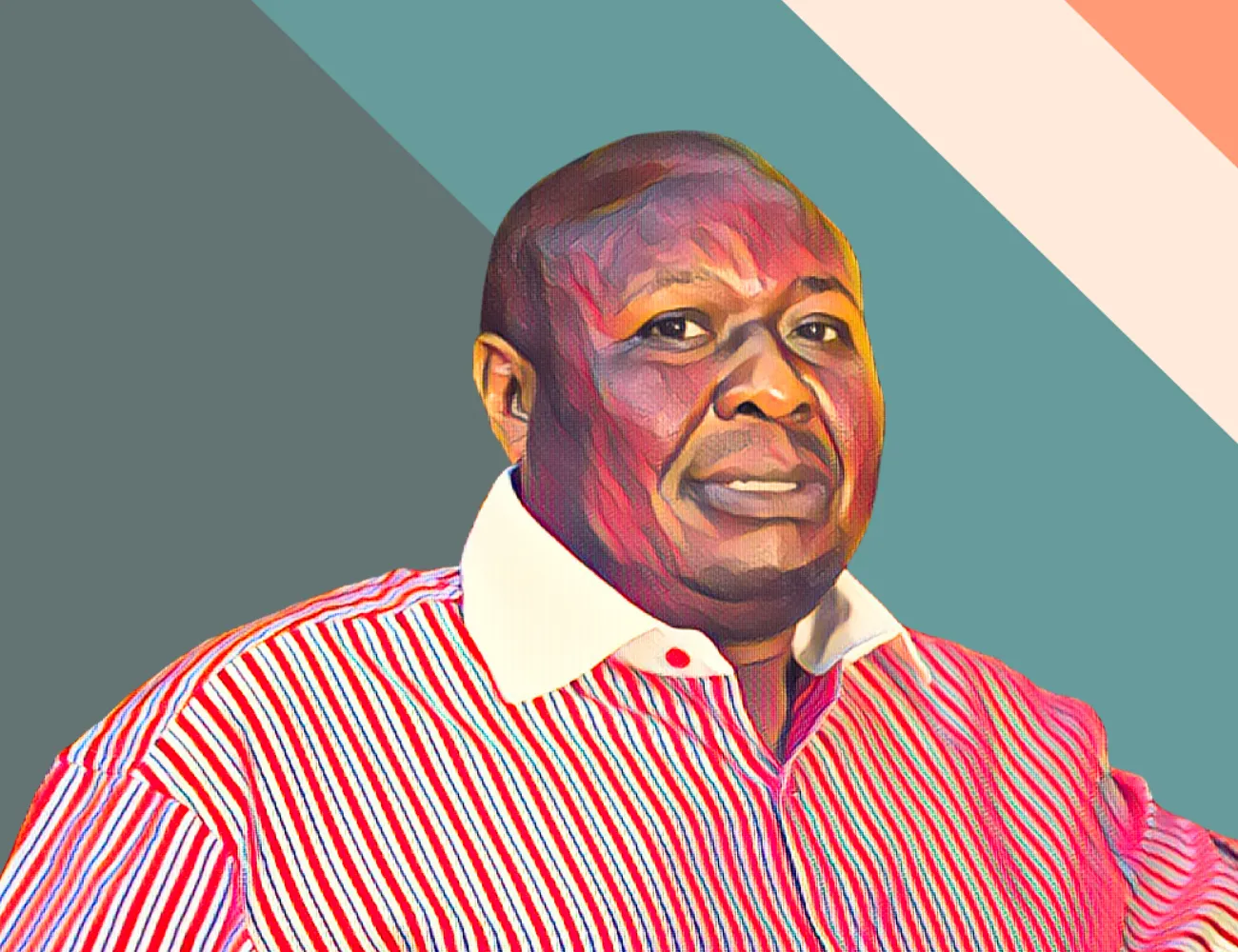
The day Uganda became an independent nation, October 9, 1962, Godfrey Kirumira Kalule was born. He has always carried that coincidence with a particular pride, as if his arrival on independence day was the first signal of what he would eventually build.
What he built, from zero, is one of the most diversified private business empires in East Africa.
Kirumira did not go to one of Kampala's elite schools. He did not inherit land or a trading company. By the time he was 12 years old, in the early 1970s, he was already on the streets, selling cigarettes. It was not a hobby. It was survival. And it turned out to be the beginning of an education in commerce that no university would have given him.
Where he came from
His father, Muhammad Kirumira, was a general merchandise trader who understood the basics of buying and selling. His mother, Princess Zawedde Joyce Nakimbugwe, came from a different register entirely: she was an educator from a royal lineage, a woman of learning and social standing in a city where that combination still meant something.
Godfrey absorbed both strands. The trading instinct came from his father. The ambition to matter, to be remembered for something larger than daily survival, appears to have come from the environment his mother represented.
He attended school but the classroom was not where he was sharpest. The street was. From cigarettes, a young Kirumira began to see that the real money was not in what you sold but in how many things you could sell and how fast you could move between opportunities. That insight would drive everything that followed.
Building the empire, one business at a time
By the time he was an adult, Kirumira had moved into fuel. He built Bargary Company Limited, which operates 12 GELP petroleum stations in and around Kampala. Petroleum was a serious bet. Fuel retailing in Uganda requires capital, logistics, regulatory relationships and the ability to manage a network of sites under price pressure. Kirumira managed all of it.
He did not stop there. He built Kirumira Towers, a commercial building on William Street in central Kampala. He developed the International Hotel Muyenga 2000 and Havana Hotel, adding hospitality to a portfolio that was already spanning several sectors. He launched GKO Security Company, a private security firm. He set up BTC Transporters to move goods. He opened Royale Cash Forex and Money Point Forex to capture foreign exchange business.
Premium Commodities, his trading arm, deals in maize and beans. He imports used clothing and footwear through a separate channel. KPI Petroleum Limited added another layer to his downstream energy interests. Nabugabo Updeal Venture Limited handles general merchandise and import-export.
And then there are the schools. St. Mary's Junior School in Nabbingo and Bright Future Secondary School in Bwebajja, both operated as non-profit initiatives. In a portfolio driven by commercial returns, the schools stand apart. They are not there to make money. They are there because Kirumira believes that education is part of what a successful man owes his community.
All of this sits under the GKK Group of Companies, of which Kirumira is chairman. His son Gideon has been brought into the management structure, learning the business with the same demanding work ethic that his father applied to his own formation. "My father doesn't just give out money, you have to work for it," Gideon told CEO East Africa Magazine. "I work hard for every coin that he gives me."
The club of the richest
In 2002, Kirumira helped found the Kwagalana Group, an association of Uganda's wealthiest businesspeople. He chairs it. The name itself gestures toward a spirit of mutual ambition: the group functions as a network of serious money in Uganda, and its chairman is someone who has spent decades watching what works and what doesn't in East African business.
He also chairs KACITA, the Kampala City Traders Association, the organisation that represents traders and business owners across Kampala's commercial districts. And he chairs the Uganda Landlords Association. Taken together, these roles make Kirumira not just a wealthy man but a central node in Uganda's private sector, someone whose phone calls get returned and whose opinions shape the conversations that matter.
The money is significant. By 2023, his net worth was estimated at approximately $350 million by industry observers, a figure that reflects the accumulated value of the fuel stations, hotels, towers, security company, forex bureaux and commodities business. In 2012, the New Vision newspaper had put him at about $30 million. The difference between those two numbers is the story of a man who never stopped building.
The diplomat
In 2023, President Hage Gottfried Geingob of Namibia named Kirumira the Honorary Consul of Namibia to Uganda. It was a recognition that carried genuine strategic logic. Namibia, a COMESA member with a GDP roughly 10 times Uganda's per capita income, is a major importer of grains. Kirumira, through Premium Commodities, is a significant grain trader. The appointment positioned him to facilitate trade flows between the two countries in a way that made sense commercially, not just ceremonially.
At the investiture, Kirumira spoke with the clarity of a man who had thought carefully about what the role meant. "It is with great honour and humility that I stand before you today as the newly-appointed honorary consul of Namibia to Uganda," he said. "I pledge to uphold the values and principles that define the strong and enduring coherence between our two nations."
He has sat in rooms with President Yoweri Museveni. His business relationships with the Ugandan state, which are inevitable when you operate 12 fuel stations and several large commercial properties, have been managed with enough care that he remains active and largely out of controversy.
The philanthropist
Beyond the schools in Nabbingo and Bwebajja, Kirumira supported Express FC, one of Uganda's oldest football clubs, for a decade. He has been involved in the Buganda Kingdom's 'Twekobe Ejjude' initiative, which was aimed at developing the Kingdom's infrastructure. He has described his open-door policy as one of the values he carries from his mother, the educator: accessible, present, willing to listen.
At charity events and business forums alike, he moves with the ease of someone who no longer needs to prove anything. The Lexus, Range Rover, G-Wagon and Hummer that sources describe him driving are not particularly unusual for his peer group. What is unusual is how far he has come from the cigarette-selling 12-year-old on Kampala's streets.
The next generation
Godfrey is married with two wives. His daughter Brenda Namugga married businessman Engineer Patrick Lubowa in 2018 in a ceremony that drew significant attention in Kampala's social circles. His son Gideon has built Trigger Enterprises Limited into East Africa's largest fire safety supplier, operating across more than 8 countries.
Kirumira's approach to raising his children has been deliberately un-indulgent. Gideon has described growing up without much access to his father because the man was always working. That absence, it turns out, was itself a kind of teaching. You see a father work that hard, you understand that the outcome is not guaranteed. You understand that the fuel stations and the towers and the forex bureaux did not arrive because of ancestry. They arrived because someone showed up every day and figured out what the next move was.
Godfrey Kirumira was born on the day Uganda became free. He then spent the next six decades making himself, and a number of people around him, a little bit freer than they would otherwise have been.
The intelligence satisfies curiosity. The paid briefings satisfy strategy.
Every Monday, Elite subscribers receive an Investor Memo breaking down the deal, the structure and the positioning behind the week's most consequential African wealth story - the kind of analysis that doesn't appear anywhere else.
Twice a month, a Wealth Intelligence brief profiles a single billionaire's holdings, cash flows and expansion pipeline in detail no public source matches.
→ Executive ($25/mo): Daily newsletter + Deep-Dive Reports
→ Elite ($75/mo): Everything above + Investor Memos + Wealth Intelligence + Quarterly Analyst Briefings
Subscribe now