

Table of Contents
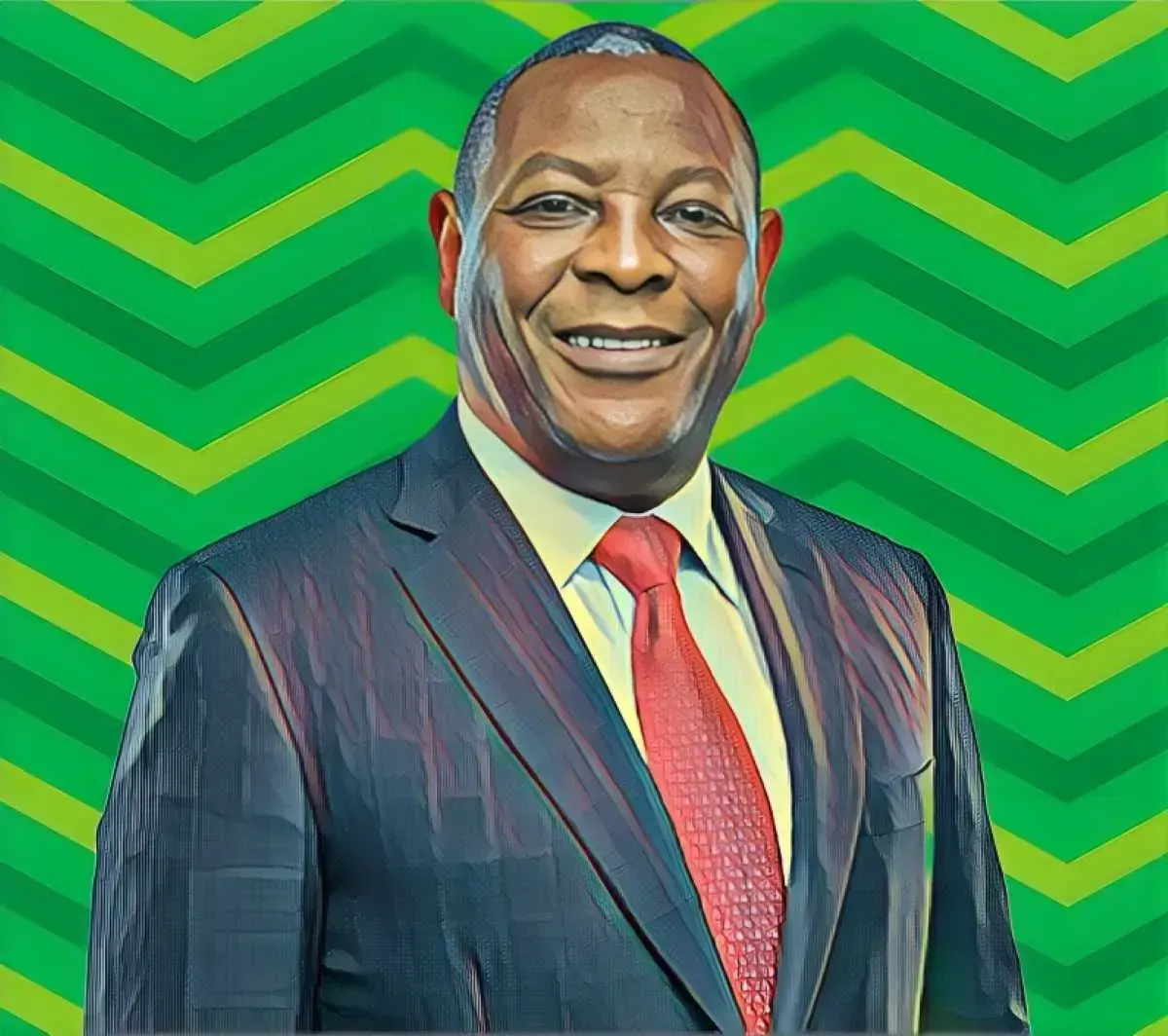
James Mwangi, the chief executive of Equity Group Holdings, used the sidelines of the International Monetary Fund and World Bank Spring Meetings to issue one of the starkest warnings to come from any major African banker this year: the continent could slide into a serious food and economic crisis within 3 years if the current convergence of fuel shocks, fertiliser supply disruptions and government debt stress is not addressed urgently.
Mwangi, speaking to reporters on the sidelines of the meetings in Washington, said African households and businesses are already feeling the pressure of higher input costs, particularly in agriculture. The disruption to global supply chains triggered by the US-Iran war has pushed fuel prices sharply higher, and he warned that the downstream effect on fertiliser availability poses a far graver long-term danger than the immediate spike in fuel costs.
"Energy is essential for production," he said. "So when energy becomes constrained, production becomes constrained. When production becomes constrained, markets become constrained. Employment becomes constrained."
In Kenya, he said, the fuel impact was already quantifiable. "The price of oil in Kenya went up by 13% in a single day... that will jack inflation to about 6%."
He was equally blunt about the capacity of African governments to absorb these shocks. "At the moment, customers are feeling the challenge of government capacity being challenged. Debt stress in Africa is real. We're also seeing inflation... and there's a lot of uncertainty," he said. With governments already constrained by debt service obligations, the fiscal room to subsidise food, energy or agriculture inputs has narrowed to the point where citizens are largely absorbing the shocks directly.
The fertiliser danger
Mwangi drew a distinction between the oil price spike, painful as it is, and the fertiliser supply disruption, which he considers the more dangerous variable. African smallholder agriculture, which feeds the bulk of the continent's population, is heavily dependent on imported nitrogen fertilisers whose production and distribution chains run through the Middle East and Russia. Disruptions to those chains raise input costs, suppress yields, and can translate into food insecurity not in months but across planting seasons.
He urged a faster alignment between global financial institutions, African governments and the private sector to prevent the situation from deteriorating into a broader crisis. The private sector, he argued, cannot substitute for public policy but it can bridge financing gaps that governments are no longer able to fill. He pointed to Equity Group's Africa Recovery and Resilience Plan as an example of the kind of ecosystem-based financing model that channels capital into agriculture, manufacturing and trade simultaneously.
Declining aid levels from Western donors, he added, are compounding the pressure, forcing a rethink of how development financing is structured across emerging markets.
Who Mwangi is
James Mwangi, 63, is the person most credited with turning Equity Bank from a failed building society in 1990s Kenya into one of the largest financial institutions on the continent. The story of how he did it is as much a part of Kenya's economic mythology as it is a business case study at Stanford, Harvard and Columbia.
He was born in 1962 in Kangema, Murang'a County, the son of a woman who was widowed when her husband died in the Mau Mau conflict. His mother Grace Wairimu raised 7 children with no formal schooling of her own and very little money. Mwangi has recounted the moment his mother went to enroll him in high school and the principal told her he could not enter because he had no shoes. She refused to accept it. He got in. He attended Kagumo High School for his A-levels and went on to earn a Bachelor of Commerce degree from the University of Nairobi before qualifying as a Certified Public Accountant.
He started his career at PricewaterhouseCoopers, moved to Ernst and Young, and then to Trade Bank as financial controller. In 1991 he was invited to join Equity Building Society, which the Central Bank of Kenya had by 1993 formally ranked last among all licensed financial institutions in the country: position 66 of 66, technically insolvent, losing KSh5 million a year on accumulated losses of KSh33 million.
What he did there became the textbook. He converted KSh7 million of his own savings into Equity Building Society shares, retrained the staff entirely around customer service, asked employees to use 25% of their salaries to buy shares and recruit depositors from their personal networks, and repositioned the institution around the one thing Kenya's banking sector had largely ignored: the poor.
By 1997 the society was paying dividends to customers. By 2004, when Mwangi became CEO, it was growing rapidly. In 2006 it listed on the Nairobi Securities Exchange. It subsequently cross-listed on the Uganda and Rwanda stock exchanges, opened subsidiaries across East and Central Africa, and grew its customer base to over 22 million accounts across Kenya, Uganda, Tanzania, Rwanda, South Sudan and the Democratic Republic of Congo.
The numbers behind the warning
The irony of Mwangi's grim macroeconomic message is that it comes from the CEO of an institution posting record results. Equity Group's 2025 full-year profit after tax rose 55% to KSh75.5 billion ($580 million), making it the most profitable company in Kenya by some measures, ahead of KCB Group and Safaricom. The group's balance sheet expanded 9% to KSh1.97 trillion ($15.2 billion). Regional subsidiaries now contribute approximately half of total banking profitability, vindicating the pan-African expansion strategy Mwangi has pursued across 3 decades.
His own compensation for 2025 reflected that performance: a KSh90.8 million bonus brought his total pay to KSh275.7 million ($2.1 million), the first time it has crossed the KSh200 million mark. His 3.39% stake in Equity Group, comprising 127.8 million shares, entitles him to a KSh734.9 million ($5.7 million) dividend from the group's proposed 2025 payout of KSh5.75 per share. His total net worth, driven primarily by his Equity stake, is estimated at approximately KSh10 billion ($77 million), making him Kenya's wealthiest banker.
The strong results give his warning a particular weight. This is not a banker speaking from distress. It is one of Africa's most successful financial institution builders arguing from a position of institutional strength that the macroeconomic environment surrounding his customers is deteriorating faster than most people are accounting for.
Mwangi has spent his career building financial infrastructure for people who were excluded from it. He has served on the World Bank's High-Level Advisory Council on Jobs, chaired Kenya's Vision 2030 Delivery Board for 12 years, and founded the Equity Group Foundation, whose Wings to Fly scholarship programme has supported over 26,000 students. His 2026 warning about food security, debt distress and energy shocks is the output of someone who has watched economic vulnerability at close range since before he had shoes on his feet.
The intelligence satisfies curiosity. The paid briefings satisfy strategy.
Every Monday, Elite subscribers receive an Investor Memo breaking down the deal, the structure and the positioning behind the week's most consequential African wealth story - the kind of analysis that doesn't appear anywhere else.
Twice a month, a Wealth Intelligence brief profiles a single billionaire's holdings, cash flows and expansion pipeline in detail no public source matches.
→ Executive ($25/mo): Daily newsletter + Deep-Dive Reports
→ Elite ($75/mo): Everything above + Investor Memos + Wealth Intelligence + Quarterly Analyst Briefings
Subscribe now