

Table of Contents
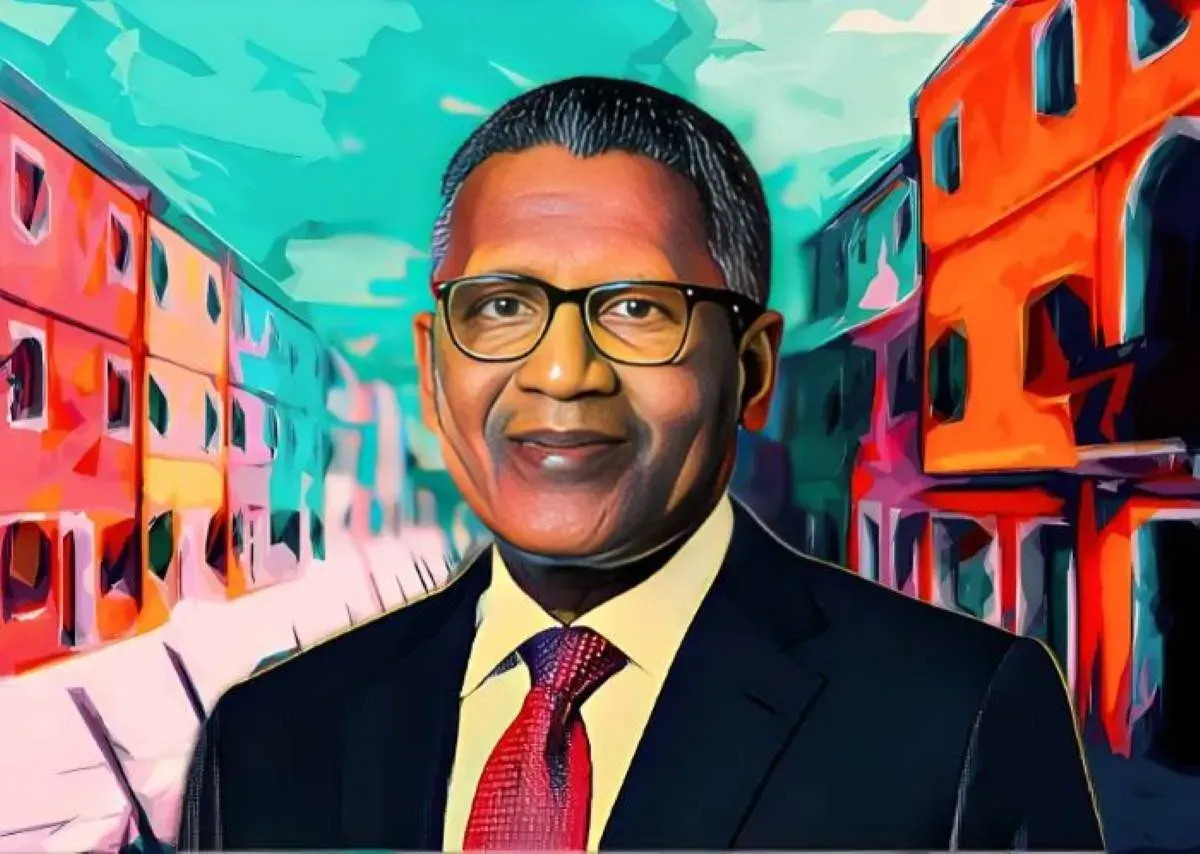
Aliko Dangote traveled to Oslo recently and sat down with Nicolai Tangen, the chief executive of Norges Bank Investment Management, the Norwegian sovereign wealth fund that manages roughly $1.9 trillion in assets and is the largest pool of institutional capital on earth.
The two men were not alone. Svein Tore Holsether, chief executive of Yara International, one of the world's dominant fertiliser companies, was in the room. So was Terje Pilskog, chief executive of Scatec, the Oslo-listed renewable energy developer that has spent the better part of a decade building solar and clean energy projects across Africa. That guest list was deliberate. Nobody ends up in a room like that by accident.
The discussions covered a potential partnership between NBIM and Dangote Group across power, energy, renewables, agriculture, fertiliser and cement. The sectors on that list correspond almost exactly to what Dangote has already built and what he is trying to build next, which is either a coincidence or the point.
What makes the meeting remarkable is who Norges Bank is. The Government Pension Fund Global owns stakes in more than 7,200 companies across 70 countries. Its 2026 to 2028 strategic plan, signed off by the Executive Board late last year, commits the fund to expanding its real assets portfolio into a broader set of technologies and geographies, with an explicit focus on renewable energy infrastructure. The fund is permitted to put up to 2 percent of its total assets into unlisted renewable energy infrastructure. At current valuations that ceiling sits around $38 billion. That is not a rounding error. That is a number that can move continents.
For Yara's Holsether, the table was a natural place to be. Yara is one of the world's largest suppliers of fertiliser and crop nutrition products. Dangote Fertilizer, the 3 million tonne per year urea plant in Lagos that Dangote completed in 2023, sits in the same markets, competing for the same customers. A formal relationship between the two companies, especially one backed by Norwegian sovereign capital, would redraw the map of agricultural inputs across sub-Saharan Africa in ways that neither company could accomplish independently.
Scatec's Pilskog adds the piece that makes the renewable angle concrete rather than aspirational. Scatec has operating assets in Egypt, South Africa, Mozambique, Rwanda and other African markets. It knows how to build and run utility-scale renewable energy infrastructure on the continent, which is exactly the kind of operational credibility that makes sovereign fund investment decisions easier. Dangote has publicly signalled his intention to enter the power generation sector at serious scale. Scatec has the track record. NBIM has the balance sheet.
The Oslo meeting lands at a precise moment in Dangote's calendar. He told the Financial Times days before the Norway visit that Dangote Cement is targeting a secondary listing on the London Stock Exchange by September, with JPMorgan Chase, Citigroup and Standard Bank already appointed as advisers. About 10 percent of the company's shares would be offered to outside investors in a transaction the FT described as a much-needed boost for the UK market. Dangote Cement, listed in Lagos since 2010, is Africa's largest producer with 55 million metric tonnes of installed annual capacity across 11 countries. Its stock has gained more than 70 percent on the Nigerian Exchange this year.
At the same time, Dangote is preparing an IPO of up to 15 percent of the Dangote Petroleum Refinery, the 650,000 barrel per day facility in Lekki that is the world's largest single-train refinery by throughput. A third offering, covering Dangote Fertilizer, is also in planning. All three transactions running simultaneously would represent the most concentrated equity capital raise in the group's history.
Norges Bank has never made a major direct investment in a Nigerian industrial conglomerate at this scale. Its African exposure has historically been weighted toward listed equities and sovereign bonds. A partnership with Dangote Group, structured as a co-investment in specific assets or sectors, would mark a genuine change in how the fund engages with African industrial capital.
No deal was announced. The meeting was described as exploratory by people familiar with the discussions. What it signals, though, is that the world's largest sovereign wealth fund is taking Dangote Group seriously as a partner, not just as a holding in an index fund. That distinction is worth paying attention to.
The intelligence satisfies curiosity. The paid briefings satisfy strategy.
Every Monday, Elite subscribers receive an Investor Memo breaking down the deal, the structure and the positioning behind the week's most consequential African wealth story - the kind of analysis that doesn't appear anywhere else.
Twice a month, a Wealth Intelligence brief profiles a single billionaire's holdings, cash flows and expansion pipeline in detail no public source matches.
→ Executive ($25/mo): Daily newsletter + Deep-Dive Reports
→ Elite ($75/mo): Everything above + Investor Memos + Wealth Intelligence + Quarterly Analyst Briefings
Subscribe now