

Table of Contents
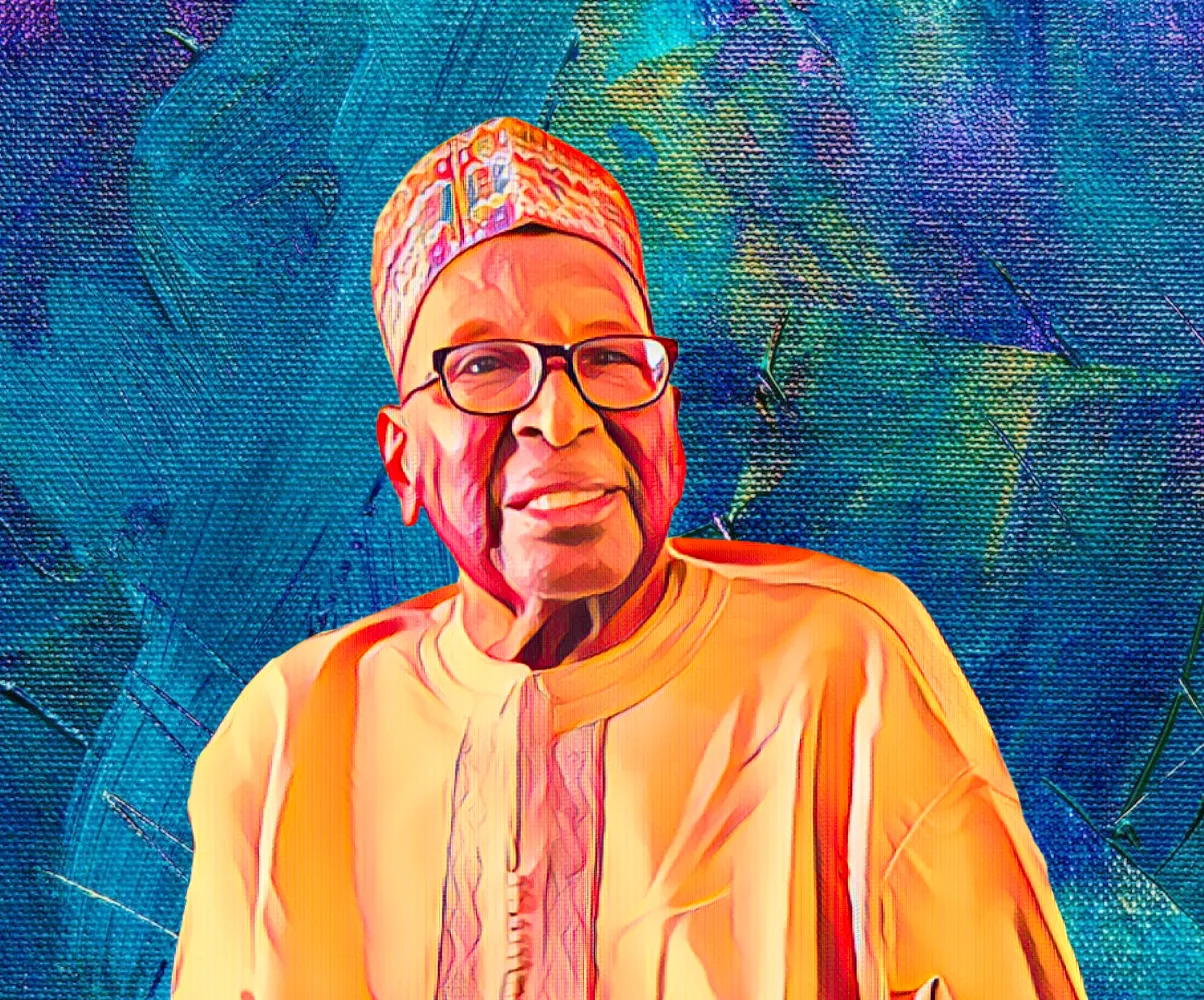
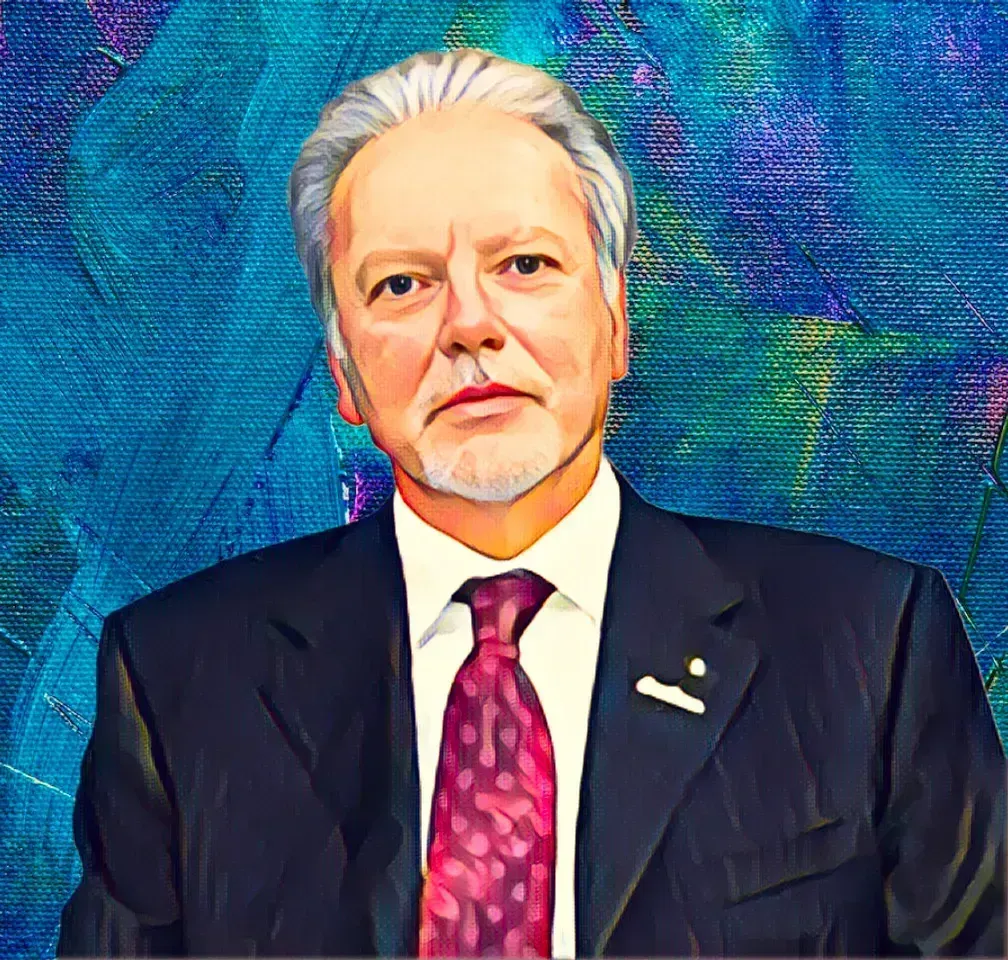
The Franco-Gabonese operator rarely grants interviews, almost never appears on stage at industry conferences and prefers to let his holding companies speak through their balance sheets. Yet for more than five decades, his name has shown up wherever Gabonese money flows, from the country's dominant bank to its industrial cold chains, from its general trading shelves to its national stock exchange. He has been described, repeatedly, as Gabon's richest man.
Kerangall arrived in Gabon in 1970 and never really left. Over the next 55 years, he stitched together stakes in finance, distribution, services and infrastructure, threading them through two holding vehicles that have since become the scaffolding of his empire. The first is Sogafric Holding, where he serves as chairman and which lists participations spanning commerce, industry, services, finance and real estate. The second is Compagnie du Komo, known locally as CDK, founded in 1995. CDK has long been described as one of the country's largest industrial holdings, with activity stretching from import and distribution to manufacturing.
The finance pillar matters most. Through Sogafric and CDK, Kerangall built positions over the years in BGFI, the dominant banking group in Gabon and one of Central Africa's leading financial institutions. His vehicles also took stakes in Finatra, the consumer credit arm, and in the Central Africa stock exchange, BVMAC. He has been a historically influential shareholder of BGFI, although the precise percentages have shifted over time. In a rare 2025 interview, Kerangall said his principal personal assets were a roughly 40 percent position in Sogafric and "less than 5 percent" of BGFI. The structure was clear regardless of the fractions: control sat with the industrial holding, and financial clout was exerted through strategic minority positions in the institutions that mattered most.
Beyond banking, Kerangall has held positions in two of the most important utilities and infrastructure platforms in Gabon. His vehicles have featured among the shareholders of SEEG, the country's water and energy distribution company, and SETRAG, the national railway transport company. The combined footprint reaches into the everyday plumbing of the Gabonese economy.
The wealth rankings put a number on what the structure produced. In 2015, Kerangall was identified as Gabon's richest individual and the eighth-largest fortune in francophone sub-Saharan Africa, with his wealth pegged at around $520 million. He has pushed back at the mythology around the figure, calling his wealth less material than people imagine. He has not, however, denied the architecture of his holdings. Local business circles have continued to describe him as the country's wealthiest man and one of the most influential figures in Central African private capital.
In Gabon, business and politics meet early and often. Kerangall's companies have intersected over time with Delta Synergie, the private holding long associated with the Bongo family, in assets that anchor the formal economy. The cross-shareholdings made him a recurring figure in debates over the influence of a small club of private groups, local and foreign, in shaping policy and markets. His supporters have argued that, in a small economy, there are few alternatives to deep-pocketed operators who can finance logistics, stock inventory and absorb currency swings. His critics have argued that the same concentration of influence kept competitors out and slowed diversification.
The operating businesses inside Sogafric tell their own quieter story. The group's ecosystem stretches into business-to-business services covering industrial refrigeration, air-conditioning and technical building trades. The cashflows are unglamorous but persistent. Long-term contracts and a steady need for maintenance feed predictable revenue into the holding company. The model is the opposite of a celebrity consumer brand. It is the underlying infrastructure of an economy.
The political winds shifted sharply in 2024, when Gabon's transitional government launched a nationalist investment drive and began buying stakes in companies it described as strategic. The state took a 35 percent position in Ceca-Gadis, the country's leading supermarket and distribution group, recasting ownership across one of Gabon's few scale retail networks. The message to large private players, including Sogafric and CDK, was unmistakable. The state intended to sit closer to the cash registers. Kerangall did not publicly fight the tide. People close to him have described his default setting as pragmatic: restructure around the state's new role, keep distribution moving, and defend minority rights where they matter.
The clearest break with that low-profile posture came in 2025. In July, Kerangall criticized opacity inside BGFI in published comments, framing himself as a shareholder pressing for governance improvements. The episode was read locally as an open rift with Henri-Claude Oyima, BGFI's longtime boss who had recently been appointed to the Gabonese government. The holding's planned listing on the BVMAC, originally scheduled for July 15 and rescheduled to July 31, was suspended indefinitely. Behind the suspension was a shareholder challenge led by Kerangall, who was publicly identified as holding a 23 percent stake in BGFI Holding Corporation, the parent of BGFI Bank.
The dispute reached the Libreville commercial court. The contested resolutions, passed at the bank's extraordinary general meeting on June 25, included a capital increase of 15.7 billion CFA francs that would have lifted share capital from 141.6 billion to 157.3 billion. BGFI Holding had sought to list 1,573,536 shares, equivalent to 10 percent of its capital, at 80,000 CFA francs each. The offering was designed to raise 125.8 billion CFA francs and had attracted strong investor interest before being derailed.
On September 22, 2025, the court ruled against him. It dismissed all of the allegations raised by Kerangall and his co-claimants and upheld every resolution passed at the June meeting. The verdict cleared the path for BGFI Holding to revive its listing. The bank confirmed soon after that a revised IPO timetable would be released. Kerangall lost the round, but kept the seat at the table.
He has put a partial version of his life on the page. His memoir, titled "Mémoires en noir et blanc," sets out his reflections on business, politics and his decades in Gabon. The book is one of the few public windows into a life otherwise lived through holdings, board minutes and quiet meetings in Libreville. He has been described in the local business community as the most discreet and arguably most influential business leader in the country.
The empire he leaves behind, whenever he eventually steps back, will rest on three intertwined pillars. The first is Sogafric's operating businesses, with their long-term technical contracts and predictable cashflows. The second is the financial holdings, anchored by his position in BGFI. The third is the holding structure of Sogafric and Compagnie du Komo, which gives him the flexibility to buy, sell or co-invest as the political seasons shift. The fortune may be debated. The footprint is not.
The intelligence satisfies curiosity. The paid briefings satisfy strategy.
Every Monday, Elite subscribers receive an Investor Memo breaking down the deal, the structure and the positioning behind the week's most consequential African wealth story - the kind of analysis that doesn't appear anywhere else.
Twice a month, a Wealth Intelligence brief profiles a single billionaire's holdings, cash flows and expansion pipeline in detail no public source matches.
→ Executive ($25/mo): Daily newsletter + Deep-Dive Reports
→ Elite ($75/mo): Everything above + Investor Memos + Wealth Intelligence + Quarterly Analyst Briefings
Subscribe now