

Table of Contents
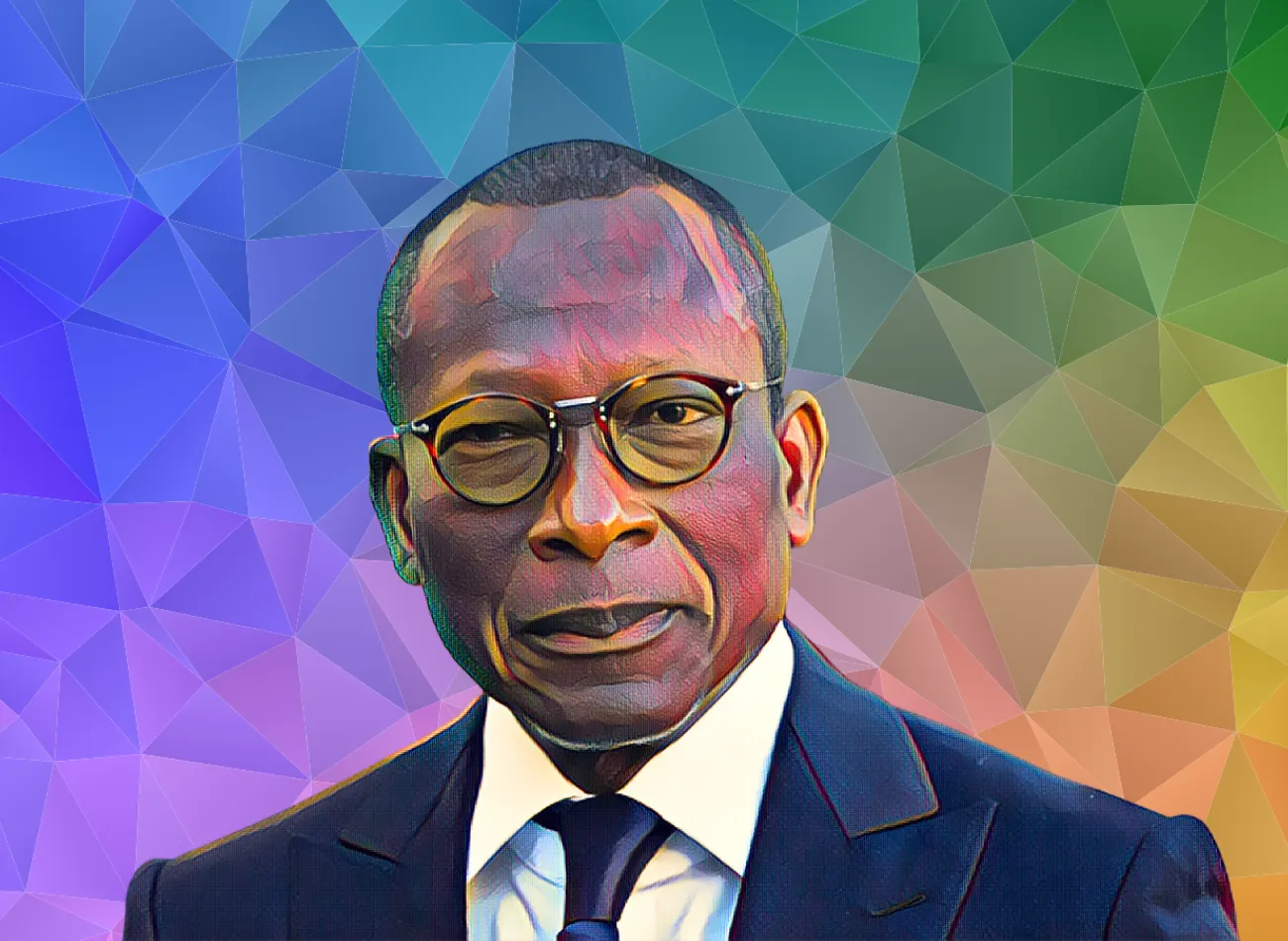
Patrice Talon, the eighth president of Benin and the country's most influential businessman of the past three decades, has built one of West Africa's most consequential careers across two arenas, cotton and the state. By the time he took the oath of office in Cotonou on April 6, 2016, he had already been ranked the 15th wealthiest person in sub-Saharan Africa, with a fortune valued at around $400 million. Nearly a decade in power later, he has survived an attempted coup, jailed two of his closest former allies and confirmed that he will leave office in 2026 without changing the constitution to extend his stay.
Talon was born on May 1, 1958, in Ouidah, in what was then Dahomey, of Fon origin. His father came from Ouidah, his mother from a Guédégbé family in Abomey. He completed secondary school with a baccalauréat and went on to study mathematics and physics at the University of Dakar. He had an early ambition to fly. After his second year at university, he passed an Air Afrique pilot exam and transferred to the École nationale de l'aviation civile in Paris, but a medical test disqualified him from a flying career and pushed him into business.
He entered trade in 1983, working in packaging and agricultural inputs. Two years later, he returned to Benin and established the Société Distribution Intercontinentale, known as SDI, supplying agricultural inputs to cotton producers across the country. The decisive opening came in 1990, when Benin acted on World Bank recommendations to liberalize its agricultural economy and withdraw from the cotton production chain. Talon won the right to establish three cotton ginning factories in the country. The position he built around that opportunity earned him the nickname "King of Cotton," and the empire that grew around it touched almost every node of the Beninese cotton sector for the next two decades.
The reach was not limited to ginning. His company Benin Control acquired two state-owned enterprises in succession, Sodeco in 2009 and PVI in 2011. The same year, he was awarded the management of imports at the Port of Cotonou, the regional maritime hub through which much of West Africa's landlocked trade flows. The combination of cotton and port logistics gave him a position in the Beninese economy that few private operators in the region could match.
The political relationships moved in parallel. Talon was one of the chief financial backers of Thomas Boni Yayi, the Beninese president who took office in 2006 and was re-elected in 2011. The two men were closely aligned for a period, then publicly fell out. In 2012, Talon fled to France after being accused of embezzling more than 18 million euros in taxes. He was subsequently accused of involvement in a plot to kill Boni Yayi. He was pardoned in 2014.
His move from financier to candidate came two years later. He ran as an independent in the March 2016 presidential election, finished second to Prime Minister Lionel Zinsou in the first round, then won the runoff with 65 percent of the vote. Zinsou conceded on election night. Talon was sworn in on April 6, 2016. The composition of his government was announced the same day. There was no prime minister. Two defeated presidential candidates who had backed him in the second round, Pascal Koupaki and Abdoulaye Bio-Tchané, were appointed to senior positions, Secretary-General of the Presidency and Minister of State for Planning and Development.
The new president pledged to reform the constitution, reduce the size of the executive and limit future presidents to a single five-year term. He framed the proposal as a defense against complacency. The bill never made it. On April 4, 2017, the National Assembly failed to pass the legislation that would have triggered a referendum on the single-term limit. The proposal needed 63 votes in the 83-member chamber and received 60. Talon dropped the matter and continued in office.
The political environment around him narrowed steadily. Changes in the law required presidential candidates to win the support of 16 members of parliament, a threshold that nearly all members of the next assembly, drawn from parties supporting Talon, controlled. He was re-elected on April 11, 2021, with 86 percent of the vote. Major opposition figures faced the courts. Sébastien Ajavon, who came third in the 2016 election, was sentenced in 2018 to 25 years in prison for "drug trafficking" and "forgery and fraud." In December 2021, former Minister of Justice Rekaya Madougou was sentenced to 20 years on charges of "terrorism," and the law professor Joël Aïvo to 10 years for "money laundering" and "undermining state security."
His regional standing rose at the same time. In March 2022, he was appointed president of the West African Economic and Monetary Union at the close of a joint ECOWAS-WAEMU summit. In July 2023, after the coup against Mohamed Bazoum in neighboring Niger, Talon publicly supported the ousted president and condemned the takeover.
The most personal threat to his rule came from inside his own circle. In September 2024, Beninese authorities announced the discovery of a coup plot against him, scheduled for September 27 and led by the businessman Olivier Boko, a long-time ally. Former sports minister Oswald Homéky and the commander of the Republican Guard were named as co-conspirators. Boko and Homéky were arrested. In January 2025, both men were convicted and sentenced to 20 years in prison and a fine of 60 billion CFA francs, equivalent to about $95 million.
His succession plan was announced shortly afterwards. On January 23, 2025, Talon said he would not seek a third term and that he would not amend the constitution, which imposes an absolute two-term limit on the presidency, in order to do so. He reaffirmed the position on March 14, 2025, in a public statement on the 2026 presidential election.
The most dangerous day of his presidency arrived in the year-end stretch of 2025. On December 7, his residence in Cotonou was attacked, and a group of soldiers led by Lieutenant Colonel Pascal Tigri announced his overthrow on national television. The coup was largely suppressed by government forces later in the day, with military assistance from Nigeria and other ECOWAS member states. Talon survived and pledged to punish those responsible.
He goes into the final stretch of his presidency in a stronger formal position than at any point since the early years of his first term. The opposition has been thinned by criminal sentences, his closest former allies are in prison for plotting against him, and a foreign-assisted military intervention defeated the only attempt to remove him by force. The cotton fortune that financed his entry into Beninese politics in the first place is, in the public record, still anchored in the same agricultural and trading networks he built between 1985 and 2016.
His exit, when it comes in 2026, will be a rare West African power transition where a billionaire businessman who spent a decade as head of state walks away from the office on his own terms. He is married to Claudine Gbènagnon, originally from Porto-Novo, and the couple has two children.
The intelligence satisfies curiosity. The paid briefings satisfy strategy.
Every Monday, Elite subscribers receive an Investor Memo breaking down the deal, the structure and the positioning behind the week's most consequential African wealth story - the kind of analysis that doesn't appear anywhere else.
Twice a month, a Wealth Intelligence brief profiles a single billionaire's holdings, cash flows and expansion pipeline in detail no public source matches.
→ Executive ($25/mo): Daily newsletter + Deep-Dive Reports
→ Elite ($75/mo): Everything above + Investor Memos + Wealth Intelligence + Quarterly Analyst Briefings
Subscribe now