

Table of Contents
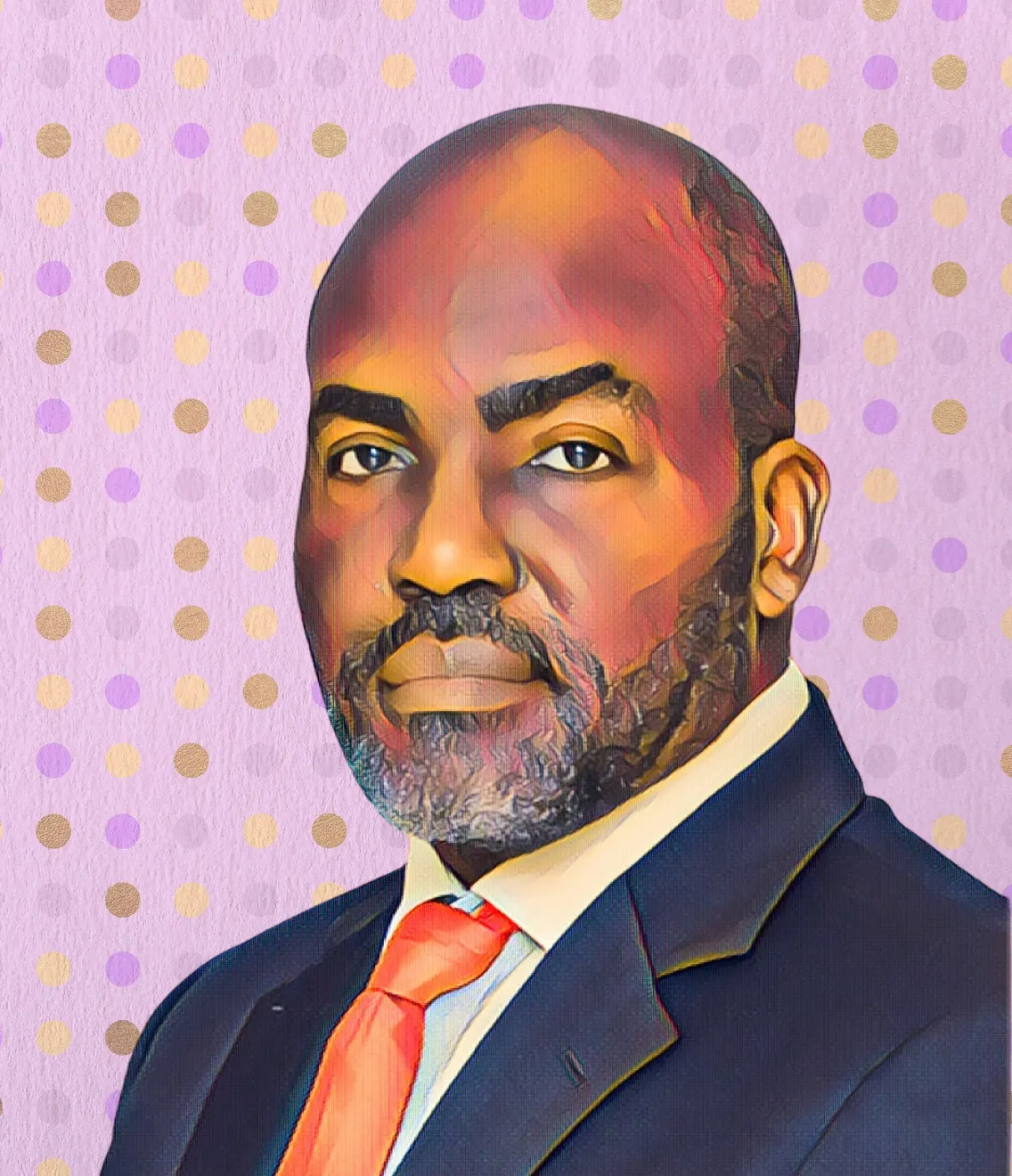
William Tewiah is not the kind of man who shows up in a sector with connections and capital and a family name that opens doors. He showed up with none of those things. No background in oil and gas. No network in Ghana's downstream petroleum industry. No university degree. What he had was 20 years of financial discipline earned in London's banking world, a clear-eyed question about why Ghanaian companies were not serving Ghana's own mining sector, and enough stubbornness to drive 300 kilometers each way to prove that they could.
Today ZEN Petroleum Holdings PLC, the company he founded in 2010 with a single mining contract worth half of Gold Fields' fuel supply needs, is listed on the Ghana Stock Exchange with a total market capitalisation of GHS 4.83 billion. It employs over 1,400 people, operates more than 63 retail service stations across Ghana, supplies nearly half of all fuel consumed by the country's major mining companies, distributes more than 30 million litres of petroleum products every month, and has expanded its operations into Burkina Faso, Mali, Guinea, Liberia, and Cote d'Ivoire. It has been named among the Financial Times' Africa's fastest-growing companies three years in a row, the only Ghanaian company to achieve that distinction three consecutive times.
The story of how it got there is worth telling in full.
200 Applications and a Factory Floor
Tewiah grew up in Ghana and moved to the United Kingdom, where he completed his A levels and, like many young men without university degrees in 1980s Britain, started out in a factory. He was not content to stay there. He sent out 200 job applications before Lloyds Bank finally offered him a position in 1987. That number is the first thing anyone who knows Tewiah's story reaches for, because it captures something essential about the man. Most people stop long before 200. Tewiah treated it as a process.
The Lloyds job was a start, but his real break arrived in 1994 when he secured a position as a management accountant at Merrill Lynch. From there the career accelerated through some of the most prestigious institutions in global finance. He worked as a senior analyst at UBS, a senior financial analyst at ABN Amro Investment Bank, a financial application consultant at the Bank of England, a business analyst at Credit Suisse, a senior business analyst at Schroders Asset Management, and a senior analyst at Deutsche Börse, where he played a central role in the Integrated Clearinghouse project. By the mid-2000s he had built the kind of CV that gets taken seriously anywhere in the world.
He walked away from it in 2008 and moved back to Ghana.
The Question Nobody Was Asking
When Tewiah arrived in Ghana and began working on what would become ZEN Petroleum in 2009, the downstream petroleum sector was structured in a way that had quietly become accepted as fixed. The country's mining companies, which consumed hundreds of millions of litres of clean diesel annually, were being served almost exclusively by multinational oil companies. Shell, Total, and other global operators had that business locked up. Ghanaian oil marketing companies existed, but they had not cracked the mining sector in any meaningful way. The prevailing assumption was that the mines required a level of service and reliability that only multinationals could deliver.
Tewiah looked at that assumption and started pulling it apart. The multinationals were buying their fuel from Ghanaian bulk distribution companies. They were using Ghanaian transporters to move it. The supply chain that supposedly required foreign expertise was already substantially Ghanaian. What was missing was a Ghanaian company willing to take on the contracting relationship directly and hold itself accountable to the same standards. Tewiah decided to be that company.
In 2010, ZEN won its first contract with Gold Fields, supplying 50% of the mine's fuel volumes. It was a significant commitment from a major mining client, and it came with enormous responsibility. Tewiah was not yet running a fleet. He was not yet managing a logistics operation with dozens of employees. In those early days, he was largely managing it alone, driving ahead of the tankers on the road to Tarkwa to make sure deliveries arrived correctly.
The company turned over $30 million in its first year. The profit on that was $20,000. The margins in the downstream sector are set by regulators, not operators, and ZEN was learning that the business was built on volume and reliability, not extraction. Tewiah kept going.
Building the Empire, One Subsidiary at a Time
ZEN's growth from that first Gold Fields contract to the diversified energy group that listed on the Ghana Stock Exchange in 2026 was deliberate and methodical. Each expansion into a new business line was driven by an operational need the company had already identified from inside its core fuel supply business.
ZEN Petroleum Limited, the original oil marketing company, remained the anchor. Around it, Tewiah built out a structure designed to control every link in the downstream supply chain. Astra Oil Services Limited was established as a bulk distribution company, giving ZEN the ability to import, distribute, and export petroleum products at the wholesale level. ZEN Terminals Limited was built around the acquisition of a major petroleum storage facility in Takoradi, which now operates with a capacity of 33,000 metric tonnes, the largest such facility in the city. ZEN Transport Limited was created to bring the company's trucking operations in-house, removing the dependency on third-party logistics providers. The group's logistics fleet now handles approximately 300 million litres of fuel annually across a road network that stretches from the coastal ports to the mining regions of the north.
The mining supply operation grew from Gold Fields to a position that now covers nearly the entire sector. ZEN has dedicated fuel storage depots at mining sites operated by Gold Fields in Tarkwa, Perseus in Ayanfuri, Asanko in Manso Nkran, Cardinal in Bolgatanga, and Newmont in Kenyasi. By the time of its IPO, ZEN was supplying approximately 49% of all fuel consumed by Ghana's major mining companies, a dominant position built without the multinational brand recognition that the sector had long assumed was a prerequisite for that kind of business.
The retail network came later but has expanded aggressively. ZEN now operates more than 63 service stations across Ghana. Bunkering services, supplying Marine Gasoil to vessels at the ports of Tema, Takoradi, and Sekondi, round out a business that is genuinely integrated from importation through to the end customer.
The All-Female Fleet That Went to London
One of the more distinctive chapters in ZEN's history began in 2017, when Tewiah and a colleague conceived of a logistics subsidiary that would be staffed entirely by female drivers. The concept was not a marketing exercise. Ghana had essentially no female heavy tanker drivers. The workforce would have to be created from scratch, trained from zero, and then deployed into one of the more physically demanding jobs in the downstream sector.
Ladybird Logistics Limited launched in 2018 with 50 women Bulk Vehicle Operators, all trained from the ground up. It was described at the time as the world's first all-female logistics fleet, and the designation appears to have held. The women were put through rigorous training and then deployed on the same routes, with the same performance expectations, as any other logistics operation. They delivered.
Ladybird Logistics subsequently earned recognition for Gender Equality and Inclusion at the Africa Sustainable Futures Awards, held by the Financial Times in partnership with the World Bank Group at a ceremony in London. The award validated what ZEN had demonstrated operationally: that the model worked, that the women delivered fuel reliably, safely, and on time, and that gender was not a limiting variable in a sector that had always assumed it was.
The Financial Times Took Notice Three Times
External validation of ZEN's growth came consistently from one of the most credible sources in global business journalism. ZEN Petroleum was named among the Financial Times and Statista ranking of Africa's fastest-growing companies in 2022, 2023, and 2024, three consecutive years. Only 17 companies across the entire African continent achieved three consecutive appearances on that list. ZEN was the only Ghanaian company among them.
The 2022 ranking placed ZEN 28th among Africa's fastest-growing businesses, with an absolute revenue growth rate of 159.6% and a compound annual growth rate of 37.4%, well above the minimum 7.99% CAGR required for inclusion. The three-year run on the list was not driven by a single exceptional year. It reflected a company that was growing consistently and structurally, not episodically.
Revenue, Profit, and What PwC Is Projecting
The financial performance over the three years to 2025 shows a company accelerating into its own momentum. Revenue grew from GHS 5.11 billion in 2023 to GHS 6.34 billion in 2025. Gross profit over the same period rose from GHS 414 million to GHS 780 million. Operating profit climbed from GHS 293 million to GHS 560 million, with operating margins improving from 5.74% to 8.83%. Profit for the full year 2025 reached GHS 436.7 million.
PricewaterhouseCoopers, acting as reporting accountants for the IPO, projected revenue reaching GHS 8.41 billion in 2026 and GHS 10.98 billion by 2030, with profit after tax forecast to keep pace as margins stabilise around 9%. These are projections, not guarantees, but they are grounded in a company that has consistently outperformed its own prior benchmarks.
The Listing and What Comes Next
ZEN Petroleum Holdings PLC was incorporated in December 2025 as the holding vehicle for the five subsidiaries, and it listed on the Ghana Stock Exchange on April 22, 2026, under the ticker ZEN. The IPO raised GHS 640 million against demand of over GHS 970 million, oversubscribed by 94%. At the listing ceremony, Tewiah framed the moment plainly. "Sixteen years ago, ZEN began with a simple but bold conviction, that a wholly Ghanaian company could compete, grow, and succeed in a sector largely dominated by multinational players. Today's listing is not the end of that journey; it is a new phase."
He has indicated plans to reduce his 80% personal holding over time through an employee share ownership scheme and further share sales, with a stated long-term target of bringing his stake to 50%. The 80% he holds today, worth GHS 3.87 billion at current prices, is already the largest individual equity position ever recorded on the Ghana Stock Exchange.
Tewiah did not come from oil. He came from 200 rejected job applications and a factory shift and 300-kilometer drives through Ghana's Western Region at the wheel of a vehicle he was learning to operate in an industry he was learning to understand. The Ghana Stock Exchange has now told him, and anyone paying attention, exactly what that was worth.
The intelligence satisfies curiosity. The paid briefings satisfy strategy.
Every Monday, Elite subscribers receive an Investor Memo breaking down the deal, the structure and the positioning behind the week's most consequential African wealth story - the kind of analysis that doesn't appear anywhere else.
Twice a month, a Wealth Intelligence brief profiles a single billionaire's holdings, cash flows and expansion pipeline in detail no public source matches.
→ Executive ($25/mo): Daily newsletter + Deep-Dive Reports
→ Elite ($75/mo): Everything above + Investor Memos + Wealth Intelligence + Quarterly Analyst Briefings
Subscribe now