

Table of Contents
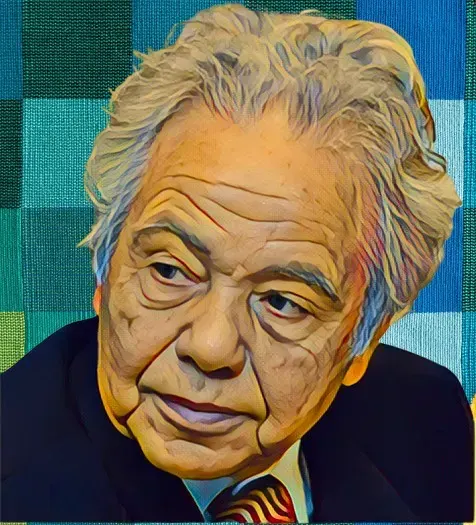
Before Algeria opened its economy, before the pharmaceutical industry existed as a private sector opportunity, and decades before foreign investors came looking for emerging market exposure in North Africa, Abdelmadjid Kerrar was already on his second industrial company.
That context matters. It explains why, when the window opened in 1991, he moved faster than anyone else and why Biopharm, the company he founded the following year, became something no other Algerian entrepreneur had managed to build in the pharmaceutical space: a vertically integrated drug manufacturer with international backing, a stock exchange listing and the scale to produce cancer treatments that Algeria had previously spent hundreds of millions of euros importing every year.
Kerrar's business career began in the 1960s with the creation of SACI, Société Africaine pour le Commerce International, through which he developed trade partnerships with China and other Asian countries at a time when Algeria's socialist economic model severely limited the scope of private activity. He was building cross-continental commercial relationships before they were fashionable, or even particularly viable.
In 1964, he founded CINCAP, Compagnie Industrielle des Caoutchoucs et Plastiques, a 100-employee manufacturer of plastic and rubber goods. Five years later, he created SAEG, a 600-employee industrial company manufacturing enameled iron consumer goods. Both businesses operated within the constraints of a command economy that kept private enterprise tightly bounded. He built within those constraints and waited.
The wait ended in 1991. When Algeria's economy began to open, Kerrar saw the pharmaceutical sector as the most structurally underserved opportunity in the country. Algeria was spending enormous sums importing drugs that could be manufactured domestically at a fraction of the cost. He founded Biopharm in 1992, starting as a medicine distributor before converting the business into a full pharmaceutical manufacturer. The shift from distribution to production was not incidental. It was the entire thesis.
The business scaled steadily. By 2012, Biopharm's annual turnover had reached $360 million, with a workforce of 1,500 employees. Then came institutional validation. In 2013, Biopharm opened 49% of its capital to a consortium of international investors including Development Partners International, Mediterrania Capital and the German development finance institution DEG. The transaction gave the company the capital and governance structure to expand beyond manufacturing into a full pharmaceutical group.
In September 2016, Biopharm became the fifth company to list on the Algiers Stock Exchange, with a market capitalization of approximately $290 million, accounting for 70% of the exchange's total market capitalization at the time. That figure alone illustrated how dominant Biopharm had become relative to the rest of Algeria's listed private sector.
Today, the group employs over 3,000 people and operates four advanced production units, manufacturing more than 200 products. The portfolio has expanded well beyond generic drugs. Biopharm has launched local production of anti-cancer medications previously imported at significant cost, building a facility with a 20 million-tablet annual capacity staffed by Algerian researchers. The cancer drug program represents the most strategically significant expansion in the company's history, replacing expensive imports with domestic output.
The group has diversified into Biopharm Distribution, Algérie Pharma, Biocare Laboratories, Biopure and Biopharm Logistic, creating a vertically integrated operation covering manufacturing, wholesale distribution, pharmacy distribution, medical information and logistics. The Kerrar Group, the broader holding vehicle, also holds investments in renewable energy, agriculture and real estate, extending the family's footprint beyond pharmaceuticals.
Annual revenues are now estimated at over $500 million, making Biopharm one of the largest privately held companies in North Africa by revenue. Kerrar's personal net worth is not publicly disclosed; his companies remain the primary measure of his standing.
In April 2025, Global Brands Magazine recognized Biopharm with its Excellence in Generic Medicine Development award for Algeria at the Global Brand Awards, an acknowledgment of three decades of consistent manufacturing quality. Kerrar also serves as vice-president of Algeria's Economic Renewal Council, bringing his industrial experience into the country's national economic planning architecture.
His son, Lies Kerrar, built a career in North American financial markets before returning to the family business, working across investment banking and fund management in Canada before taking a role in the group's holding structure.
Kerrar began his working life trading rubber goods and plastic products in a socialist economy that gave private business little room to move. Six decades later, his factories are producing cancer drugs that Algeria no longer has to import. The throughline is the same: find what the country needs, build it before anyone else does and keep building until the case is closed.
The intelligence satisfies curiosity. The paid briefings satisfy strategy.
Every Monday, Elite subscribers receive an Investor Memo breaking down the deal, the structure and the positioning behind the week's most consequential African wealth story — the kind of analysis that doesn't appear anywhere else.
Twice a month, a Wealth Intelligence brief profiles a single billionaire's holdings, cash flows and expansion pipeline in detail no public source matches.
→ Executive ($25/mo): Daily newsletter + Deep-Dive Reports
→ Elite ($75/mo): Everything above + Investor Memos + Wealth Intelligence + Quarterly Analyst Briefings
Subscribe now