

Table of Contents
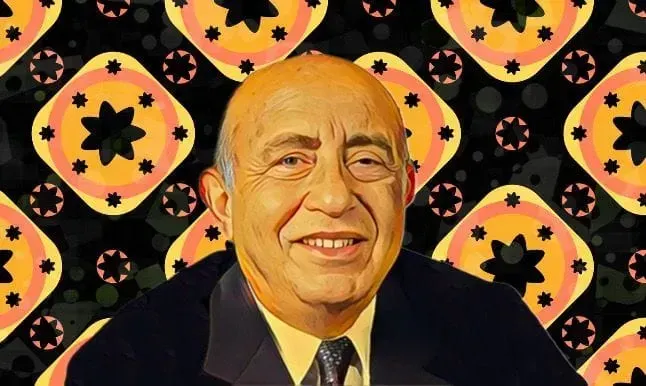
Youssef Mansour does not court attention. While his brother Mohamed has become Egypt's most visible businessman, shuttling between San Diego FC boardrooms and UK Conservative Party treasurer meetings, Youssef has spent five decades quietly doing the harder work, building the operational backbone of one of Africa's most diversified conglomerates from the inside out.
He is worth $1.4 billion according to Forbes, placing him among Egypt's top five wealthiest individuals. He is 80 years old. And the empire he helped rescue, rebuild and expand sits at the center of Egyptian commercial life in ways most consumers never pause to consider.
The story starts not with success but with loss.
A family business seized, then rebuilt
Loutfy Mansour founded Mansour Group in 1952 as a cotton trading company in Alexandria. He built it carefully, methodically. Then President Gamal Abdel Nasser nationalized it in 1964 under socialist economic policies that swept through private Egyptian enterprise, forcing the family out temporarily. Youssef was a teenager watching his father's life work disappear by government decree.
That experience did not break the family. It clarified something. When the political climate shifted in the 1970s and private enterprise was again permitted, Loutfy returned and began rebuilding. When he died in 1976, his sons took over. Youssef was 31.
He had studied textile technology and chemistry at North Carolina State University and followed it with an MBA from Auburn University in 1972. He had worked briefly in investment banking in New York. When he came home to Egypt in 1976, he came back with a different lens on the family business and a clear sense of what it could become.
Building Mantrac and Metro from scratch
In 1977, Youssef founded Mantrac and served as its chairman until 1992. That fifteen-year run transformed the subsidiary into the sole authorized dealer for Caterpillar equipment across Egypt and several African countries. Caterpillar machines dig mines, build roads and move earth across the continent. Positioning Mantrac as the exclusive dealer in multiple African markets was not a small bet. It was a structural play that locked in recurring revenue from infrastructure growth across the region for decades.
He then turned to retail. Youssef established Egypt's first local supermarket chain, Metro Markets, building it into one of the largest retail networks in the country. He also secured the sole distribution rights for L'Oreal in Egypt, adding a fast-moving consumer goods anchor to a portfolio that was growing in every direction simultaneously.
Youssef currently serves as chairman of Mansour Holding Company for Financial Investments, the group's financial services arm. He held the chairmanship of Mansour Automotive Company from 2006 to 2009, overseeing a business that sits at the heart of the Mansour Group's identity. The group is the largest General Motors dealer in the world, a fact that is easy to say and harder to fully absorb. Not in Egypt. Not in the Middle East. In the world.
A conglomerate built for the long term
The Mansour Group today employs approximately 60,000 people across operations in automotive distribution, consumer goods, machinery, retail, energy, finance, construction, shipping, defense, information technology and food. Revenue has exceeded $6 billion in recent reporting periods. The group is the second largest company in Egypt by revenue.
Youssef's domain within that structure is the consumer goods division. Metro supermarkets, L'Oreal distribution, retail infrastructure and the financial investments arm fall under his oversight. It is a quieter portfolio than the Caterpillar machines and GM dealerships that define the group's most visible operations, but it is the division that touches Egyptian daily life most directly.
The Mansour family story is one of the most instructive business narratives in African private enterprise. A cotton trading company founded in 1952, seized by the state, revived by a determined patriarch, then expanded into a global conglomerate by three brothers operating across completely different sectors with the same underlying discipline. Youssef is the least famous of the three. He is also, arguably, the one who understood earliest that the real work of building something lasting happens far from the spotlight.
The intelligence satisfies curiosity. The paid briefings satisfy strategy.
Every Monday, Elite subscribers receive an Investor Memo breaking down the deal, the structure and the positioning behind the week's most consequential African wealth story - the kind of analysis that doesn't appear anywhere else.
Twice a month, a Wealth Intelligence brief profiles a single billionaire's holdings, cash flows and expansion pipeline in detail no public source matches.
→ Executive ($25/mo): Daily newsletter + Deep-Dive Reports
→ Elite ($75/mo): Everything above + Investor Memos + Wealth Intelligence + Quarterly Analyst Briefings
Subscribe now