

Table of Contents
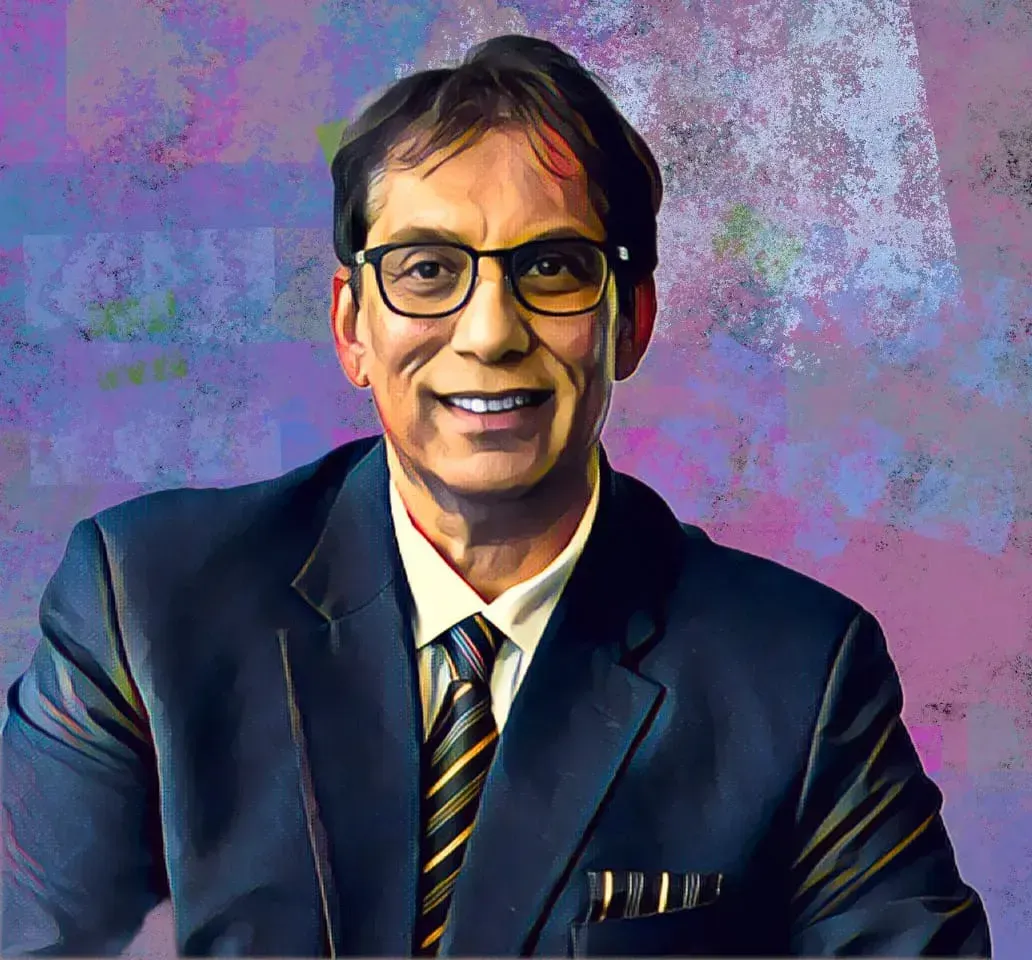
Iqbal Surve has stepped down as chairman of Sekunjalo Investment Holdings after more than two decades at the helm, ending an era for one of South Africa's most prominent diversified investment groups just as its linked digital publishing arm announces a R200 million ($12.4 million) shareholder-backed expansion drive.
The leadership change, which took effect May 1, was framed by Sekunjalo as the natural start of a new chapter. Zoliswa Kota-Mpeko, a founding member of the group and former deputy minister of Human Settlements, has taken over as chairperson. Lucien Jacobs, previously Sekunjalo's chief operating officer and chairman of Independent Media, has been appointed chief executive.
The timing could not be more loaded.
IOL, the digital publisher linked to the Sekunjalo orbit, has separately announced what it describes as a bold national expansion strategy, anchored by R200 million ($12.4 million) in shareholder funding. The company says the money will go toward building out digital infrastructure and AI-powered publishing tools, hiring at least 200 journalists, multimedia producers, designers and digital specialists, and launching a new flagship publication called The National, which it expects to go live later this year.
IOL chief executive Viasen Soobramoney said the investment was a "decisive vote of confidence" in South African journalism and that the company intended to become the country's biggest and most impactful digital publisher within three years.
In a local media market where newsrooms have spent years shrinking, the scale of that ambition is notable. Print circulation has collapsed across South Africa. Advertising revenue has drained toward global technology platforms. Most publishers have spent the past decade cutting rather than hiring. IOL's stated plan runs directly against that grain.
The company has also served formal notice to Independent Media that it intends to terminate the historic content partnership agreement under which it drew on the print titles' journalism for years. IOL says it now wants to build its own editorial operation independently, and has been operating with its own ownership structure and executive team since 2014, distinct from Independent Media, despite years of public conflation between the two.
Surve built Sekunjalo into a diversified investment holding company spanning aquaculture, technology, health sciences and other sectors over more than two decades. His acquisition of Independent Media in 2013, buying the print titles from Irish Independent, was the defining chapter of his public profile, putting newspapers including The Star, Cape Times and The Mercury under his control and sparking years of controversy over editorial independence and the group's relationship with state institutions. Sekunjalo itself is an investment company, not a media company. Its media holdings represent one strand of a broader portfolio.
Critically, Surve's departure from the chairmanship is a governance change, not an ownership change. He remains the sole surviving founding shareholder of Sekunjalo Investment Holdings, a position he has held since the other three co-founders sold their stakes years ago. Sekunjalo Investment Holdings is a privately held company and his precise personal equity percentage has never been publicly disclosed. What is documented is that Sekunjalo Investment Holdings owns 61 percent of African Equity Empowerment Investments, the JSE-listed public trading arm of the group, which in turn holds stakes in Ayo Technology Solutions and other listed entities. His personal stake in the unlisted parent at the top of that chain remains intact as far as the public record shows. As recently as April 1 this year, Sekunjalo's own website still identified Surve as "Chairman of the Sekunjalo Group" in a press release, raising questions about whether the May governance transition represents a clean break or a title adjustment.
That controversy has never fully subsided. In October 2024, the Press Council of South Africa expelled the Independent Media group, including IOL, for failing to comply with rulings regarding inaccurate and malicious reporting. The expulsion remains in effect. Major South African banks including Standard Bank and Nedbank have blacklisted and closed accounts linked to Sekunjalo entities following compliance and reputational assessments.
The R200 million ($12.4 million) expansion plan lands against that backdrop, with a series of substantive questions about its structure remaining publicly unanswered. Daily Maverick posed questions to IOL and Independent Media including which financial institution is hosting IOL's operational accounts and clearing the investment, given the banking exclusions; whether the funds involve any debt-for-equity swap arrangements or are unencumbered equity; and how the transaction is structured on the balance sheet of Sagarmatha Technologies, the ultimate owner of IOL, which has historically carried large unlisted asset impairments.
Neither IOL nor Independent Media had responded to those questions as of publication.
A separate legal matter has also resurfaced at a sensitive moment. The Supreme Court of Appeal recently corrected an error in the Southern African Clothing and Textile Workers' Union matter involving the Independent Media Consortium, the special purpose vehicle created in 2013 to hold shares in Independent Media on behalf of a broad-based consortium. The court's correction confirmed the application of the in duplum rule, which prevents interest from exceeding the capital amount owed, and reduced the amount claimed by the union from approximately R458 million ($28.3 million) to R300 million ($18.6 million), effective March 2026.
Sekunjalo has stressed that the Independent Media Consortium is a separate entity from both Sekunjalo and Independent Media. Jacobs said the original R150 million ($9.3 million) loan from the union was paid directly to the Public Investment Corporation as part of the acquisition transaction. Sekunjalo has itself instituted a counterclaim of approximately R620 million ($38.3 million) against the union in the Western Cape High Court, relating to a proposed workers' newspaper initiative that it says was never delivered.
Whether Surve's formal exit from the chairmanship creates genuine distance between the founder and his media interests remains an open question his continued ownership makes difficult to answer. His departure from the board chair role does not alter the underlying ownership structure of Sekunjalo or the ongoing legal and regulatory battles that have defined its public profile.
The National, when it launches, will do so carrying all of that history with it.
The intelligence satisfies curiosity. The paid briefings satisfy strategy.
Every Monday, Elite subscribers receive an Investor Memo breaking down the deal, the structure and the positioning behind the week's most consequential African wealth story - the kind of analysis that doesn't appear anywhere else.
Twice a month, a Wealth Intelligence brief profiles a single billionaire's holdings, cash flows and expansion pipeline in detail no public source matches.
→ Executive ($25/mo): Daily newsletter + Deep-Dive Reports
→ Elite ($75/mo): Everything above + Investor Memos + Wealth Intelligence + Quarterly Analyst Briefings
Subscribe now