

Table of Contents
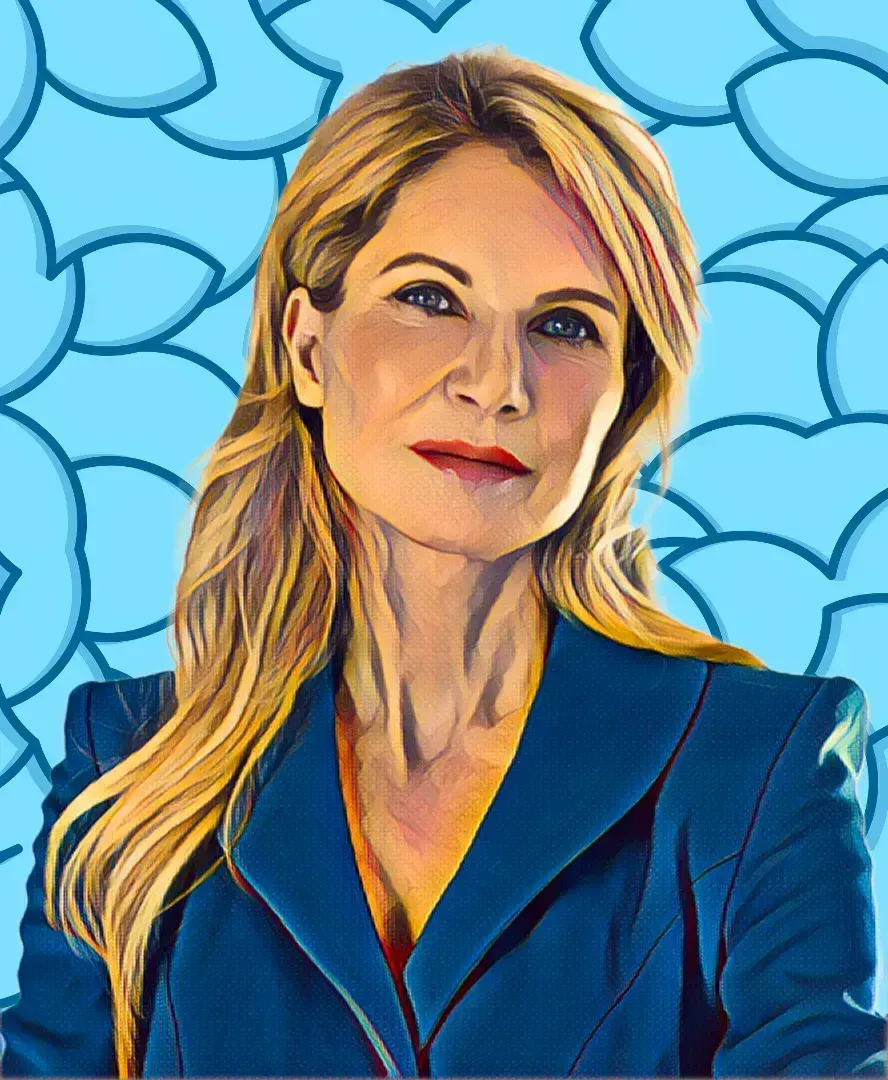
Magda Wierzycka, the founder and chief executive of Sygnia and one of Africa's richest women, says she would press a delete button on artificial intelligence if one existed — and is simultaneously launching a venture capital fund to invest in South African entrepreneurs building AI-based businesses.
The apparent contradiction is deliberate. Wierzycka, speaking on Moneyweb's RSG Geldsake radio programme, maintained her well-documented alarm about AI's impact on humanity while explaining that the technology's advance is now irreversible and that the only rational response is to ensure South Africa captures its upside rather than importing the systems that will reshape the country's economy from abroad.
"If she can't press delete, then she wants to enjoy first-mover advantage," was how News24 summarised her position after the broadcast.
The remarks are the latest in a running public argument Wierzycka has been having with the AI industry since attending the World Economic Forum in Davos in January. She left Davos shaken rather than inspired. "I was in Davos and the next big thing apart from Donald Trump was AI, and it was an eye-opener," she said in a February interview. "I only had one thought in my mind, and that was a big, giant delete button. Delete the whole lot; this is not heading in a good direction for humanity."
Her concerns go beyond the standard job displacement argument. After speaking with behavioural psychologists at Davos, Wierzycka said she became particularly alarmed about AI's effect on children and young people, warning of three long-term consequences she described as cognitive decline, erosion of problem-solving ability and a collapse of empathy. "You do not learn, and you forget how to process problems and engage with them. You just type it in and get an answer," she said. "You no longer deal with real people and their emotions, but rather a machine that tells you what you want."
Those remarks triggered a sharp public rebuttal from South African academics. Steven Boykey Sidley, a professor of practice at the University of Johannesburg, told radio station 702 that the claim AI had produced zero value for humanity was demonstrably incorrect. "It has already discovered new science, new drugs, and powered schools to give better outcomes for learners," Sidley said. OpenAI chief executive Sam Altman, whose company produces ChatGPT, has separately argued that AI will create a world of abundance that benefits everyone.
Wierzycka has not softened her position in response to the pushback. But she has made a commercial decision that runs parallel to her fears. Sygnia is launching a venture capital fund dedicated to South African founders building AI-based businesses, a move Wierzycka frames explicitly as a structural intervention rather than an endorsement.
"We have the same intellectual capital in South Africa that is available in the UK or US, but what we are missing is the structured capital behind it," she said when announcing the fund in February. "We are currently allowing founders of AI start-ups to leave South Africa and take their intellectual property with them." She returned to South Africa from the UK earlier this year, where she spent six years running a venture capital operation investing in start-ups.
The logic behind the fund does not require Wierzycka to believe AI is good for humanity. It requires only that she believes AI is coming regardless, that South African builders are competitive with their global peers, and that without local capital behind them those builders will take their intellectual property to London, San Francisco or Singapore and South Africa will end up importing the systems that run its own economy. It is an argument from competitive necessity rather than conviction.
Sygnia is South Africa's second-largest asset management company by some measures, with assets under management that have grown from 2 billion rand when Wierzycka took over as CEO in 2006 to more than 162 billion rand under her stewardship before her move to the UK. The company listed on the Johannesburg Stock Exchange on October 14, 2015. Wierzycka serves on the Africa Advisory Board of Harvard University's Center for African Studies and has been one of South Africa's most prominent corporate governance activists, most notably in her public campaign against corruption at state-owned enterprises during the Zuma era.
Her net worth, built primarily through her Sygnia shareholding, has been estimated at approximately $160 million to $200 million by various South African financial publications, though she is more typically described as Africa's richest self-made woman based on the scale of what she built from scratch rather than a single verified Forbes figure.
The AI fund launch date was not disclosed in the Moneyweb broadcast. Details on fund size and target investments are expected to be announced separately.
The intelligence satisfies curiosity. The paid briefings satisfy strategy.
Every Monday, Elite subscribers receive an Investor Memo breaking down the deal, the structure and the positioning behind the week's most consequential African wealth story - the kind of analysis that doesn't appear anywhere else.
Twice a month, a Wealth Intelligence brief profiles a single billionaire's holdings, cash flows and expansion pipeline in detail no public source matches.
→ Executive ($25/mo): Daily newsletter + Deep-Dive Reports
→ Elite ($75/mo): Everything above + Investor Memos + Wealth Intelligence + Quarterly Analyst Briefings
Subscribe now