


Table of Contents
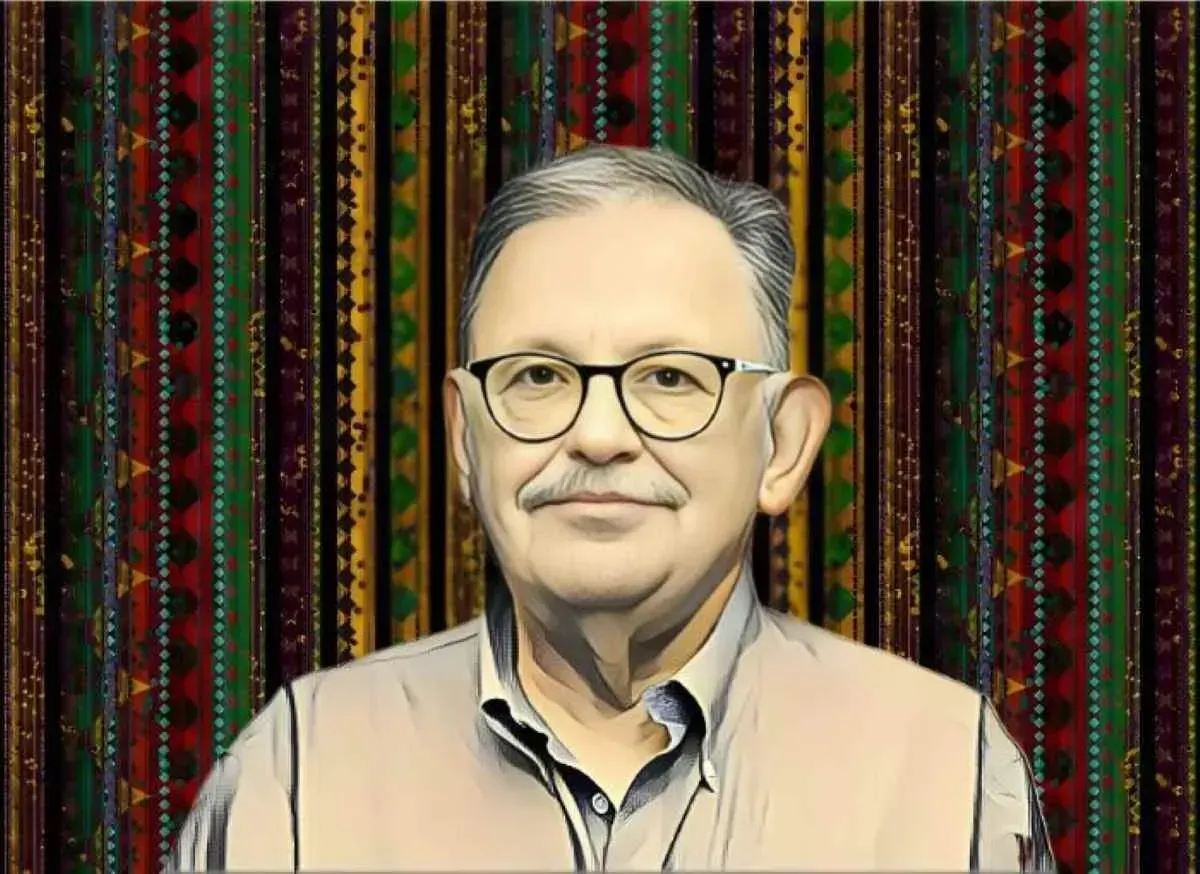
Rui Morais took over as chief executive of Dis-Chem Pharmacies in July 2023 and inherited a pharmacy empire built over 47 years by Ivan and Lynette Saltzman. His first major strategic decision was to start dismantling it. Not the business itself, but the model that built it.
Morais is driving what he calls an "internal disruption" at Dis-Chem, committing hundreds of millions of rands to three new ventures designed to transform the group from a pharmacy retailer into what he describes as South Africa's integrated healthcare provider and funder. The strategy, confirmed in an interview with Moneyweb published June 10, is built around three new platforms: X, the group's digital health ecosystem; bigly labs, a technology development arm; and Dis-Chem Life, its insurance and financial services offering. Together they represent the most significant strategic pivot in the company's history.
The pivot is expensive and it has cost the company real money in the short term. Morais has acknowledged that if Dis-Chem had avoided these investments over the past year and stayed with its core retail pharmacy business, it would have delivered earnings growth of more than 20 percent. Instead, the group reported a 17 percent plunge in headline earnings per share for the 2026 financial year and cut its final dividend by 43 percent. The share price fell nearly 8 percent when the results were released on May 29, 2026. Shareholders have not been shy about expressing their displeasure.
Morais is not apologising. His argument, made directly and without qualification, is that the alternative is worse. He asks management to look at what is happening in South African retail, specifically at the Shoprite Group's domination of the grocery sector, and asks a blunt question: stay safe and become irrelevant, or invest in disruption and remain competitive. "The alternative is to stay safe and become irrelevant over time," he told Moneyweb. "There are lots of examples in South African retail where that has happened."
The three-pronged ecosystem strategy reflects a specific commercial thesis. Morais believes that the traditional pharmacy retail model, in which customers visit a store to collect prescriptions and purchase health and beauty products, is being eroded from multiple directions simultaneously. Digital health platforms are drawing script customers away from physical pharmacies. Medical scheme dynamics are concentrating script volumes. The grocery retailers, led by Shoprite's Checkers, are expanding aggressively into health and beauty categories that Dis-Chem has historically owned.
His response is to build what he describes as a dual-role platform: a healthcare provider that also functions as a healthcare funder. Dis-Chem Life, the insurance subsidiary, is the funder dimension. X and bigly labs are the technology infrastructure that connects the funder and provider functions into an integrated service offering. The goal is to give a Dis-Chem customer a single relationship that covers their pharmacy needs, their health monitoring, their insurance product and their medical aid navigation, rather than requiring them to manage multiple separate institutional relationships.
The restructuring has also involved an organisational overhaul. Morais described what he inherited as a "founder-led, cross-functional leadership structure" that did not allow for clear lines of accountability. The reorganisation into clearer functional divisions with defined accountability is a precondition for the kind of scaled technology investment the new strategy requires.
Dis-Chem spent R5 billion ($301.7 million) on capital expenditure over the past five financial years, covering aggressive retail expansion, independent pharmacy acquisitions and the construction of major distribution and supply chain infrastructure. The hundreds of millions of rands now being invested in the ecosystem platforms add to that base, funding development at bigly labs and the commercial buildout of Dis-Chem Life alongside X's digital health features.
The company currently operates more than 300 stores across South Africa, employs 18,500 people and generated revenue of R42.83 billion ($2.58 billion) in the 2026 financial year, a 9.3 percent increase on the prior period. Cost of sales grew 10 percent to R33.42 billion ($2.02 billion). The revenue growth confirms that the core business is still performing. The earnings collapse confirms that the transformation is coming at a cost that management has chosen to absorb rather than avoid.
Whether that cost produces the integrated healthcare positioning Morais is targeting will be determined over the next three to five years. Dis-Chem has announced a new store format, unveiled in May 2026, which reflects the physical expression of the new model and will be rolled out across the existing store base in the period ahead. New stores will be opened. The ecosystem platforms will be extended. The shareholders who voted against the remuneration report in protest at the earnings decline will be watching closely to see whether the disruption Morais is engineering delivers on the returns he has promised.
The intelligence satisfies curiosity. The paid briefings satisfy strategy.
Every Monday, Elite subscribers receive an Investor Memo breaking down the deal, the structure and the positioning behind the week's most consequential African wealth story - the kind of analysis that doesn't appear anywhere else.
Twice a month, a Wealth Intelligence brief profiles a single billionaire's holdings, cash flows and expansion pipeline in detail no public source matches.
→ Executive ($25/mo): Daily newsletter + Deep-Dive Reports
→ Elite ($75/mo): Everything above + Investor Memos + Wealth Intelligence + Quarterly Analyst Briefings
Subscribe now