

Table of Contents
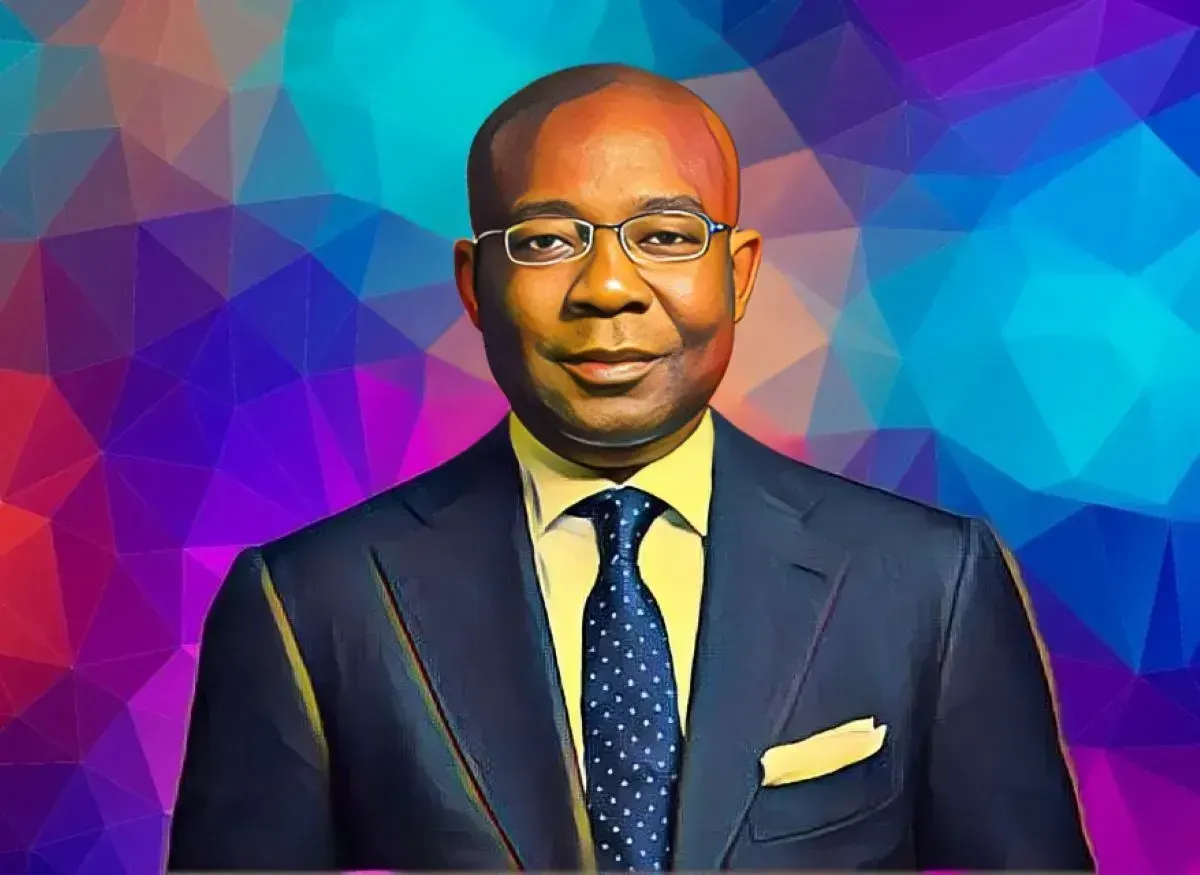
Aigboje Aig-Imoukhuede returned to Access Holdings in March 2024 to chair a bank he had already built once. He was pulled back by tragedy. His long-time friend and successor, Herbert Wigwe, died in a helicopter crash in California on February 9, 2024, alongside his wife and son. Aig-Imoukhuede, who had spent a decade building other things after stepping down as CEO in 2013, came back to steady an institution at a moment of genuine shock and uncertainty.
On Wednesday, June 10, 2026, at the group's fourth annual general meeting in Lagos, he spoke about the next chapter. He had a clear message for shareholders who have watched the bank's share price lag its peers despite a N1.007 trillion pre-tax profit and a N51.56 trillion balance sheet. The acquisition era is over. Now comes the returns.
"Our ambition was not for you to see our performance in the lens of Access is a great bank and compare us to GTCO or Zenith," he told financial journalists after the AGM. "Our ambition was for you to see us as Access is a great bank, compare us to Standard Bank of Africa."
It is an ambitious benchmark. Standard Bank of South Africa is the largest bank on the African continent by assets, with operations spanning more than 20 African countries and key international financial centres. It is widely regarded as the continental reference point for scale, profitability and cross-border financial services capability. Aig-Imoukhuede is saying that is the company Access Holdings intends to be measured against.
The context for that ambition is a 24-year acquisition programme that produced results and costs in roughly equal measure. Aig-Imoukhuede led the original acquisition of Access Bank in 2002, when it was a minor regional player with 10,000 customers, limited branch coverage and no meaningful national presence. By the time he stepped down as CEO in December 2013, the bank had 6.5 million customers, more than 20,000 employees and assets of approximately $12 billion. His successor Herbert Wigwe continued the inorganic strategy, executing the transformational merger with Diamond Bank in 2019, which made Access the largest bank in Nigeria by customer count overnight, and extending the group's footprint through acquisitions in Kenya, South Africa, Botswana and multiple other African markets.
In total, Access Holdings has executed 20 mergers and acquisitions between 2002 and 2025. Each one built scale. Each one also required fresh capital raises that diluted earnings per share, suppressed return on equity and contributed to the persistent discount at which the stock has traded relative to competitors whose balance sheets are smaller but whose earnings quality metrics are cleaner.
Aig-Imoukhuede acknowledged that dynamic directly. "We've done the scale stage of the evolution," he said. "Now we're doing the value part of it."
The most recent acquisition, a Mauritius-based bank that he cited at the AGM, is the last of its kind for the foreseeable future. He framed it as a transformational positioning move that temporarily pressures returns but opens corridors of cross-border business that most sub-Saharan African banks outside South Africa cannot access. Once the integration is complete, the mandate shifts.
"I want you, over the next three or four years, to come back and say, Access, we are tired of this high performance, we want to start acquiring again," he said. "That's what I want you to say. Then we will consider expansion of that nature."
Access Holdings' 2025 financial results are the foundation on which the value extraction narrative is built. The group reported gross earnings of N5.529 trillion, total assets of N51.56 trillion ($40 billion at N1,292 to the dollar) and profit before tax of N1.007 trillion, making it the first Nigerian bank in history to cross the N1 trillion pre-tax profit threshold. The numbers are large. The question Aig-Imoukhuede is now trying to answer is whether they are large in the right way, meaning whether they translate into the kinds of per-share returns and dividend consistency that drive institutional investor demand for the stock.
He confirmed that share reconstruction, a mechanism through which a company reduces its share count to concentrate earnings per share and lift the headline price, remains available to the board but is not the immediate priority. The timing, he said, is not right when the group has recently raised capital through equity. The instrument remains on the table.
The standard he has set for Access Holdings' next phase is explicit: Standard Bank's return on equity, Standard Bank's earnings per share and Standard Bank's cost of risk. Those are the metrics he wants shareholders to use when they evaluate the group's progress. The comparison is ambitious. Standard Bank has been building its pan-African platform for 170 years. Aig-Imoukhuede is proposing to compress the remaining distance in three to four years.
He was 35 years old when he led the 2002 acquisition that started all of this. He is 59 now and back in the chair. The building phase, by his own declaration, is complete. The test of what it produced begins now.
The intelligence satisfies curiosity. The paid briefings satisfy strategy.
Every Monday, Elite subscribers receive an Investor Memo breaking down the deal, the structure and the positioning behind the week's most consequential African wealth story - the kind of analysis that doesn't appear anywhere else.
Twice a month, a Wealth Intelligence brief profiles a single billionaire's holdings, cash flows and expansion pipeline in detail no public source matches.
→ Executive ($25/mo): Daily newsletter + Deep-Dive Reports
→ Elite ($75/mo): Everything above + Investor Memos + Wealth Intelligence + Quarterly Analyst Briefings
Subscribe now