

Table of Contents
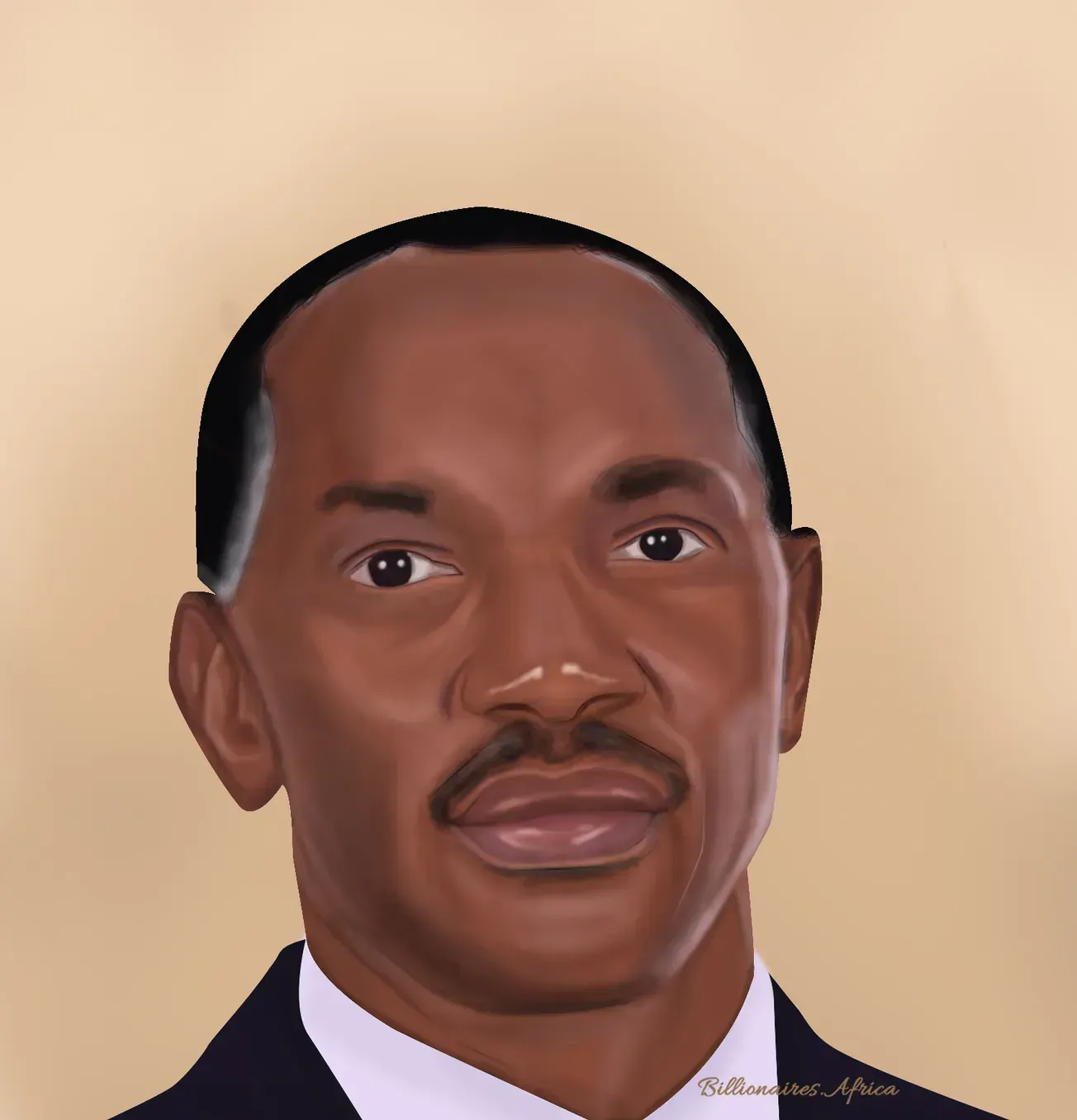
In January 2012, a private jet landed in Makhachkala, a city on the Caspian Sea that most Europeans could not have found on a map. Aboard was Samuel Eto'o, four-time African Player of the Year, treble winner with Barcelona, a man who had just signed a contract with Anzhi Makhachkala that made him the highest-paid footballer on earth. The deal was worth approximately €20 million per year after tax, roughly $29 million at the exchange rate of the time. More than Lionel Messi. More than Cristiano Ronaldo. More than anyone else in the history of the sport to that point. He would fly to Makhachkala twice a week for training and matches, then return to his home in either Barcelona or London. He would not live in Russia.
What Eto'o did in Makhachkala, and what he was paid to do it, became one of the most discussed transfers of the modern era. But the story people told about it was almost always about the money, as if that was the surprising part. It was not. The surprising part was the reasoning. Eto'o was 30 years old, still operating at elite level, and he had just spent a decade at the top of European football. He could have taken another Champions League club. He took a billionaire's vanity project in a city most of his peers had never heard of and extracted from it the largest salary the sport had ever produced.
That is who Samuel Eto'o Fils is. Not the player who scored the goals. The man who understood, better than almost any African footballer of his generation, that the window in which fame could be converted into wealth was finite, and that converting it required a different kind of intelligence than the one that made you a four-time African Player of the Year.
He was a teenager in Madrid who nobody wanted
Eto'o was born on March 10, 1981, in Nkon, a small town in Cameroon's Centre Region. He was one of seven children. His father worked in a small business, his family was not wealthy, and the path from Nkon to the highest levels of world football was not obvious. He made it through a combination of exceptional natural ability and an almost pathological refusal to accept limits.
He was spotted by Real Madrid scouts as a teenager and signed to the club's youth academy. The first years were difficult. He was loaned out repeatedly, to Leganes, Espanyol and then Mallorca, where he finally broke through, scoring 70 goals in 162 league games and establishing himself as one of the most dangerous forwards in La Liga. Real Madrid sold him to Barcelona in 2004 for approximately €24 million. It was, in retrospect, one of the more costly decisions the Spanish club ever made.
At Barcelona, under Frank Rijkaard and then Pep Guardiola, Eto'o became one of the greatest players of his era. He was part of the team that won back-to-back La Liga titles in 2005 and 2006 and the Champions League in 2006. Under Guardiola, he was part of the treble-winning squad of 2008-09, scoring in the Champions League final against Manchester United at Rome. He won the Spanish Super Cup, the Copa del Rey, the FIFA Club World Cup. He won the African Player of the Year award in 2003, 2004, 2005 and 2010, a record that stood for over a decade.
The Barcelona years made him wealthy. At his peak at Camp Nou, Eto'o earned approximately €7.5 million per year in basic salary, making him one of the club's highest earners. His image rights, endorsed primarily through Nike, added millions more. Nike paid him a contract estimated at between $1 million and $2 million annually during his Barcelona years, a figure that grew substantially after the 2006 Champions League victory as his profile expanded across Africa and into the Asian market.
The richest footballer on earth flew home twice a week
The Inter Milan years preceded Makhachkala. In 2009, Eto'o moved to Inter as part of the deal that sent Zlatan Ibrahimovic to Barcelona. At Inter, under Jose Mourinho, he won another treble in 2010, this time the Serie A, Coppa Italia and Champions League, making him only the second player in history to win the Champions League in consecutive seasons with different clubs. He earned approximately €7 million annually at Inter. It was a successful period commercially and competitively but it was the Anzhi deal that changed the architecture of his wealth.
His Anzhi Makhachkala contract paid him approximately €20 million, around $29 million, per year after tax. He spent 18 months in Russia before the club's billionaire owner Suleyman Kerimov suffered significant financial losses and stripped the project back. Eto'o left with most of his earnings intact. He was careful with the money in a way that African footballers of his generation were not always known to be. He did not blow it. He structured it.
He went to Chelsea on a one-year deal in 2013, then to Everton, Sampdoria, Anzhi again briefly, Antalyaspor in Turkey, where he reportedly earned €2.5 million annually, and then to Qatar. By the time he retired in 2019, his career earnings from playing contracts alone were estimated at approximately $70 million to $80 million net of agent fees. Combined with endorsement income, image rights and early investments, Celebrity Net Worth places his current fortune at $95 million, a figure consistent with multiple independent estimates.
The cursed villa and the wealth nobody talks about
The most famous property associated with Eto'o is a Villa in Portofino, on the Italian Riviera, that he has consistently denied owning. The story of the cursed mansion circulates in European football journalism with the persistence of legend: a property linked to his name, reportedly worth tens of millions, surrounded by rumors of disputed ownership and legal proceedings. Eto'o has addressed the claims directly on multiple occasions, stating that the property was never his and that the association between his name and the villa was a misrepresentation that damaged his reputation.
What he does own is more grounded. During his Barcelona years, he invested in residential property in Spain, and subsequently in Cameroon. He maintains properties in Spain and has made investments in Cameroonian real estate through vehicles connected to his Samuel Eto'o Foundation. The specific current value of his property portfolio has not been publicly confirmed, but his real estate holdings are generally estimated to represent a significant portion of his overall net worth.
His endorsement relationships extended well beyond Nike. Puma signed him during his later career years, and Pepsi ran campaigns featuring him during the peak of his Barcelona period. Combined, the major endorsement relationships across his playing career generated an estimated $10 million to $15 million in income, with individual annual deals ranging from approximately $1 million to $3 million during his highest-profile years.
He won four African Player of the Year awards and now runs the federation
In December 2021, Samuel Eto'o was elected president of the Cameroonian Football Federation, known as FECAFOOT. He won re-election for a second term in late 2025 and continues to lead the federation. The role is not salaried at a level that changes his financial position, but it is the platform from which he is attempting to do something that his playing career never required: institutional change.
Under his presidency, FECAFOOT has introduced meaningful operational reforms. Subsidies for Elite One and Elite Two clubs have increased, prize money for winners of the Cameroon Cup and League One championships has risen, salaries for male and female footballers have been raised, and women's football has seen the introduction of monthly salaries for the first time. Referees now receive payment. These are not glamorous interventions. They are the foundational infrastructure of a functional football ecosystem, and they matter in a country where the gap between the quality of footballing talent and the institutional support available to develop it has historically been enormous.
The presidency has also brought controversy. Eto'o received a six-month ban from FIFA in 2024 for conduct at a match during the FIFA U-20 Women's World Cup. He has faced allegations related to financial management at FECAFOOT, including claims about funds for international friendlies being directed to his personal accounts, allegations he has denied. A past tax fraud conviction in Spain, for which he served a conditional sentence and paid a fine, created complications around his eligibility to stand for re-election under certain interpretations of FECAFOOT's statutes.
The complications are real and they are part of the record. They have not stopped him from continuing to function as the most prominent and active football administrator Cameroon has produced, a man using the credibility of four African Player of the Year awards and a career that took him from Nkon to Barcelona to Makhachkala to Yaoundé.
What he built when the cameras stopped watching
The Samuel Eto'o Foundation, established during his playing years, focuses on healthcare, education and youth development in Cameroon and across Africa. The foundation has funded hospital infrastructure in Cameroon, supported educational programs for children in underserved communities and provided resources for youth football development on the continent.
Specific annual expenditure figures for the foundation have not been made public. What is clear from the programs it has operated is that the foundation functions as a genuine operational entity rather than a letterhead. Eto'o has been involved personally in hospital visits, school openings and community events throughout his post-playing years in a way that is consistent with the foundation's stated mission.
His son Etienne Eto'o is a professional footballer who has played in Spain, following a path that mirrors the beginning of his father's own career. The next generation carries the name forward in the sport. The current generation is building something different, an institutional presence in African football that his goals and his Anzhi salary could never have purchased, built on the credibility that both required.
The intelligence satisfies curiosity. The paid briefings satisfy strategy.
Every Monday, Elite subscribers receive an Investor Memo breaking down the deal, the structure and the positioning behind the week's most consequential African wealth story - the kind of analysis that doesn't appear anywhere else.
Twice a month, a Wealth Intelligence brief profiles a single billionaire's holdings, cash flows and expansion pipeline in detail no public source matches.
→ Executive ($25/mo): Daily newsletter + Deep-Dive Reports
→ Elite ($75/mo): Everything above + Investor Memos + Wealth Intelligence + Quarterly Analyst Briefings
Subscribe now