

Table of Contents
On the Mediterranean edge of Port Said, where the Suez Canal hands ships off to Europe, a tangle of steel towers does something quietly improbable. It takes propane, heats it, strips away hydrogen and turns the gas into propylene, then spins that into small white pellets of polypropylene. The plant was the first in the world to run the process at commercial scale. The pellets it makes end up, often enough, woven into the carpets that carry the Khamis name into more than 130 countries. The woman who signed off on the financing that built it does not run the carpet company. She built the machine that feeds it.
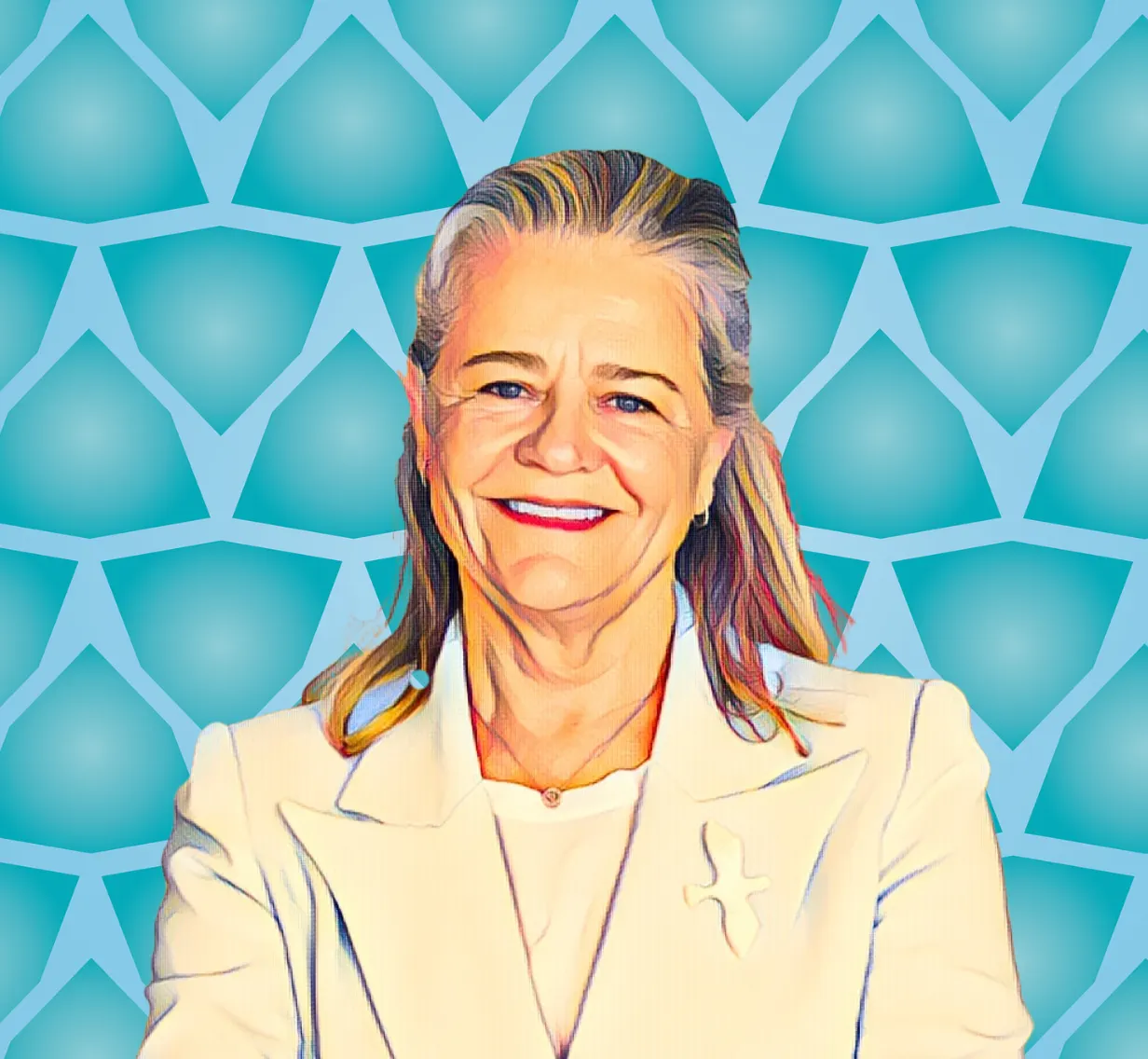
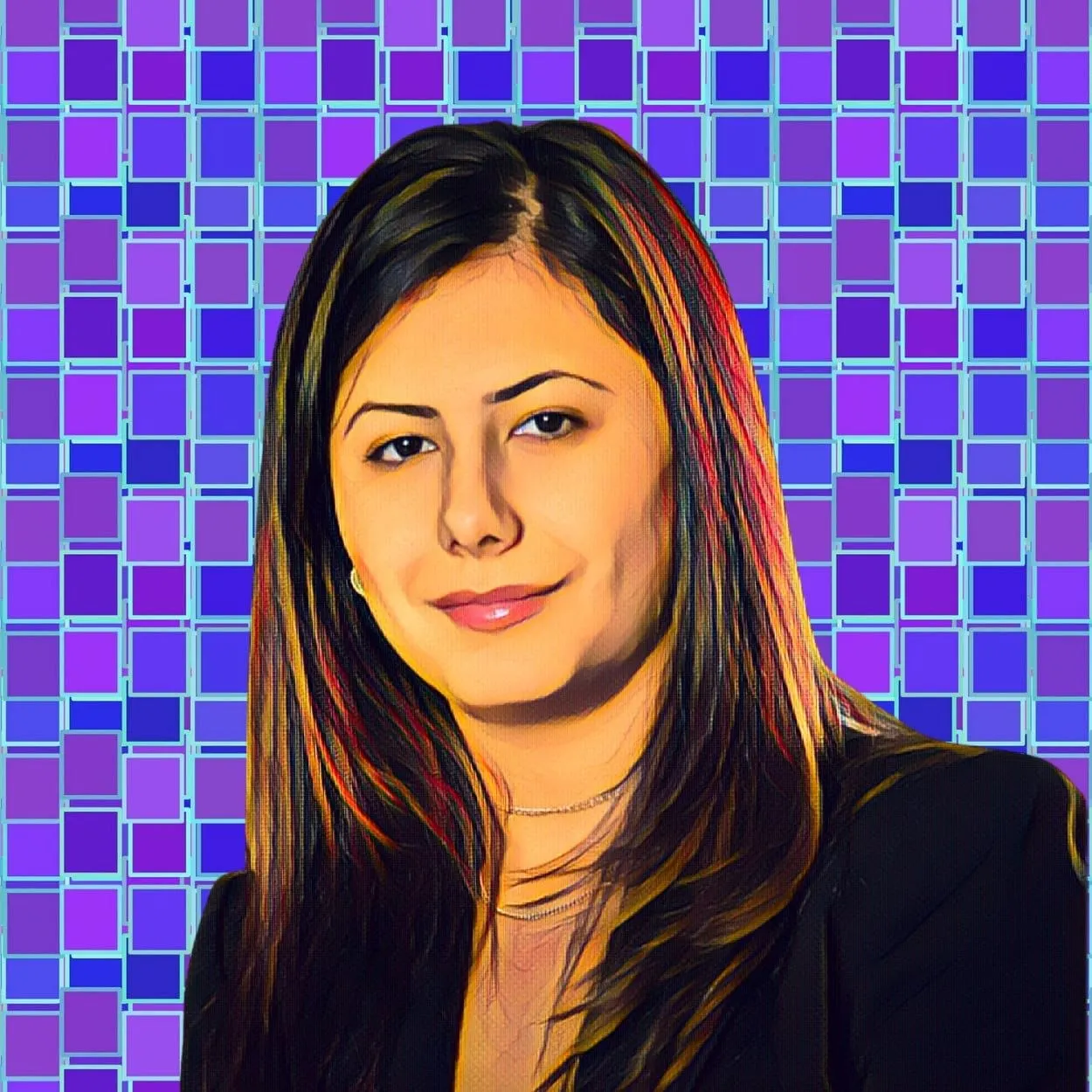
Farida Khamis is the member of Egypt's most famous textile dynasty who never reached for the loom. Her older sister, Yasmine, chairs Oriental Weavers, the Cairo company that grew from a single loom in 1979 into the largest maker of machine-woven carpets on earth. Farida took the harder, quieter machinery: capital, chemistry and a university. She is chair of the Egyptian Propylene and Polypropylene Company, chair of the British University in Egypt and chair of the family holding entity, the Orientals Group. Hers is the part of the empire that does not photograph well and rarely makes the trade press, which is precisely why it is so easy to underestimate.
That underestimation ended, in a sense, on Sept. 19, 2020. Mohamed Farid Khamis, the industrialist who founded Oriental Weavers and was often called the Talaat Harb of modern Egypt after the banker who industrialized the country a century earlier, died in a hospital in the United States after a long illness. He had started his working life at the National Bank of Egypt in the 1960s, left to build a textile business from a single loom and turned it into a company that listed on the Egyptian Exchange in 1997. He left behind not one business but a federation of them, and a question his children had to answer fast. Who would hold which crown.
The inheritance that split a dynasty
The answer was a clean division of labor that had, in truth, been forming for years. Yasmine kept the looms and the listed company. Farida took the petrochemicals, the financing and the school her father had founded. Within weeks of his death she succeeded him as chair of the British University in Egypt board of trustees. The split let each sister run toward what she already understood. Farida understood money and the machinery that turns oil into thread.
She had understood it for a long time. Farida graduated from the American University in Cairo with a degree in business administration and a minor in psychology, then cut her teeth inside regional and international investment banks before joining the family firm. Once inside, she built something the group did not have: an investor relations function, the discipline of explaining a private family's numbers to public markets. By her early 20s she and Yasmine were effectively helping run their father's company. Over nearly two decades she oversaw the group's investment portfolio and structured the international transactions that financed its expansion, work that culminated in the most capital-intensive bet the family ever made.
A wager on turning Egyptian gas into Egyptian carpet
The bet started with a problem. Oriental Weavers needed polypropylene, the synthetic fiber that had been quietly displacing wool on floors around the world, and Egypt did not make enough of it. In 2001 the family helped open Oriental Petrochemicals Company, the country's first polypropylene plant, on the Gulf of Suez. Oriental Weavers took the largest stake, about 22 percent, and bought roughly a third of the plant's output. The logic was vertical integration in its purest form. Control the raw material, control the cost, and the looms never go hungry. Within a few years the plant was moving to double its capacity, and the family was already sketching something far more ambitious: a facility that would make the propylene feedstock it had until then been forced to import.
The far bigger move came in 2005 with the Egyptian Propylene and Polypropylene Company, the venture Farida now chairs. Built on the Mediterranean at Port Said for roughly $680 million, it became Egypt's and North Africa's largest and only integrated polypropylene producer, with annual capacity of 350,000 tons. The plant makes its own propylene through propane dehydrogenation using a technology licensed from Uhde, the STAR process, which the company says was the first commercial deployment of that specific process anywhere in the world. The significance runs deeper than carpet. In a country that imports much of its plastics, a domestic producer of this scale is an import-substitution asset of national weight, and Farida's name sits at the top of its board. Sitting near the mouth of the Suez Canal, the complex can ship into both Europe and Asia, and it slotted into a long state effort to build a homegrown petrochemical industry rather than buy the chemistry abroad. The petrochemical arm is the clearest statement of her commercial philosophy: own the upstream, and the downstream takes care of itself.
Where the fortune still lives, 56.58 percent of a carpet giant
The carpets remain the cash. The Khamis family controls 56.58 percent of Oriental Weavers, a stake of roughly 376 million shares whose market value moved past $176 million in mid-2025 as the company valuation climbed beyond $312 million on the Egyptian Exchange. The business behind those numbers is genuinely global. It built that reach from one loom, and today runs plants in Egypt and the United States, sells into more than 130 countries and keeps a large showroom network across Egypt, vertically integrated from fiber to finished rug. Its scale shows in the top line. Revenue hit a record $725.2 million (EGP11.4 billion) in 2021 and reached $571.53 million (EGP17.66 billion) in 2023, even as a brutal currency devaluation reshaped the math.
Farida's personal hold on that fortune runs partly through a vehicle few outside Cairo's brokerages would recognize. In December 2022 she and Yasmine each moved a 12.3 percent slice of Oriental Weavers, worth a combined $55.8 million (EGP1.375 billion), into FYK Limited, a family investment company. The transfer lifted FYK's stake to 24.61 percent and made it a leading shareholder in the carpet maker. The maneuver was less about cashing out than locking in, consolidating the bloodline's grip on the company into one disciplined holding structure of the kind Farida has spent her career building.
The fortune still pays out in cash. For 2025 Oriental Weavers approved dividends of $18.3 million (EGP997.66 million), of which the family controlling stake entitles it to roughly $10.35 million (EGP564.36 million). The payout came against softer earnings. Net profit slipped about 11 percent to $42.7 million (EGP2.26 billion) as the pricing windfall from Egypt's March 2024 devaluation faded, and the first quarter of 2026 brought revenue of $130.3 million (EGP6.9 billion) and net profit of $11.6 million (EGP614 million), early evidence of a business steadying itself. Farida sits on the boards of the carpet subsidiaries that generate it, from Oriental Weavers International to the group's American operation.
A campus King Charles opened, now hers to steady
The asset that may matter most to Farida personally does not trade on any exchange. The British University in Egypt, founded by her father through a 1998 agreement between the Egyptian and British governments, sits on a 60-acre campus in El Shorouk City east of Cairo and teaches more than 12,000 students. It opened in 2005 with 200 undergraduates and now spans faculties from dentistry and pharmacy to engineering, business and law, awarding dual degrees validated by British partner universities. It is the only university in Egypt and North Africa accredited by the United Kingdom Quality Assurance Agency, and it was inaugurated in 2006 by the then-Prince Charles, now King Charles III, alongside Egypt's first lady at the time. Its honorary chancellor is the celebrated heart surgeon Sir Magdi Yacoub. When her father died, Farida inherited the chair of its board, and with it the job of steering a private university through the worst currency crisis in Egypt's modern history, a stretch in which the pound lost roughly half its value and tuition became a luxury for many families. The university is not a profit machine. It is the part of the legacy she seems least willing to let slip.
That instinct shows up elsewhere. Farida co-founded and chairs the Khayrazad Organisation for Social Care, which she has run since 2007 and which directs funds toward healthcare initiatives across Egypt. The work sits inside a broader family tradition of giving that her father built into the business itself, treating social responsibility as a duty of capital rather than a marketing line. At the university, that philosophy translates into scholarships and financial aid that have kept the doors open to students the devaluation might otherwise have priced out. The organization keeps a deliberately low profile, channeling money toward clinics and care rather than headline causes, which mirrors how Farida runs the rest of her portfolio.
Her reach has widened beyond the family entities. She serves as an independent non-executive director at Rameda, the Tenth of Ramadan pharmaceutical and diagnostics company, a seat she took in 2020, and she joined the board of Endeavor Egypt, the local arm of the global high-impact entrepreneurship network. Forbes ranked her among the 100 most powerful Arab businesswomen every year from 2017 to 2021, and in 2022 placed her and Yasmine together at 27th on its list of the most powerful women in the Middle East. The recognition tends to frame the sisters as a pair, which obscures how different their jobs actually are. The Endeavor seat, in particular, puts a second-generation industrialist in the room with the founders trying to build Egypt's next generation of companies, a long way from the family loom.
The current moment finds the dynasty pivoting hard. Under Yasmine, Oriental Weavers has leaned into digital reinvention, rolling out what it bills as the world's first AI-powered carpet showroom and a unified e-commerce platform, a striking move for a business that has made a stubbornly physical product since 1979. Farida's domains face a quieter test. Petrochemical margins swing with oil and the pound, and a university dependent on tuition must hold its standards while the economy squeezes its customers. The work suits her. She has always been the one in the family who reads the balance sheet before the room.
Back at Port Said, the towers keep cracking gas into pellets, a $680 million answer to a question Farida Khamis started asking in her 20s about who should control the things a fortune depends on. The carpets made the family famous. The machinery beneath them, the chemistry and the capital and the school, is the part she chose to own. It is, by design, the part that does not show.
The intelligence satisfies curiosity. The paid briefings satisfy strategy.
Every Monday, Elite subscribers receive an Investor Memo breaking down the deal, the structure and the positioning behind the week's most consequential African wealth story - the kind of analysis that doesn't appear anywhere else.
Twice a month, a Wealth Intelligence brief profiles a single billionaire's holdings, cash flows and expansion pipeline in detail no public source matches.
→ Executive ($25/mo): Daily newsletter + Deep-Dive Reports
→ Elite ($75/mo): Everything above + Investor Memos + Wealth Intelligence + Quarterly Analyst Briefings
Subscribe now