


Table of Contents
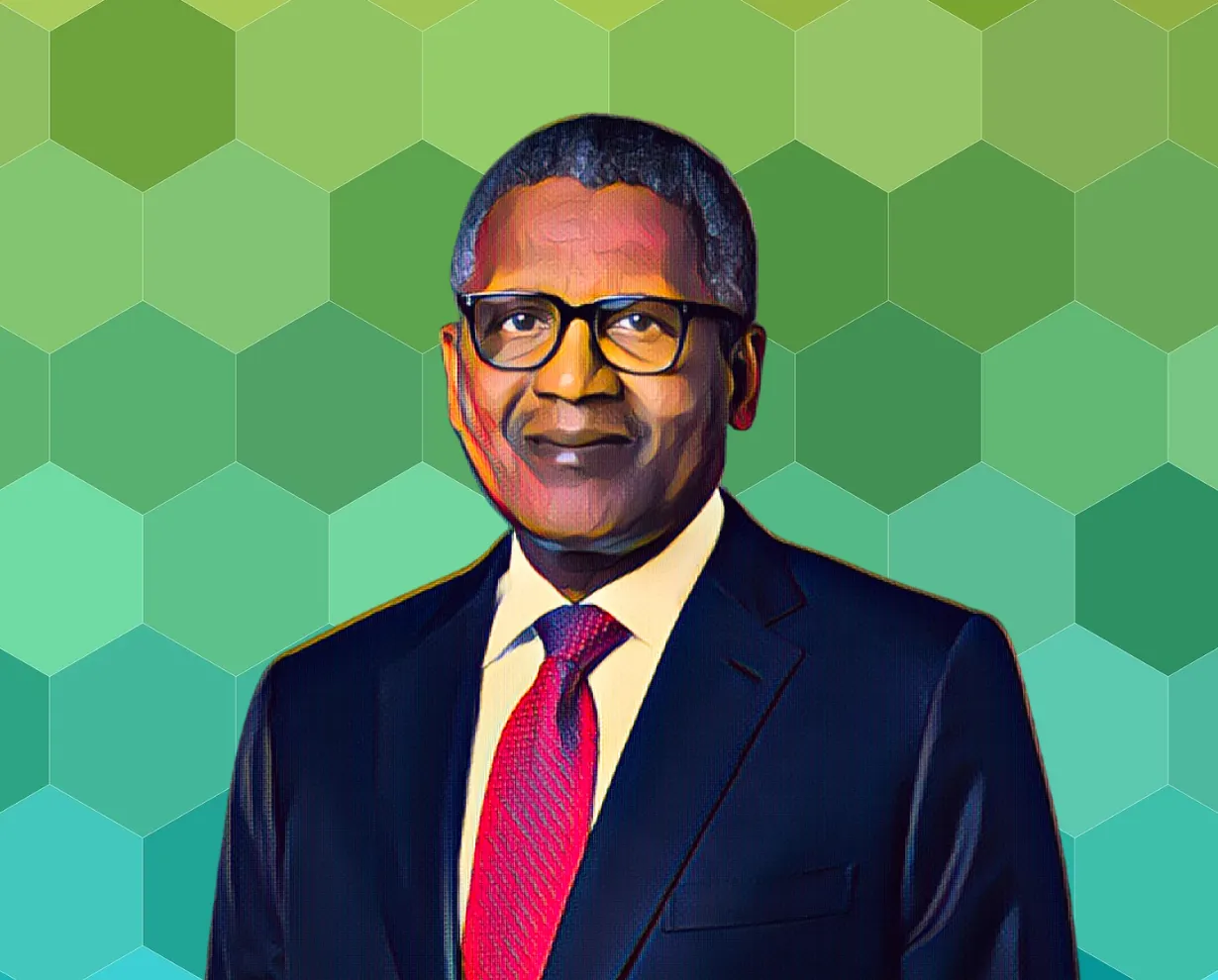
Baba Ahmadou Danpullo, the richest man in francophone sub-Saharan Africa, is preparing to stake nearly his entire personal fortune on a single bet: that Cameroon needs an airline more than its government has been able to deliver one, and that he is the man to build it.
The 76-year-old billionaire has announced plans to invest 500 billion FCFA, approximately $900 million, in the creation of Danpullo Air Line, a private carrier designed to connect all ten regions of Cameroon and ultimately link Yaoundé and Douala to the major cities of the CEMAC economic zone, which includes Cameroon, Congo, Gabon, Equatorial Guinea, the Central African Republic and Chad. The figure is almost identical to Forbes Africa's most recent estimate of Danpullo's total net worth, at approximately 547 billion FCFA, meaning the project represents a commitment that approaches the entirety of his accumulated wealth across real estate, telecommunications, agriculture and transport.
What distinguishes the plan from previous attempts to crack open Central Africa's underdeveloped aviation market is its infrastructural ambition. Danpullo Air Line will not simply lease aircraft and operate out of existing airports. The project includes the construction of two private airports, one in Yaoundé and one in Douala. Construction on the Yaoundé facility is scheduled to begin in September 2026, with commercial service targeted for 2030. Financing for the project is structured around a combination of Danpullo's own capital, independent investors, and commitments from American and European banks, according to sources close to the matter cited by Cameroonian outlet Camer.be.
The timing is not accidental. Cameroon's national carrier, Camair-Co, remains the country's only other significant airline, and its operational difficulties have become a recurring source of public frustration. The carrier's fleet has aged to an average of 19.7 years, profitability has remained precarious for years, and in September 2025 the airline was forced to lease a Boeing 737-800 from Czech carrier Smartwings simply to maintain scheduled operations. It is into that vacuum that Danpullo is moving, positioning a privately funded carrier as the answer to a gap the Cameroonian state has been unable to close.
Danpullo's own trajectory makes the scale of the ambition somewhat less surprising than it might first appear. Born in 1950 into a modest Fulani Muslim family in Cameroon's Northwest Region, he began as a truck driver and small shopkeeper before securing import licences for rice and flour in the 1980s after impressing the country's then Minister of Economy and Planning with his ability to mobilise capital quickly. Those licences became the foundation of an empire that now spans Ndawara Tea Estates, one of Central Africa's largest tea producers; a 49 percent stake in Nexttel, Cameroon's third-largest mobile network operator; one of South Africa's largest privately held commercial real estate portfolios, including office towers and shopping centres in Johannesburg, Cape Town and Port Elizabeth; and minority stakes in state-linked enterprises including Sodecoton and Cameroon's national airports authority.
His career has not been without controversy. In 2022, South African authorities seized assets linked to Danpullo valued at more than 500 billion FCFA in connection with a dispute over a 12 billion FCFA loan. He has also been entangled in shareholder disputes surrounding Nexttel, disputes that critics now point to when questioning whether a businessman who has struggled with the governance of a telecommunications operator can successfully execute an infrastructure project of the scale and technical complexity that an airline and two greenfield airports represent.
The challenges facing Danpullo Air Line are substantial on every front. The capital requirement alone, even with international bank participation, exposes Danpullo to extraordinary financial risk for a single venture. The regulatory and construction hurdles involved in building two private airports from scratch, including land acquisition, environmental approvals and aviation safety certification, are formidable in any market and particularly so in Cameroon, where major infrastructure projects have a well-documented history of delay. And once operational, Danpullo Air Line would face established international competition from Air France, Brussels Airlines, Turkish Airlines and Royal Air Maroc, all of which already serve Cameroon with established route networks and customer bases.
If the project succeeds, Cameroon would become the first country in Central Africa to host a major privately owned airline, a milestone that would mark a significant departure from the state-carrier model that has defined African aviation for decades and that has produced, across the continent, a long list of national carriers that have struggled financially or collapsed entirely. The Danpullo project also fits a broader pattern emerging across the continent, in which African billionaires who built their fortunes in energy, telecommunications and real estate are increasingly turning to aviation and large-scale transport infrastructure as the next frontier for private capital deployment, a trend visible in moves by wealthy individuals and conglomerates from Lagos to Nairobi seeking to fill gaps left by underperforming state carriers and underfunded public infrastructure programmes.
Whether Danpullo can execute at the scale his announcement implies remains the central open question. He has built his career on a willingness to commit capital aggressively at moments others considered too risky, a pattern visible in his decision to double down on flour milling capacity during Africa's 2015 economic downturn rather than retreat. Danpullo Air Line, if it proceeds as announced, would be by far the largest and most technically demanding bet of that career, one that would either cement his legacy as the man who solved Central African aviation or expose the limits of what even Francophone Africa's wealthiest individual can build with capital alone.
The intelligence satisfies curiosity. The paid briefings satisfy strategy.
Every Monday, Elite subscribers receive an Investor Memo breaking down the deal, the structure and the positioning behind the week's most consequential African wealth story - the kind of analysis that doesn't appear anywhere else.
Twice a month, a Wealth Intelligence brief profiles a single billionaire's holdings, cash flows and expansion pipeline in detail no public source matches.
→ Executive ($25/mo): Daily newsletter + Deep-Dive Reports
→ Elite ($75/mo): Everything above + Investor Memos + Wealth Intelligence + Quarterly Analyst Briefings
Subscribe now