


Table of Contents
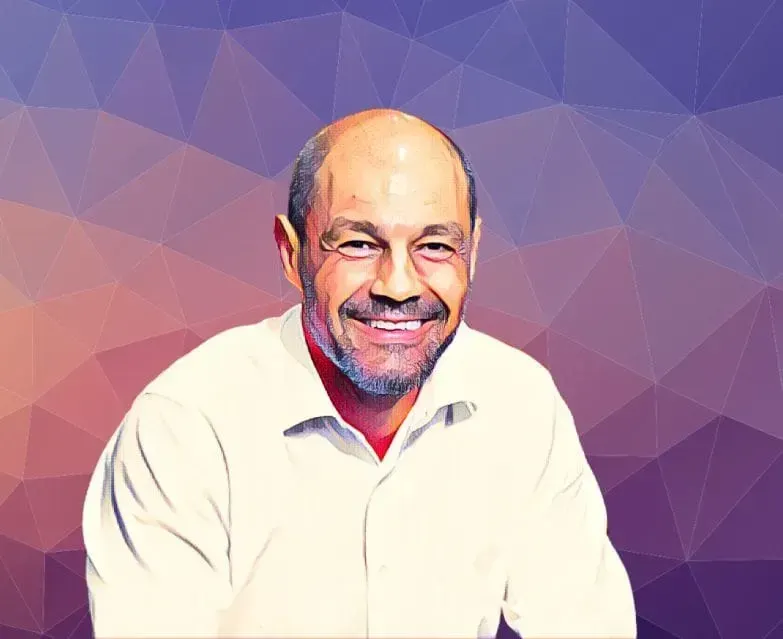
The Wapnick family owns 100,419,836 shares in Octodec Investments, about 37.7% of the Johannesburg-listed property company Alec Wapnick founded in the 1950s. At 1,740 cents a share, that holding is worth R1.75 billion, or $108.3 million at 16.13 rand to the dollar.
A rival property fund has spent R892 million buying into the same company, and the board told shareholders not to sell.
Emira Property Fund is a Johannesburg-listed real estate investment trust, a company that owns rent-producing buildings and is required by law to distribute most of its income to shareholders rather than retain it. Emira owns Wonderpark Shopping Centre in Pretoria and holds residential rental stock through Transcend Residential Property Fund, which it took over completely in early 2024.
On April 13 it disclosed that a wholly owned subsidiary called Freestone Property Investments had bought 53,698,356 Octodec shares, 20.17% of the company, for R891.77 million in a series of off-market transactions. The sellers were institutional fund managers including Abax, Sanlam and Old Mutual Investment Group.
Emira then launched a voluntary offer for a further 39.2 million shares at 1,675 cents each in cash, which would have taken it to 34.9%. That number was chosen deliberately, sitting just below the 35% threshold in South Africa's Companies Act at which a buyer must offer to purchase every remaining share.
Octodec's board refused to co-operate. Its directors said publicly they were told of the purchase only shortly before Emira announced it, that Emira never formally engaged them before launching the offer, and that the price undervalued the company. They said they would not sell their own shares.
The offer closed on May 14 well short of its target, lifting Emira to 23.5% rather than 34.9%. James Day, Emira's chief executive, said he was pleased to have surpassed the goal of a strategic 20% stake.
While that was happening, the Wapnicks were putting more money into the ground almost nobody else wants.
Octodec is doubling down in Pretoria's inner city, where it owns more than 100 buildings, several of which have stood empty for years and are now being repurposed or redeveloped. The Financial Mail described the approach as bold and brave, in a market where poor municipal service delivery and deteriorating infrastructure have driven most institutional investors out of Gauteng's central business districts entirely.
That portfolio is what makes Octodec unusual. It is the only real estate investment trust on the Johannesburg exchange focused exclusively on Gauteng, and one of very few with substantial exposure to residential rental housing rather than offices or malls. It owns 246 properties, roughly two-thirds in Pretoria and a third in Johannesburg, with gross lettable area above 1.5 million square metres, and its tenants are largely ordinary residents and small businesses in city centres the market has written off.
The buildings are managed by City Property Administration, a separate Wapnick family company that employs close to 400 people and runs more than 600 buildings. The family therefore owns the assets through Octodec and collects fees for managing them through City Property, a related-party arrangement that has been in place since the businesses were listed.
Alec Wapnick built all of it. He brought the family's property companies to the Johannesburg exchange in the early 1990s and grew their assets toward R7 billion before stepping back from the chairmanship more than a decade ago, saying at the time that he would keep working on acquisitions.
His children run it now. Jeffrey Wapnick, 65, joined the Octodec board in October 1998 and is chief executive. Sharon Wapnick, 63, became chairman in September 2011, having led the redevelopment of the cinema complex at Killarney Mall. Riaan Erasmus became finance director in November 2024.
The company took its present shape through a reverse merger in 2014, when Premium Properties acquired Octodec and both Premium and IPS Investments became wholly owned Octodec subsidiaries, at 88.5 Octodec shares for every 100 Premium linked units. The Wapnicks held 43% of Octodec and 29.9% of Premium going in and gave binding undertakings to support it.
What attracted Emira is the gap between what Octodec owns and what the market pays for it. The property portfolio has been valued at around R11 billion against a market capitalisation near R4.5 billion. The share price has risen 81% over twelve months and touched a seven-year high around 1,700 cents, helped by improved operations, inclusion in the all property index and the sale of Killarney Mall in February for R397.5 million after years of underperformance. It still trades roughly 30% below a net asset value of 2,455 cents.
Emira is itself controlled. Castleview Property Fund, listed on the Johannesburg exchange's AltX board for smaller companies, holds about 60% of Emira and is led by James Templeton, who ran Emira before Day. Day joined from Castleview, where he was finance director, replacing Geoff Jennett in July 2025. Castleview also holds a stake in Collins Property Group, the company formerly called Tradehold that once housed the offshore property interests of the retail billionaire Christo Wiese.
Octodec's earnings have been difficult. Headline earnings per share fell 37% in the year to August 2023 on revenue up 2.2%, though net asset value rose 4.1% and the company held its distribution guidance. The stock trades on a price-to-earnings ratio around 8.4 and yields about 7.4%.
Emira has said it will engage with Octodec as a significant minority shareholder on ways to create value in the portfolio. Evan Robins, listed property portfolio manager at Old Mutual Investment Group, has said it is possible Emira will raise its offer at some point, and that Emira's ultimate intention is unclear.
The Wapnicks hold 37.7%. Emira holds 23.5%. Neither has said what happens next.
The intelligence satisfies curiosity. The paid briefings satisfy strategy.
Every Monday, Elite subscribers receive an Investor Memo breaking down the deal, the structure and the positioning behind the week's most consequential African wealth story — the kind of analysis that doesn't appear anywhere else.
Twice a month, a Wealth Intelligence brief profiles a single billionaire's holdings, cash flows and expansion pipeline in detail no public source matches.
→ Executive ($25/mo): Daily newsletter + Deep-Dive Reports
→ Elite ($75/mo): Everything above + Investor Memos + Wealth Intelligence + Quarterly Analyst Briefings
Subscribe now