


Table of Contents
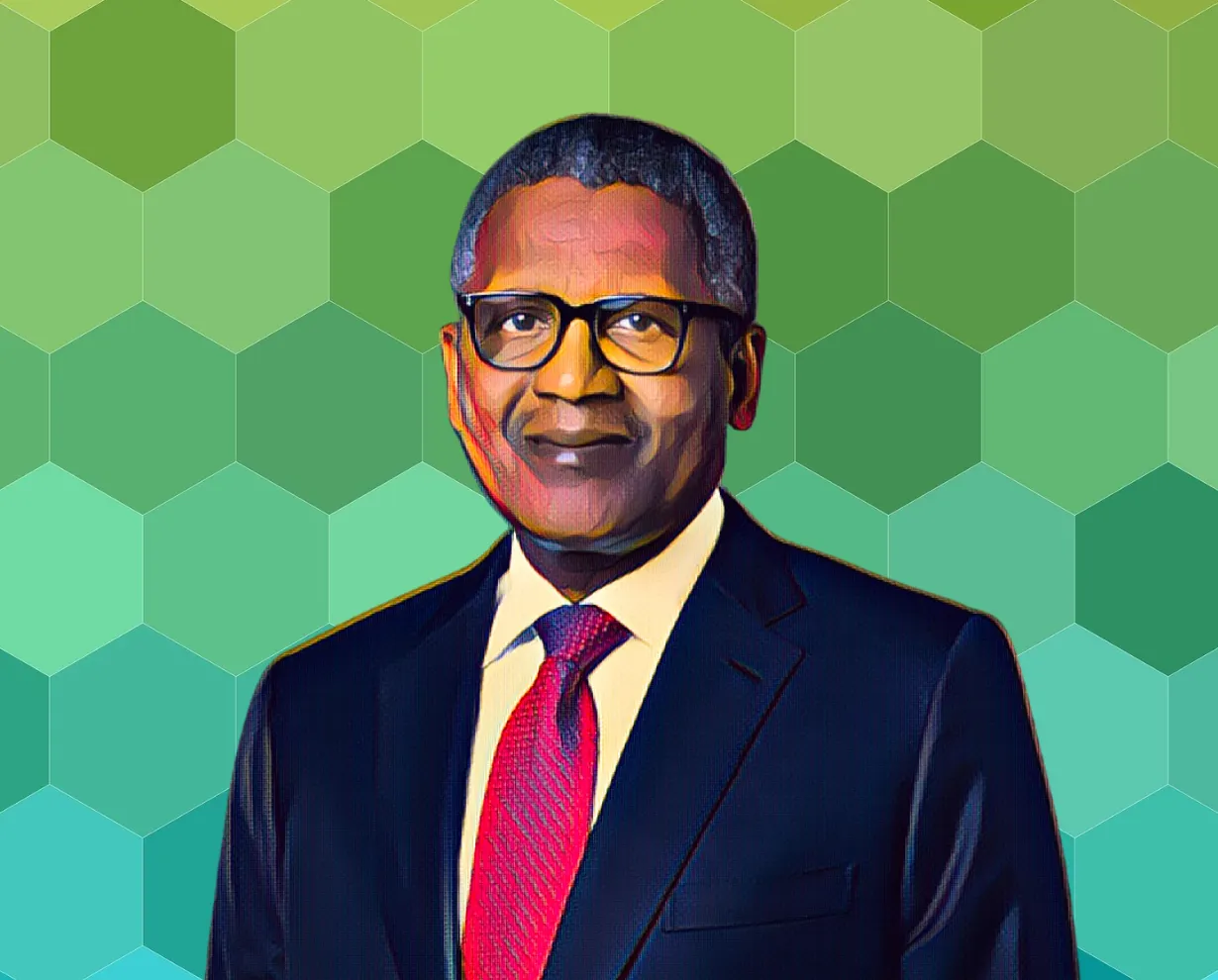
Sello Moloko qualified as a maths teacher and took his first pay cheque at R180 a month. Four decades later he controls Thesele Group, a wholly black-owned investment company holding a fifth of one of South Africa's largest asset managers, all of a power equipment manufacturer, a national car rental fleet, six motor dealerships and a water treatment business that has worked in more than 20 countries.
He has also chaired three of the largest companies on the Johannesburg Stock Exchange, and left the biggest of them under circumstances the bank has never fully explained.
Neither Forbes nor the Bloomberg Billionaires Index carries a net worth figure for Moloko. Thesele is private and publishes no accounts, and Moloko has never disclosed what his holding is worth. What can be established is what he owns, when he bought it and what it does.
Soweto, Leicester, and a classroom
Matthews Sello Moloko was born in Soweto on July 6, 1965, the eldest of four children. He matriculated from Seana Marena Senior Secondary School in 1982, at the point when the township school system was still operating under Bantu Education and when a black South African going abroad to study mathematics was a rarity rather than a pipeline.
He went to the University of Leicester in England and took a bachelor's degree in mathematics, then stayed on for a postgraduate certificate in education. He came home to teach.
The teaching is not incidental to the story, and Moloko has returned to it repeatedly in public remarks over the years. It is also the reason the Thesele Foundation, which holds 4.8 percent of the group, concentrates on entrepreneurship training for women and people in under-served communities rather than on cheque-writing philanthropy.
He moved into financial services in 1992, at 27, with no accountancy qualification and no MBA. What he had was quantitative training at a moment when South African asset management was about to be forced open.
Learning the business from the inside
His first job in the industry was as an analyst at Capital Alliance Asset Managers. He rose to deputy chief executive. He then served as deputy chief executive at Brait Asset Management before joining Old Mutual Asset Managers as a senior portfolio manager.
He became chief executive of Old Mutual Asset Managers, ran the group's UK asset management arm, and sat on the Old Mutual South Africa executive committee and on the boards of several of its subsidiaries. Running money at Old Mutual in that period meant running a meaningful share of South African retirement savings, and it put him inside the institutional relationships that determine who manages pension assets in the country.
He was also building a position in the industry's politics. He served as national president of the Association of Black Securities and Investment Professionals from 2005 to 2007, and in 2003 ABSIP gave him its Financial Services Pioneer Award. ABSIP was the lobby pressing for black participation in an industry that had almost none, and its presidency put Moloko in the room when empowerment transactions in financial services were being structured.
He later completed the Advanced Management Program at the Wharton School.
Thesele, and what the name means
Moloko left Old Mutual and founded Thesele Group in 2005 with Thabo Leeuw, a former executive with experience across food and beverages, petrochemicals and information technology. Standard Bank and Sanlam provided anchor funding.
The name comes from the praise name given to King Moshoeshoe, who welded the Basotho clans into a single nation in the nineteenth century. Basotho refer to themselves as Bana Ba Thesele, the children of Thesele.
The structure has stayed unusually tight. Thesele is 95.2 percent owned by its founders and management, with the Thesele Foundation holding the remaining 4.8 percent. There is no outside private equity fund, no listed vehicle and no external limited partners demanding an exit within a fixed window. That has allowed Thesele to hold assets for periods that a conventional fund could not.
The stated investment criteria are narrow. Thesele looks for established businesses with positive earnings, experienced management, high cash generation and high barriers to entry, meaning strong brands, scale, proprietary assets or a technological edge.
The deal that built the base
Thesele's foundation stone was laid in September 2006, when it acquired 15 percent of Prudential Investment Managers South Africa.
The business had been founded in 1994 and was part of the UK insurer Prudential's international operation. When Prudential plc demerged its savings and investment arm in 2019, the South African company took the M&G name along with the rest of the group.
Thesele bought a further 10 percent in January 2012, which after dilution for the management and employee share scheme left it with 22 percent. That position slipped to 21.8 percent in July 2021, when M&G plc lifted its holding from 49.99 percent to 50.12 percent and the staff scheme moved from 28.01 percent to 28.08 percent in a parallel cash-funded transaction.
M&G Investments now manages more than R275 billion and ranks among South Africa's ten largest investment managers. Both Moloko and Leeuw sit on its board.
The economics of that holding explain a great deal about how Moloko built what he built. An asset manager with that much money under management throws off fee income year after year without requiring the shareholder to put more capital in. Thesele bought into it in 2006 and has held it for two decades. Every subsequent acquisition rests on that base.
Buying things that make things
What Thesele did next distinguishes it from most black-owned investment companies of its generation, which stayed inside financial services and mining and remained minority partners in other people's businesses.
Thesele started buying operating companies outright.
In September 2016 it bought into Probe Group Holdings, which imports and distributes batteries, auto-electrical components and automotive safety products. Probe IMT supplies the mining industry, representing General Electric and Caterpillar in collision avoidance systems for mining equipment. Primo Recycling extracts and refines lead from scrap batteries.
February 2018 brought Mortimer Thesele Group, which began as a single Toyota dealership in Dundee, KwaZulu-Natal. It now runs six outlets: Toyota Dundee, Toyota Queenstown, Nissan Queenstown, Hyundai Queenstown, UD Trucks Queenstown and Toyota Hyde Park in Johannesburg. Mortimer Motor Group, the minority shareholder, manages the network. Toyota Dundee took Best New Vehicle Department in the small dealer category at the Toyota National Dealer Awards in March 2021.
In August 2018 Thesele took 100 percent of Vexila, previously Pfisterer South Africa, which manufactures equipment for electricity transmission and distribution networks. The business carries more than 35 years of history and a Level 2 B-BBEE rating, and runs a foundry producing aluminium and spheroidal graphite, a moulding plant handling fibreglass rod and silicone, an assembly division making cut-outs, insulators and fuse tubes, and a wire forming operation. Buying it gave Thesele a position in the supply chain for every substation and power line South Africa builds.
May 2019 brought Knowledge Integration Dynamics, a data management and business intelligence group with more than two decades of history and a client list including MTN, Vodacom, FirstRand, Standard Bank, Liberty and MultiChoice. It comprises Centerfield Software, KID Professional Services, ITB and InfoFlow.
The largest single transaction came in June 2021, when a Thesele-led consortium bought Bidvest Car Rental from the Bidvest Group and renamed it Bluu Car Rental. The business operates 42 locations across South Africa with a fleet of about 4,500 vehicles, covering car, van and truck rental, chauffeur services and fully equipped four-wheel drives.
The rest of the portfolio runs to Talbot, which provides water, wastewater, water recovery and biogas solutions and has delivered more than 300 projects in over 20 countries across Africa, Australia and Eastern Europe; Crown Homes Construction, a KwaZulu-Natal affordable housing developer whose largest project, Capital Hill Estate outside Pietermaritzburg, covers 496 freehold sites, 417 sectional title units, 21 light industrial plots, three commercial sites and a school; DG Capital, a financial services group spanning customs duties, freight forwarding, procurement, funding, forex and insurance broking with more than 100 staff; and Nande Capital, an advisory firm working in private equity and infrastructure.
Ten companies across five sectors, assembled over nineteen years.
The chairmanships
Running Thesele was only half of what Moloko did. The other half was chairing other people's companies, and at that he was more visible than almost any black executive of his generation.
He became chairman of Alexander Forbes in December 2007 and held the position for a decade, through the private equity buyout that took the company off the JSE, its 2014 relisting, and the arrival of Africa Rainbow Capital as its empowerment shareholder. He oversaw the appointment of chief executive Andrew Darfoor and handed over to Moses Kgosana in 2017. He held no Thesele equity in Alexander Forbes; the role was a chairmanship, not an investment.
He chaired Sibanye Gold from January 2013 and resigned in May 2019, effective that September, the day after Lonmin shareholders approved the takeover that turned Sibanye into one of the world's largest platinum producers. The company said he was leaving to concentrate on Thesele.
He chaired General Reinsurance Africa, a Berkshire Hathaway company, and Guardrisk Group. He sat on the boards of Gold Fields, Momentum Metropolitan Holdings, Momentum Metropolitan Life, Stor-Age REIT, Acucap Properties, Sycom Property Fund, Makalani Holdings, Seartec Industries, Kellogg Brown & Root South Africa and the Industrial Development Corporation. City Press counted directorships at 28 companies by 2015.
He joined the Telkom board in March 2018 and became chairman in June 2019.
Absa, and the way it ended
Absa named Moloko chairman-designate in October 2021. He joined the board that December and took over from Wendy Lucas-Bull on April 1, 2022, becoming chairman of a banking group operating in ten African countries. Forbes Africa put him on its cover.
The first sign of strain came seven months later. On November 23, 2022, Business Day reported that the Prudential Authority, the South African Reserve Bank's banking supervisor, wanted him to give up Telkom and concentrate on Absa. Telkom announced his resignation hours later, citing workload. He left the telecoms group by the end of March 2023.
The oddity, noted at the time, was the timing. The regulator had approved his Absa appointment knowing he already chaired Telkom, and he had run both boards for nearly eight months before the objection surfaced. What the Prudential Authority's reservations actually were has never been made public.
Absa announced on May 7, 2025 that he would step down as chairman and independent non-executive director on July 15, with René van Wyk succeeding him. Moloko said the board had dealt with several challenges in 2024, had appointed a permanent chief executive and begun restructuring the retail operating model, and that "the time is ripe now for me to refocus my attention on my family."
TimesLIVE reported a different account the same day. Citing sources, it said speculation inside the bank had linked Moloko to an investigation by the law firm ENS, which some employees characterised as a hunt for whistle-blowers, concerning leaks that preceded the departure of former group chief executive Arrie Rautenbach. One source told the paper that "Arrie's departure has dragged Moloko with him," and that he had faced heavy scrutiny from fellow directors over certain decisions and disclosures.
Absa has never confirmed any of it, and no regulator has made a finding against Moloko. He has not responded publicly to the reporting.
Where he stands now
Moloko, 61, is back where he started, running Thesele as executive chairman with Leeuw as chief executive and a bench that includes Oliver Petersen, formerly of CapitalWorks and Brait, and Yolande Mahlangu, who came from Kagiso Tiso Holdings in 2023.
He remains a trustee of the Nelson Mandela Foundation, where he chairs the investment committee, and of the UCT Foundation. He sits on the board of DG Capital.
The pattern across twenty years is consistent enough to describe plainly. He used a career inside white-owned asset management to learn how institutional money works, used the empowerment window of the mid-2000s to buy a permanent minority position in a fee-generating asset manager, and used the income from that to buy control of unglamorous industrial and services businesses that generate cash.
The intelligence satisfies curiosity. The paid briefings satisfy strategy.
Every Monday, Elite subscribers receive an Investor Memo breaking down the deal, the structure and the positioning behind the week's most consequential African wealth story - the kind of analysis that doesn't appear anywhere else.
Twice a month, a Wealth Intelligence brief profiles a single billionaire's holdings, cash flows and expansion pipeline in detail no public source matches.
→ Executive ($25/mo): Daily newsletter + Deep-Dive Reports
→ Elite ($75/mo): Everything above + Investor Memos + Wealth Intelligence + Quarterly Analyst Briefings
Subscribe now