

Table of Contents
Sokoni Retail Kenya will sell 2 billion Quick Mart PLC shares, half the supermarket chain's issued capital, in an offer expected to launch on or around Sept. 30 and list on the Nairobi Securities Exchange's Main Investment Market Segment, subject to regulatory approval.
Sokoni owns all of Quickmart. It is a Kenyan holding company created by the private equity firm Adenia Partners to buy the business, and it is the vehicle through which Adenia, the chain's founders and its chief executive all hold their stakes. Selling half of it is the first time anyone outside that group will be able to own a piece of the retailer, and Sokoni keeps control afterwards.
None of the money reaches the company. The transaction is an offer for sale rather than a capital raise, so Quickmart issues no new shares and receives nothing. Every shilling goes to Sokoni, and from there to the people behind it. An over-allotment option of up to 15% of the offer shares could take Sokoni's remaining holding down to about 42.5%.
The company said the sale would broaden its ownership, create a meaningful public free float and let its shareholder realise part of its investment after a sustained period of growth. No offer price has been set, and the terms will appear in the information memorandum. At any plausible valuation for a chain of this size, the sums involved run into tens of millions of dollars.
Who gets paid
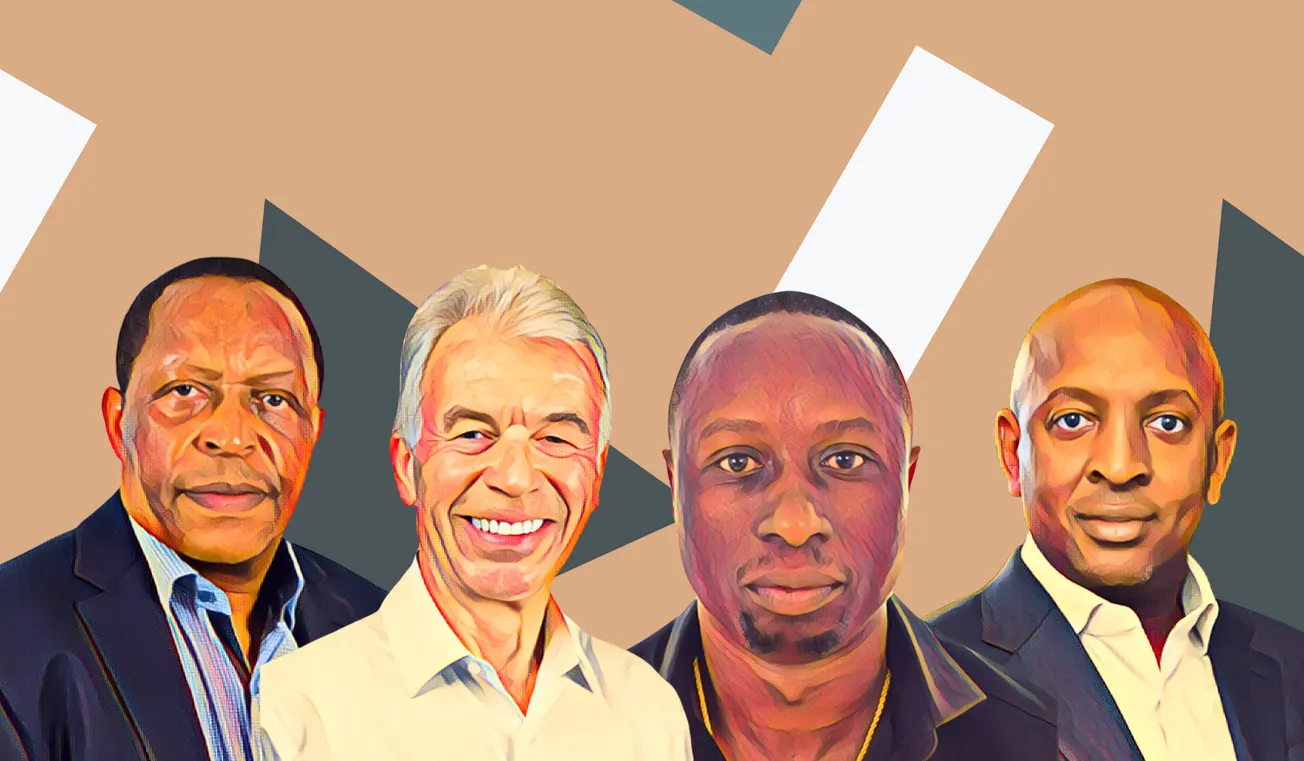
The largest beneficiary is Adenia Partners, the Mauritian private equity firm that controls Sokoni. Antoine Delaporte founded Adenia in 2002 and still leads it, and the firm manages more than $1 billion across five funds and co-investments on behalf of institutional investors. Its largest fund closed at $470 million in March 2024, backed by Norway's Norfund, the United States International Development Finance Corporation and Canada's FinDev, which means most of the proceeds flow to those investors rather than to Delaporte personally.
Moses Ng'eruro Nditika holds an interest through Sokoni. He founded Tumaini Self Service in Nairobi's Eastlands in 2006 and ran it as managing director, building it to 13 stores across Nairobi, Kiambu, Kajiado and Kisumu. His business is what brought Adenia into Kenyan retail.
The Kinuthia family is the other founding interest. John Kinuthia started Quickmart in Nakuru in 2006 and ran it with his son Duncan until his death in 2016. Peter Kang'iri, appointed group chief executive in 2019, also holds an interest.
How the ownership divides between them has never been disclosed.
What buyers get instead of growth capital
Quickmart is selling income. Its board intends to pay out at least 80% of annual profit after tax as dividends, twice a year, with the first payment covering the second half of 2026 and landing in the first half of 2027.
On the company's own projections that is real money. An 80% payout on the 2.10 billion shillings it expects to earn in 2026 produces 1.68 billion shillings of dividends across four billion shares, about 42 cents a share, rising to roughly 57 cents on its 2027 forecast, by Billionaires.Africa's calculation. What that means as a yield depends on a price nobody has published.
What Quickmart actually is
Quickmart runs 72 stores across 16 of Kenya's 47 counties, in hypermarket, supermarket and express formats, and holds an estimated 15% of the country's modern grocery retail market. It is the second-largest modern grocery retailer in Kenya by both store count and turnover.
Thirty-five of those stores never close.
The business runs on repeat customers rather than passing trade. Quickmart recorded about five million transactions a month in the first half of 2026, has 2.5 million members on its Q-Points loyalty scheme, and those members generated roughly 74% of all sales in 2025 and the first half of this year. In a country of about 55 million people, one in twenty-two Kenyans carries a Quickmart loyalty account.
Naivas remains the market leader, passing 113 stores by the end of 2025. Carrefour, run as a franchise by Dubai's Majid Al Futtaim, had 34 outlets.
How it was assembled
Quickmart and Tumaini were both founded in 2006 and both were small when Adenia arrived.
Sokoni bought Tumaini on Oct. 11, 2018, when it had nine stores, then acquired 100% of Quickmart's shares the following year, when Quickmart had ten outlets across Kiambu, Nairobi and Nakuru. Kenya's Competition Authority approved the purchase unconditionally and cleared the merger on Aug. 26, 2019. The two chains combined under the Quickmart name in 2020 and the Kinuthia family gave up control.
Opening has accelerated since. Quickmart had 64 stores on Dec. 31, 2025, 68 by June 30, and has opened four more since. It plans 10 to 15 a year across urban, peri-urban, regional and coastal markets, and is targeting more than 100 stores in Kenya over the medium term, funded from its own cash flow rather than from the offering.
The numbers
Quickmart made 50.4 billion shillings of revenue in the year to Dec. 31, 2025, about $390 million, and adjusted profit after tax of 1.7 billion shillings. Revenue has compounded at 18.4% a year since 2021, when it stood at 25.68 billion shillings.
Revenue for the first half of 2026 was 27.3 billion shillings. The company projects 58.20 billion shillings and 2.10 billion of profit after tax for the full year, rising to 67.44 billion and 2.85 billion in 2027.
Its strategy through 2030 rests on new stores, like-for-like sales growth, a stronger online offering with delivery platforms, better category management and what it calls disciplined capital allocation.
Kang'iri said the listing would give Kenyans the chance to own "a share of a business they already shop in" while raising the company's profile with suppliers and partners.
Why it survived where Nakumatt did not
Nakumatt also started in Nakuru, founded by the Shah family in 1987 as Nakuru Mattresses, and grew into the largest retailer in East Africa with around 60 stores across Kenya, Uganda, Tanzania and Rwanda.
It collapsed because of how it paid for that. Nakumatt funded new stores with supplier credit and short-term debt rather than with the cash its shops produced, and when suppliers stopped extending terms the shelves emptied. It went into administration in January 2018 owing creditors more than 30 billion shillings and was ordered into liquidation in January 2020. Tuskys, run by the Mukuha family, failed the same way soon after.
Quickmart expanded on the opposite model, in small neighbourhood formats, under an owner whose money came from a fund rather than from suppliers, and it is entering the market promising to keep building from its own cash while paying most of its profit away.
The exchange it is joining
The Nairobi Securities Exchange has been short of new companies for years. It opened in 1954, carries about 162 listings, and saw three new admissions in July 2025, the most in nearly a decade.
Frank Mwiti, who runs the exchange, has said retail investors account for less than 10% of participation in Kenya and that more than 60% of the institutional money in the market is foreign. The state-owned Kenya Pipeline Company flotation is also pending under President William Ruto's privatisation programme.
Safaricom remains the largest company on the exchange, worth about 1.2 trillion shillings.
The intelligence satisfies curiosity. The paid briefings satisfy strategy.
Every Monday, Elite subscribers receive an Investor Memo breaking down the deal, the structure and the positioning behind the week's most consequential African wealth story - the kind of analysis that doesn't appear anywhere else.
Twice a month, a Wealth Intelligence brief profiles a single billionaire's holdings, cash flows and expansion pipeline in detail no public source matches.
→ Executive ($25/mo): Daily newsletter + Deep-Dive Reports
→ Elite ($75/mo): Everything above + Investor Memos + Wealth Intelligence + Quarterly Analyst Briefings
Subscribe now