

Table of Contents
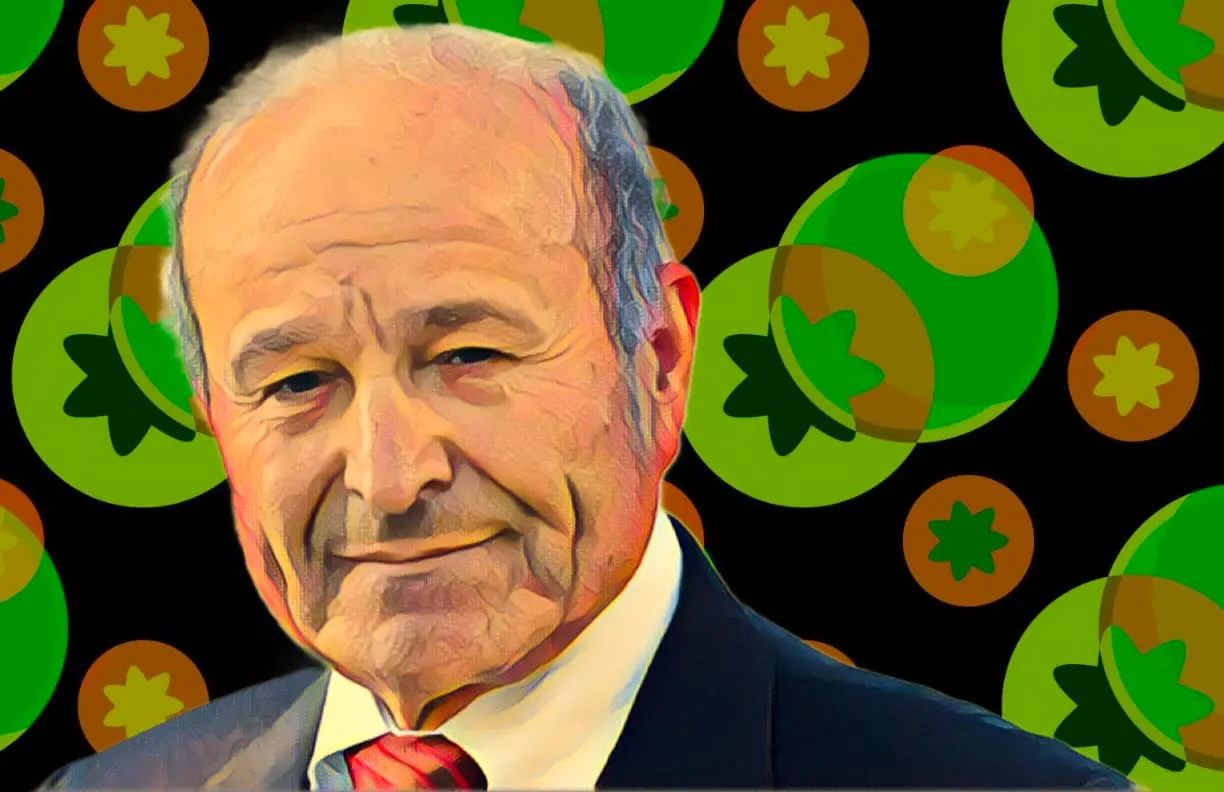
Issad Rebrab was born in 1944 in the village of Taguemount-Azouz, a small settlement in the Kabylia region of Tizi Ouzou, in what was still colonial Algeria. His parents were active in the armed independence movement, fighting to end French rule. He grew up in a household where sacrifice was ordinary and deference to authority was not. Nothing about his early circumstances pointed toward a billion-dollar fortune.
The accountant who could not stop
After finishing school, Rebrab won a scholarship to study accounting in France, training at Cours Pigiers in Thionville before returning to Algeria to teach accounting and commercial law. He left teaching in 1968 to open his own accounting firm. It was a calculated step, not a leap. "If I failed, I could always go back to teaching," he said years later. He did not fail.
In 1971, one of his accounting clients offered him a 20% stake in Sotecom, a small metallurgical construction company. Rebrab took it. That single transaction opened a door he never closed. He founded Profilor, a steel production company, in 1975, then Metal Sider in 1988. By the late 1980s, he was one of the most significant private industrialists in a country whose economy was still largely state-controlled.
The year everything burned
In 1995, at the height of Algeria's brutal civil war, three of Rebrab's factories were attacked and destroyed. The losses ran into billions of Algerian dinars. He left the country. The obvious reading was that he was done. It was wrong.
He returned in 1997, establishing a Hyundai Motors dealership in Algeria. In 1998, he founded Cevital, a food and agribusiness conglomerate headquartered in Bejaia, a Mediterranean port city in northeastern Algeria. The company grew fast. Its sugar refinery in Bejaia became one of the largest in the world, with annual production capacity reaching 2.7 million tons. Cevital also moved into vegetable oil, margarine, float glass and real estate. By the early 2000s, it was the largest private company in Algeria, and Rebrab was the country's first billionaire, the only Algerian to appear on the Forbes global list.
Europe and the media bet
Rebrab did not stop at Algeria's borders. Cevital acquired French home appliances manufacturer Groupe Brandt in 2014, paying a fraction of its original value and rescuing thousands of jobs across France. The group also picked up Aferpi, an Italian steel mill, and Alas Iberia, a Spanish aluminum producer. A German water purification company, EvCon, rounded out its European holdings. By 2022, the group operated 26 subsidiaries across three continents and employed more than 18,000 people.
His move into media was equally ambitious. Rebrab owned Liberte, a French-language Algerian daily that was sharply critical of the government and vocal during his legal battles. In 2016, he acquired El Khabar, one of Algeria's most widely read Arabic-language newspapers, for $45 million. He closed Liberte in April 2022.
Prison, a ban and a succession
The legal pressure on Rebrab built steadily. In April 2019, he was arrested and imprisoned at El Harrach prison as part of a broad corruption investigation that swept up dozens of Algeria's most powerful business figures in the aftermath of President Abdelaziz Bouteflika's fall from power. He was released on January 1, 2020, having served longer than his six-month sentence, and was fined 1.383 billion Algerian dinars. In May 2023, a court banned him from engaging in any commercial or management activity.
He had already handed over the reins. In 2022, Rebrab stepped down as chairman and passed leadership of Cevital to his eldest son, Malik, who brought international experience from a prior stint at Xerox in Morocco. Malik has since steered the group closer to the government's economic priorities, including a new domestic sugar refinery backed by President Abdelmadjid Tebboune.
Issad Rebrab's net worth stands at approximately $3 billion, down from a peak of $5.1 billion in 2022, when Europe's sunflower oil shortage lifted Cevital's revenues sharply. He remains Algeria's richest person and the only Algerian on the Forbes Africa billionaires list, even as the courts have restricted him and his sons now hold the controls he once kept entirely to himself.
His father fought so Algeria could belong to Algerians. Rebrab spent 50 years proving what an Algerian could build inside it. Cevital, the company he built from a 20% stake in a metals firm, remains the largest private enterprise Algeria has ever produced.
The intelligence satisfies curiosity. The paid briefings satisfy strategy.
Every Monday, Elite subscribers receive an Investor Memo breaking down the deal, the structure and the positioning behind the week's most consequential African wealth story - the kind of analysis that doesn't appear anywhere else.
Twice a month, a Wealth Intelligence brief profiles a single billionaire's holdings, cash flows and expansion pipeline in detail no public source matches.
→ Executive ($25/mo): Daily newsletter + Deep-Dive Reports
→ Elite ($75/mo): Everything above + Investor Memos + Wealth Intelligence + Quarterly Analyst Briefings
Subscribe now