


Table of Contents
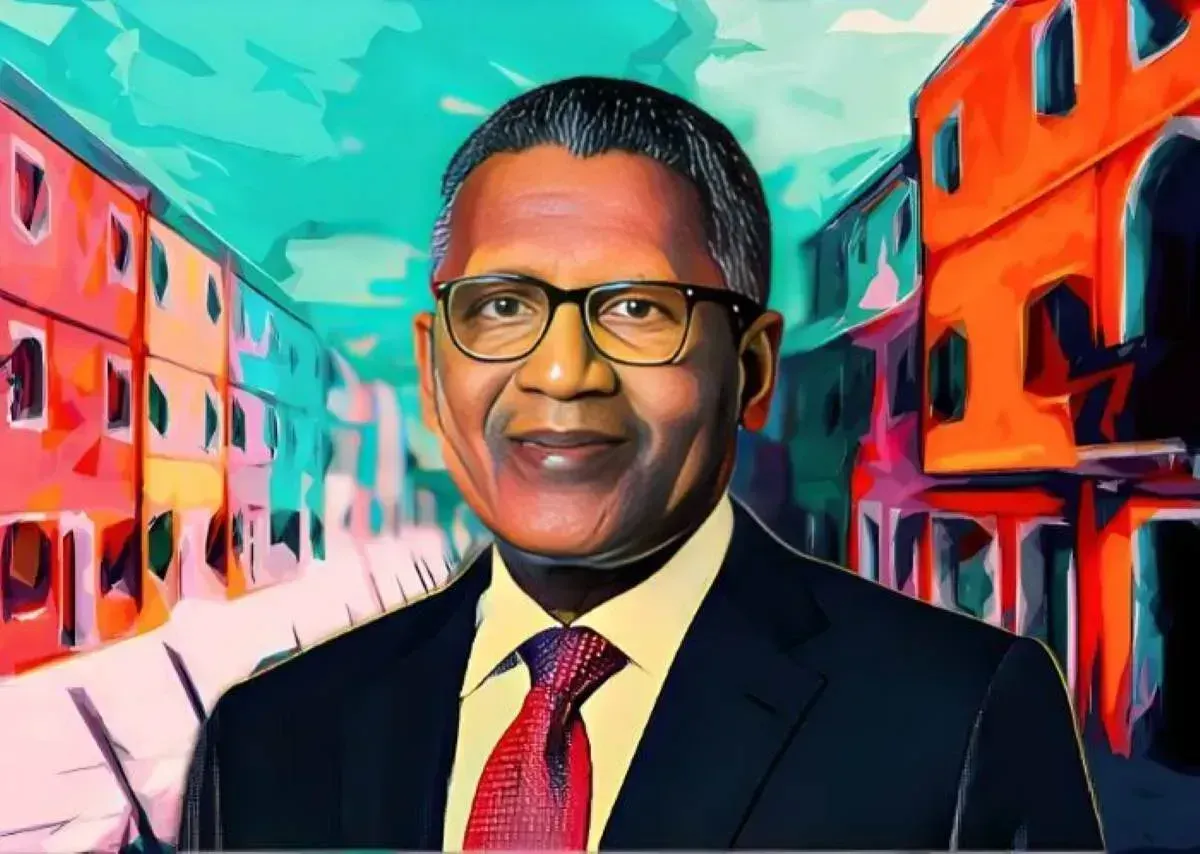
Mohammed Dewji, the Tanzanian billionaire who turned Mo Cola into a mass-market phenomenon by pricing it well below Coca-Cola, is bringing that same strategy to Kenya, announcing plans for a Sh6.5 billion ($50 million) soft drinks manufacturing plant in Mombasa that would sell 300-millilitre bottles of Mo Cola for Sh15 in a market where competing products typically retail for around Sh40.
Dewji, whose MeTL Group is East Africa's largest indigenous industrial conglomerate and whose net worth Forbes estimates at $2.1 billion, told Business Daily the company is already in the planning stage and could break ground within 12 months. The Mombasa facility would be MeTL's first major manufacturing investment in Kenya and would produce its growing beverage portfolio including Mo Cola, Mo Xtra and Mo Malto.
The pricing arithmetic is the core of the strategy. A Sh15 bottle against a Sh40 competitor is not a minor discount. It is a different market entirely, targeting the tens of millions of Kenyan consumers for whom the major brands are an occasional indulgence rather than an everyday purchase. In Tanzania, where MeTL deployed exactly this model, Mo Cola reportedly overtook Coca-Cola in sales volumes within a decade of launch. Dewji is betting that Kenya's consumer base, under sustained pressure from inflation and rising costs of living, is ready for the same proposition.
A market that has resisted challengers before
Kenya's non-alcoholic drinks sector has a long history of eating would-be disruptors. Softa Bottling Company, launched in the late 1990s by Kenyan businessman Peter Kuguru, came close to breaking Coca-Cola's grip before eventually collapsing under competitive pressure. Several other local and regional challengers have attempted to carve out meaningful share over the past 25 years without lasting success.
Coca-Cola and PepsiCo between them still dominate a market that, despite rapid population growth and increasing urbanisation, has proved resistant to structural disruption at the price-sensitive end. Smaller manufacturers, including Kevian Kenya, maker of the Pick and Peel juice range, have gained ground in adjacent categories but the core carbonated soft drinks market remains concentrated.
Stephen Mutoro, secretary general of the Consumers Federation of Kenya, told Business Daily that existing beverage brands do not adequately serve low-income consumers, a gap that Dewji's pricing model is explicitly designed to fill. Whether consumer sentiment translates into sustained purchase behaviour against entrenched brands with decades of marketing investment is the question every would-be disruptor has failed to resolve.
Industry analysts say MeTL's success will depend on 3 variables operating simultaneously: pricing discipline tight enough to hold the Sh15 price point without sacrificing margin, distribution infrastructure capable of reaching the mass market beyond Nairobi and Mombasa, and marketing spending sufficient to build brand recognition against rivals that have been in the market for generations.
How Dewji built the model in Tanzania
The Mo brand's success in Tanzania did not happen by accident. MeTL approached beverages the same way it approaches most of its businesses: target the bottom of the income pyramid with a product that is good enough and cheap enough that switching from the premium alternative becomes a straightforward economic decision rather than a lifestyle sacrifice.
The MeTL Group that Dewji chairs today is one of the most diversified industrial conglomerates in East Africa, with operations spanning manufacturing, agriculture, energy, logistics and consumer goods. It supplies cooking oil, sugar, fuel, textiles and household goods across the region, primarily to mass-market consumers who have become the core of its customer base across Tanzania, Mozambique, Rwanda, Uganda and beyond. The beverage business sits within that broader FMCG strategy rather than as a standalone venture.
Dewji said the company is evaluating both a greenfield investment and possible acquisitions or partnerships with existing Kenyan players as it finalises its market entry approach. He is also reportedly considering investments in Kenya's hospitality and energy sectors, meaning the Mombasa beverage plant could be the opening move in a substantially larger Kenya commitment.
Who Dewji is
Mohammed Dewji, born in 1978 in Ipinda, Tanzania, took the helm of MeTL Group at 27 after studying at Georgetown University in Washington and working briefly at McKinsey. His family had built the company over 3 generations, but the global footprint it carries today is largely his creation. He expanded manufacturing capacity, pushed geographic diversification across sub-Saharan Africa and built the consumer brands that have given the group visibility beyond its industrial base.
In October 2018, Dewji was kidnapped from a hotel gym in Dar es Salaam in an episode that captured international attention. He was released after 9 days. He has spoken publicly about the experience as one that sharpened rather than diminished his ambition for MeTL's expansion across Africa.
He is routinely described as East Africa's richest person, though the ranking fluctuates depending on the tracker and the exchange rates used. Forbes put him at $2.1 billion in its 2026 estimates. He was previously a member of Tanzania's parliament and remains active in regional policy conversations about trade and investment integration under the East African Community framework.
The broader context
Dewji's Mombasa announcement arrives as global beverage companies are also accelerating African investment. Coca-Cola has announced plans to invest approximately $1 billion in South Africa by 2030. Bloomberg reported that Coca-Cola HBC agreed to acquire a controlling stake in Coca-Cola Beverages Africa in a multibillion-dollar transaction designed to consolidate the bottling system across the continent.
The parallel investments by MeTL and the multinationals reflect the same underlying judgement: Africa's beverage market is at an inflection point driven by urbanisation, population growth and a consumer base large enough to absorb multiple competing strategies simultaneously.
Whether Dewji can do in Kenya what he did in Tanzania will be determined by execution rather than intention. The Mombasa plant needs to get built, the distribution network needs to reach beyond the coast and the Sh15 price point needs to hold long enough to create the habit that turns a new brand into a market staple. Those are not small requirements. But the same things were required in Tanzania, and the Mo Cola model worked there.
The intelligence satisfies curiosity. The paid briefings satisfy strategy.
Every Monday, Elite subscribers receive an Investor Memo breaking down the deal, the structure and the positioning behind the week's most consequential African wealth story - the kind of analysis that doesn't appear anywhere else.
Twice a month, a Wealth Intelligence brief profiles a single billionaire's holdings, cash flows and expansion pipeline in detail no public source matches.
→ Executive ($25/mo): Daily newsletter + Deep-Dive Reports
→ Elite ($75/mo): Everything above + Investor Memos + Wealth Intelligence + Quarterly Analyst Briefings
Subscribe now