

Table of Contents
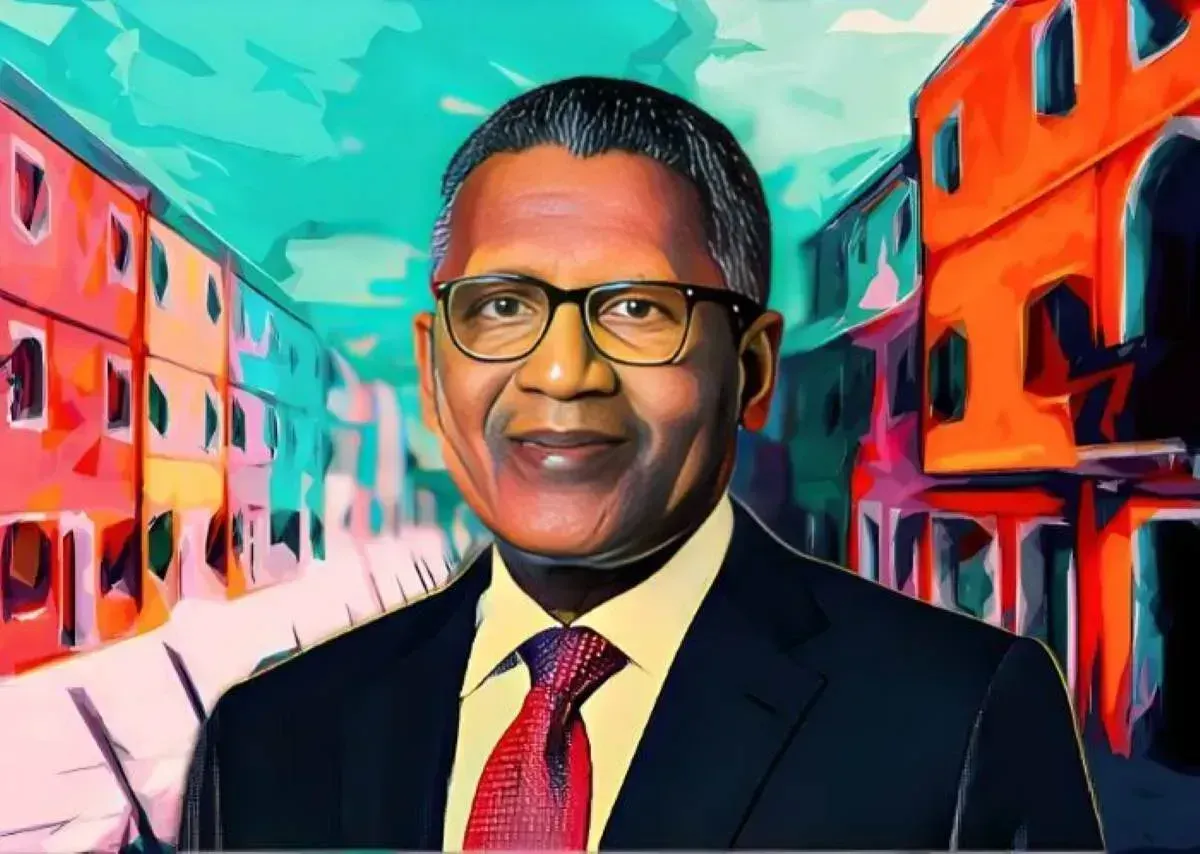
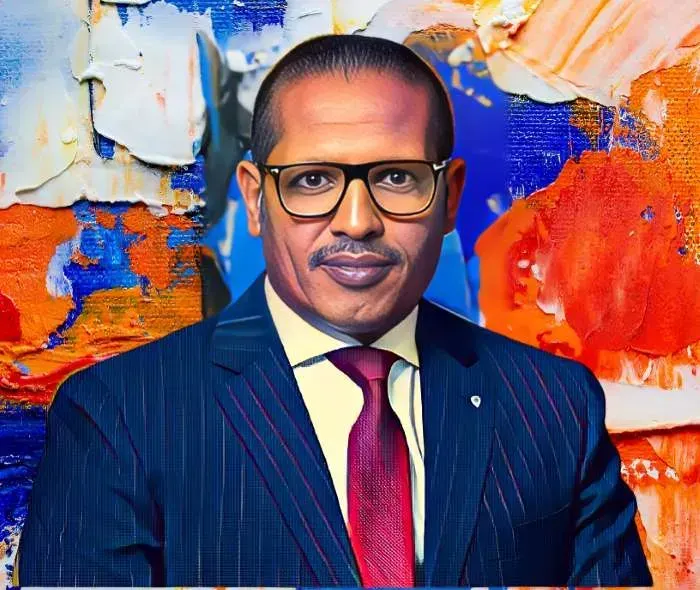
Edha Nahdi does not usually seek the podium. The 40-year-old Tanzanian founder of Amsons Group has spent two decades building one of East Africa's most consequential private industrial conglomerates largely in the shadows, acquiring Kenya's largest cement company, expanding into petroleum, transport, flour and real estate across six countries, all with a minimum of public commentary. In Kigali last week, he made an exception.
Speaking at the 2026 Africa CEO Forum, the continent's most significant annual gathering of business leaders and heads of state, Nahdi challenged Africa's private sector to stop treating foreign donors as a structural component of the continent's development model. The summit, which drew more than 2,500 business leaders, policymakers and investors from across Africa, provided the platform. He used it to make an argument that went well beyond corporate responsibility.
"We can no longer depend on external solutions," he told one panel. "The blueprint for Africa's growth depends entirely on local manufacturing, shared regional infrastructure and corporate ownership of our social challenges."
He was speaking on two separate high-level panels over the course of the summit, each covering a different dimension of the same underlying problem. The first was a side event organised by the Bill and Melinda Gates Foundation, focused on what happens to African economies if investment in maternal and child healthcare collapses as international aid budgets shrink. The session was titled The $7 Question: Why Africa Cannot Afford to Lose a Generation and What Business Can Do Now, a reference to World Health Organization research showing that every dollar invested in maternal and child healthcare can generate up to seven dollars in broader economic returns.
Nahdi's position was direct. The private sector cannot keep treating healthcare financing as someone else's problem. "Safeguarding the health of mothers and children is not philanthropy," he said. "It is economic preservation." He added that African businesses have both the means and the obligation to act. "As Africa's sons and daughters of the soil, we are more obligated to safeguard the health of our mothers and children than foreign donors." He called on African firms to use their operational expertise and institutional capital to build domestic healthcare financing systems capable of sustaining future generations independent of external support.
His second panel turned to infrastructure, specifically the economics of building housing and cities in Africa at the pace and scale the continent's population growth demands. He described imported construction materials and fragmented logistics networks as the structural bottleneck that nobody in the urbanisation conversation wants to address directly. The session was titled Nuts and Bolts: The Silent Bottleneck Behind Africa's Urban Expansion.
"The silent bottleneck behind Africa's urbanisation is the high cost of imported construction materials and fragmented logistics systems," he said, drawing on Amsons Group's own investments in cement manufacturing, liquefied petroleum gas and regional transport corridors as a reference point for what local industrial capacity looks like in practice. "We cannot design or demand our way out of Africa's housing shortages without scaling manufacturing capacity, strengthening supply chains and improving energy reliability."
His argument was not theoretical. Amsons Group completed the acquisition of Bamburi Cement, Kenya's largest cement producer, in December 2024 for approximately $250 million in one of the most consequential cross-border corporate transactions in East African history. Earlier this year, Amsons' subsidiary Kalahari Cement Limited completed the buyout of a 29.2 percent stake in East African Portland Cement Company from Swiss multinational Holcim, giving Amsons a combined 41.75 percent stake in EAPCC once Bamburi's existing 12.5 percent position was accounted for. Together, the two Kenyan acquisitions make Nahdi the leading Tanzanian investor in Kenya and give Amsons a dominant position in a country whose cement production capacity stands at 14.5 million tonnes per year.
The same industrial logic that drove those acquisitions is the logic Nahdi was presenting to the forum as a model for the continent more broadly. Countries that build their own cement industries, their own energy infrastructure, their own grain milling capacity and their own transport networks stop paying the import premium that makes everything from building a house to distributing food more expensive than it needs to be. The alternative, dependence on imported materials and foreign financing, produces the kind of compounding structural disadvantage that shows up in housing costs, maternal mortality rates and stalled infrastructure projects simultaneously.
"Whether we are talking about protecting the health of our children or building the physical foundations of our megacities, Africa's private sector must think in terms of scale," Nahdi said at the close of his remarks.
He started Amsons from a petroleum import business he founded at 19. He did not inherit a conglomerate. He built one, across borders, across sectors, through acquisitions and manufacturing investments, in markets where the infrastructure he now argues Africa must build was often absent when he was trying to use it. That background gives his Kigali argument its credibility. He is not asking African businesses to do something he hasn't already done himself.
The intelligence satisfies curiosity. The paid briefings satisfy strategy.
Every Monday, Elite subscribers receive an Investor Memo breaking down the deal, the structure and the positioning behind the week's most consequential African wealth story - the kind of analysis that doesn't appear anywhere else.
Twice a month, a Wealth Intelligence brief profiles a single billionaire's holdings, cash flows and expansion pipeline in detail no public source matches.
→ Executive ($25/mo): Daily newsletter + Deep-Dive Reports
→ Elite ($75/mo): Everything above + Investor Memos + Wealth Intelligence + Quarterly Analyst Briefings
Subscribe now