

Table of Contents
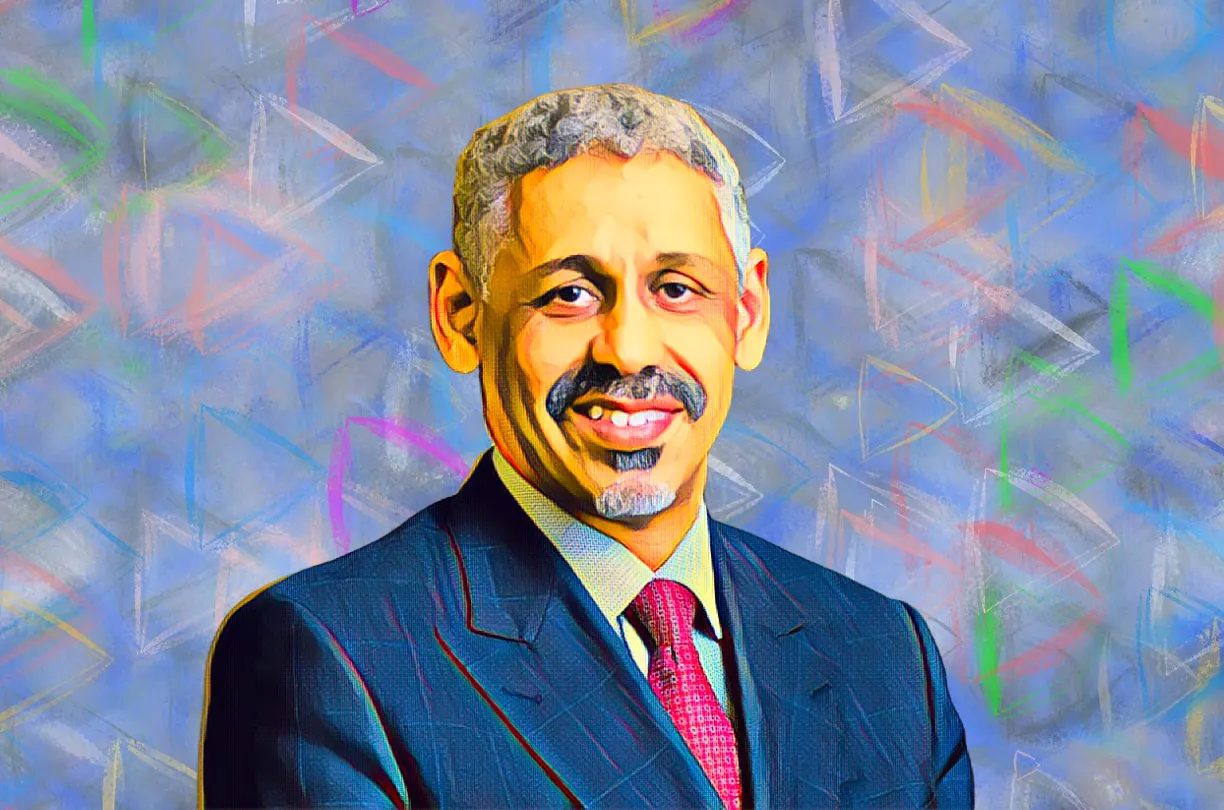
Africa has $4 trillion in institutional savings. Almost none of it is building the infrastructure the continent needs. Sidi Ould Tah wants to change that, and he chose one of the most difficult moments in a generation to make the case.
More than 3,000 delegates gathered at the Kintele Conference Centre in Brazzaville, Republic of Congo on May 25 for the 61st annual meeting of the African Development Bank Group's Board of Governors, running through May 29. The meeting is the first under Ould Tah, the former Mauritanian finance minister who took office as the AfDB's ninth president in September 2025. Its theme is Mobilising Africa's Development Financing at Scale in a Fragmented World. The choice of words is not accidental. Africa's annual development financing gap stands at $400 billion per year, covering energy, food security, climate adaptation, infrastructure and job creation for a rapidly growing and anxious population.
The external environment pressing down on that gap has rarely been more hostile. Aid from wealthy countries to developing nations fell sharply in 2025 to $174.3 billion, with the United States leading some of the biggest cuts. Reduced support for concessional financing has directly affected the AfDB's own resource base. At the same time, the ongoing US-Iran conflict has pushed global energy prices higher, feeding directly into food costs, electricity shortages and public anger across import-dependent African economies already stretched by inflation and currency weakness.
The health backdrop is no easier. An Ebola outbreak centered in eastern Democratic Republic of Congo has spread into Uganda, with more than 170 suspected deaths recorded. No cases have been confirmed in the Republic of Congo, and the Congolese government confirmed last week that the meetings would proceed without restriction, citing World Health Organization guidance. Canada and the United States have imposed travel restrictions on travelers from the DRC, Uganda and South Sudan linked to the outbreak, ahead of the 2026 World Cup.
Against that backdrop, Ould Tah is advancing what he has called the New African Financial Architecture for Development, known as NAFAD. Africa holds an estimated $4 trillion in pension funds, sovereign wealth funds and similar savings mechanisms, but these resources sit in fragments. The NAFAD framework is designed to marshal those resources and direct them toward investable projects with measurable socioeconomic impact. Ould Tah has described the goal in precise terms: "Make every dollar work like ten."
A key early achievement under his leadership is the historic $11 billion seventeenth replenishment of the African Development Fund, completed in London in December 2025. Twenty-four African countries, a record number, pledged $182.7 million to the ADF. The ADF is the bank's concessional lending arm, providing soft loans and grants to low-income and fragile member countries.
The political momentum behind NAFAD has been building. Kenyan President William Ruto argued at the Africa Forward Summit in Nairobi earlier this month that Africa is not short of money but short of coordinated systems capable of directing capital into large-scale development projects. "There is capital in Africa, but Africa's development projects remain starved of financing," Ruto said. That framing aligns precisely with what Ould Tah is trying to institutionalize through NAFAD.
Critics have raised legitimate questions. Much of the institutional capital cited by African leaders is already committed to existing investments and cannot be easily redirected into illiquid infrastructure projects with long payback periods. Skeptics also argue that governance improvements, stronger regulatory frameworks and reduced political risk are prerequisites for mobilizing large pools of domestic capital, not follow-on steps.
Those objections will be tested in Brazzaville's meeting rooms. The venue carries its own symbolism. The Kintele Conference Centre overlooks the Congo River, whose flow is estimated to hold enough hydroelectric potential to power much of Africa. The continent's problem has never been a shortage of resources. It has been a shortage of systems to convert them into prosperity. Ould Tah is proposing that the financing architecture be rebuilt from the inside out.
The intelligence satisfies curiosity. The paid briefings satisfy strategy.
Every Monday, Elite subscribers receive an Investor Memo breaking down the deal, the structure and the positioning behind the week's most consequential African wealth story - the kind of analysis that doesn't appear anywhere else.
Twice a month, a Wealth Intelligence brief profiles a single billionaire's holdings, cash flows and expansion pipeline in detail no public source matches.
→ Executive ($25/mo): Daily newsletter + Deep-Dive Reports
→ Elite ($75/mo): Everything above + Investor Memos + Wealth Intelligence + Quarterly Analyst Briefings
Subscribe now