

Table of Contents
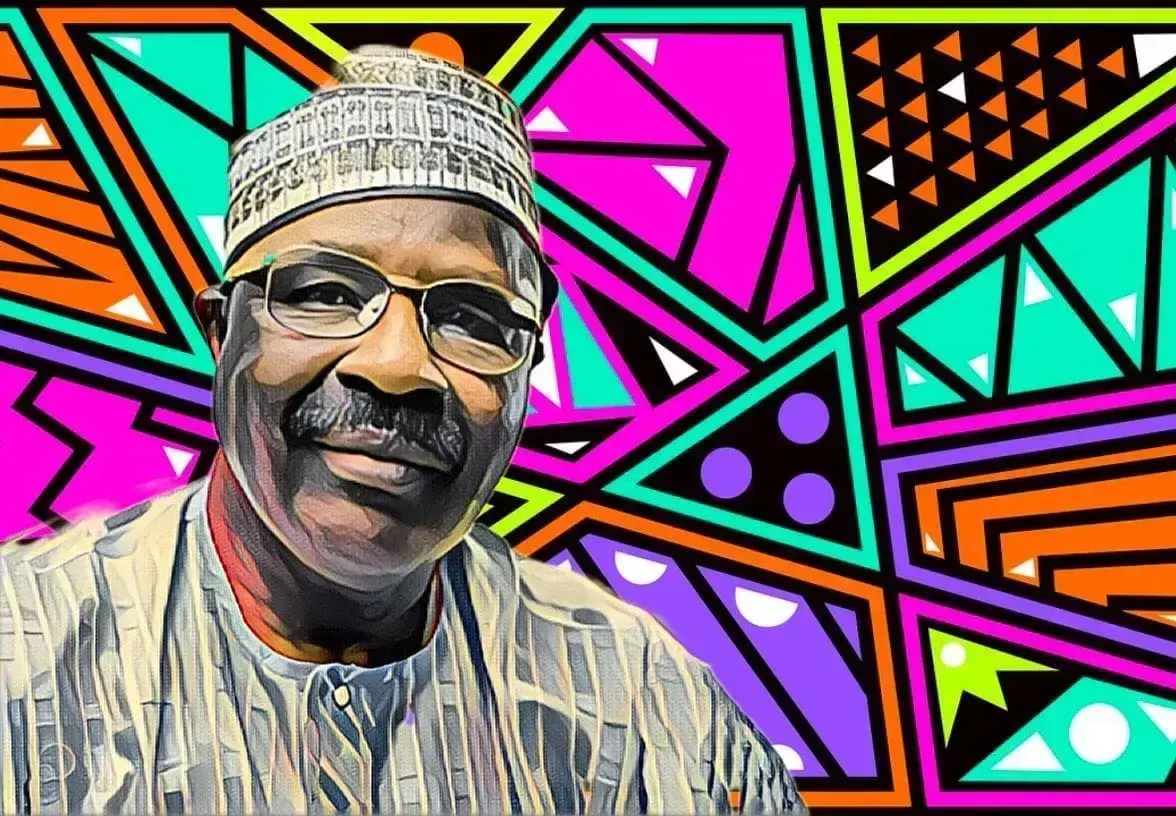
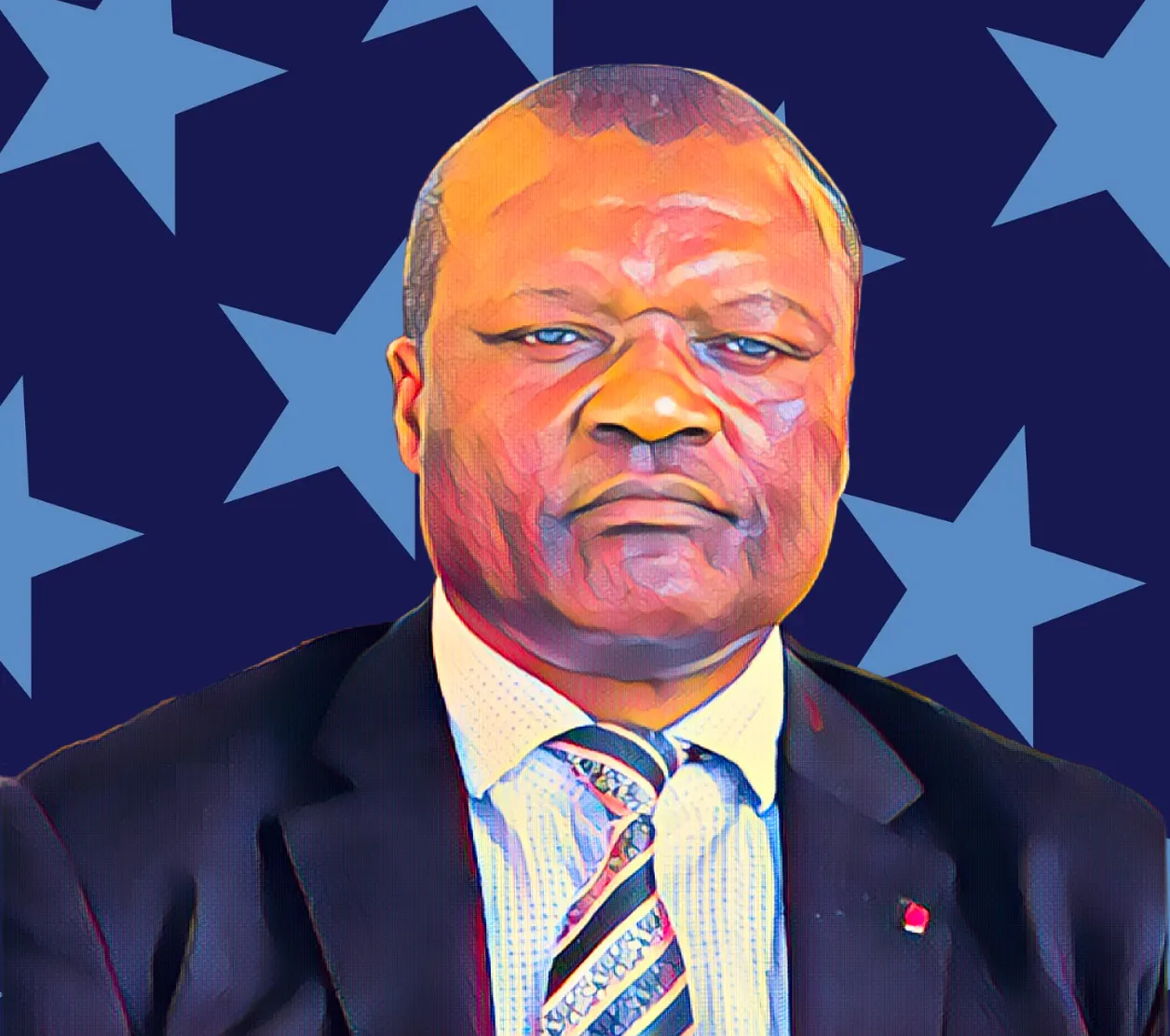
In 1982, at the Mvog Mbi market in Yaoundé, a young trader from Bafoussam named Sylvestre Ngouchinghe set up a stall selling frozen fish at retail. He had begun his career as a vendor in western Cameroon, the kind of work that requires waking before dawn, hauling produce to a market stand, and counting the day's takings in small bills. The fish business was not glamorous. It was perishable, low-margin, and dependent on a cold chain infrastructure that barely existed in Cameroon at the time. What Ngouchinghe understood, standing at that stall in 1982, was that the absence of that infrastructure was not a problem. It was the opportunity. He took his first profits and reinvested them in freezers, building a cold storage capability that none of his competitors at Mvog Mbi possessed. The freezers led to cold rooms. The cold rooms led to scale. By the time the pattern had compounded across more than a decade, the man who had started with a market stall was building the infrastructure that would make him one of the wealthiest individuals in Central Africa.
Ngouchinghe formally founded Congelcam in 1994, converting more than a decade of accumulated retail trading experience and reinvested capital into a registered company with the storage and import capacity to operate at national scale. Congelcam, short for Congelés du Cameroun, is now the largest fishmonger in Cameroon, a company engaged in the importation, distribution and sale of seafood products across the entire national territory. The company controls between 70 and 80 percent of Cameroon's frozen fish market, a level of market concentration that few consumer goods companies achieve anywhere in the world, let alone in a market as large and logistically fragmented as Cameroon. Walking through any market in the country, including its most remote localities, it is nearly impossible to avoid a fish stand bearing the Congelcam stamp.
The cold chain that became a national monopoly
The commercial logic that built Congelcam into Cameroon's dominant seafood company is, at its core, an infrastructure story rather than a trading story. The company now operates with storage capacity of 80,000 tonnes in Douala, a cold chain scale that places it among the largest frozen goods storage operations in Central Africa, alongside import terminal facilities capable of receiving an entire boat of seafood products approximately every two days. Congelcam employs more than 2,000 people across Cameroon, operating a distribution network that reaches retailers and end consumers in markets that more sophisticated, urban-focused competitors had never bothered to serve.
Annual company revenues exceed $120 million according to information available from Congelcam, a figure built on the volume economics of a commodity that Cameroon's population consumes in enormous quantities relative to most other animal proteins, given the relative affordability of frozen fish compared to beef or poultry across the country's lower and middle income households. The company's dominance positioned Ngouchinghe as, in the words of his biographer at HPS Finance Eco, the indispensable partner of the Cameroonian state in supplying the market with fish and in the fight against the high cost of living, a role that has placed Congelcam at the center of government food security and price stability discussions whenever inflation pressures threaten household food budgets.
In 2023, the company received four formal notices, the first issued on February 20 by the Régie du Terminal à Conteneurs of the Port of Douala, followed by a second from the Autorité Portuaire Nationale on April 3, a third reissued by the RTC on May 23, and a fourth from the Capitainerie of the Port Autonome de Douala on June 2, all citing obstruction of the Container Terminal. The repeated port authority notices reflect the operational friction of running an import logistics operation at the scale Congelcam maintains, where container handling and terminal capacity disputes are a recurring cost of doing business at the volume the company requires to supply its national distribution network.
The senator's seat and the corruption investigation
The most consequential chapter of Ngouchinghe's public life unfolded not in the seafood trade but in Cameroon's political institutions, and it carries weight that no profile of his career can responsibly omit.
At the 2013 senatorial elections, Ngouchinghe was appointed substitute senator for Cameroon's West Region by the President of the Republic. He was subsequently elected senator in 2018, formalizing a political role that had run alongside his commercial career for several years. The path to that 2018 election was contested: reports indicate he had previously been a substitute candidate after a dispute with the Social Democratic Front before Cameroon's Constitutional Council during the prior electoral cycle, and that he financially supported several other candidates' filing costs for the senatorial elections, contributions that drew commentary about the relationship between his commercial wealth and his political ambitions.
In December 2018, Ngouchinghe was implicated in a corruption scandal. According to Cameroonian outlets 237 Actu and Actu Cameroun, Cameroon's National Anti-Corruption Commission filed a request with the Senate to lift his parliamentary immunity, with his company suspected of misappropriating funds totaling approximately 32 billion FCFA, equivalent to roughly $55 million at contemporary exchange rates. The allegations connected to a broader controversy involving Polycarpe Abah Abah, Cameroon's former Minister of Economy and Finance, who was imprisoned on separate corruption-related charges. Anonymous leaflets circulated in early 2016 alleging that Ngouchinghe was "sitting" on assets and starting capital connected to Abah Abah, citing specific buildings at locations including Bonamoussadi, Akwa Nord, Akwa, Bonanjo in Douala and Bastos in Yaoundé, and demanding the return of those assets to the state. Ngouchinghe's commercial associates connected the timing of these allegations to his entry into electoral politics. The matter has not produced a publicly confirmed criminal conviction against Ngouchinghe, and the underlying facts of the relationship between his company's founding capital and the Abah Abah affair remain disputed in the public record. What is documented is that a sitting senator and one of Cameroon's wealthiest businessmen faced a formal anti-corruption commission request to strip his parliamentary immunity over allegations involving tens of millions of dollars, a fact that sits permanently alongside the commercial success story of Congelcam's national dominance.
The bank, the diversification and what comes after fish
Ngouchinghe's most significant recent business move reflects the same instinct for vertical control that built Congelcam in the first place: rather than remaining dependent on third-party financial institutions for the capital his import and distribution operations require, he moved to build his own banking infrastructure.
Ngouchinghe launched his own commercial bank, extending a career built on cold storage and seafood logistics into financial services. The move follows a pattern common among Central Africa's most successful commodity importers: once a trading and distribution operation reaches sufficient scale, the working capital requirements of financing import shipments, container terminal fees, cold storage construction and nationwide distribution logistics become large enough that owning a bank, rather than borrowing from one, becomes the more economically rational structure. The specific capitalization and operational scope of Ngouchinghe's banking venture have not been comprehensively detailed in public reporting, but the move signals a deliberate diversification beyond the seafood trading business that built his original fortune.
His net worth has been estimated with notable consistency across multiple years and sources. Forbes Africa placed his fortune at 158 billion FCFA, approximately $280 million, in its most cited Francophone sub-Saharan Africa wealth assessment, a figure that has persisted as the standard reference point across subsequent rankings through 2026, where he continues to be listed as the sixth wealthiest individual in Cameroon. The remarkable consistency of that $280 million figure across nearly a decade of separate rankings reflects both the stability of Congelcam's market position and the absence of any major liquidity event, public listing or asset sale that would have generated updated independent valuation data.
Le Jour newspaper noted in its coverage of Ngouchinghe's political entry that in his home city of Bafoussam, his wealth did not escape insinuation, with some observers suggesting it represented only the visible face of a broader network operating in the corridors of power. That skepticism sits in permanent tension with the more straightforward commercial narrative: a man who began as a shopkeeper selling fish retail at a Yaoundé market stall, reinvested every early profit into freezers and cold rooms that his competitors lacked, and built the dominant supply chain for one of Cameroon's most essential food categories. Both stories exist in the public record. Neither fully resolves the other. What is not in dispute is the scale of what Congelcam became, and the fact that a market stall trader from Bafoussam built it without inherited capital, foreign partnership or state asset transfer, whatever the subsequent controversies surrounding his political career may have added to that original story.
The intelligence satisfies curiosity. The paid briefings satisfy strategy.
Every Monday, Elite subscribers receive an Investor Memo breaking down the deal, the structure and the positioning behind the week's most consequential African wealth story - the kind of analysis that doesn't appear anywhere else.
Twice a month, a Wealth Intelligence brief profiles a single billionaire's holdings, cash flows and expansion pipeline in detail no public source matches.
→ Executive ($25/mo): Daily newsletter + Deep-Dive Reports
→ Elite ($75/mo): Everything above + Investor Memos + Wealth Intelligence + Quarterly Analyst Briefings
Subscribe now