

Table of Contents
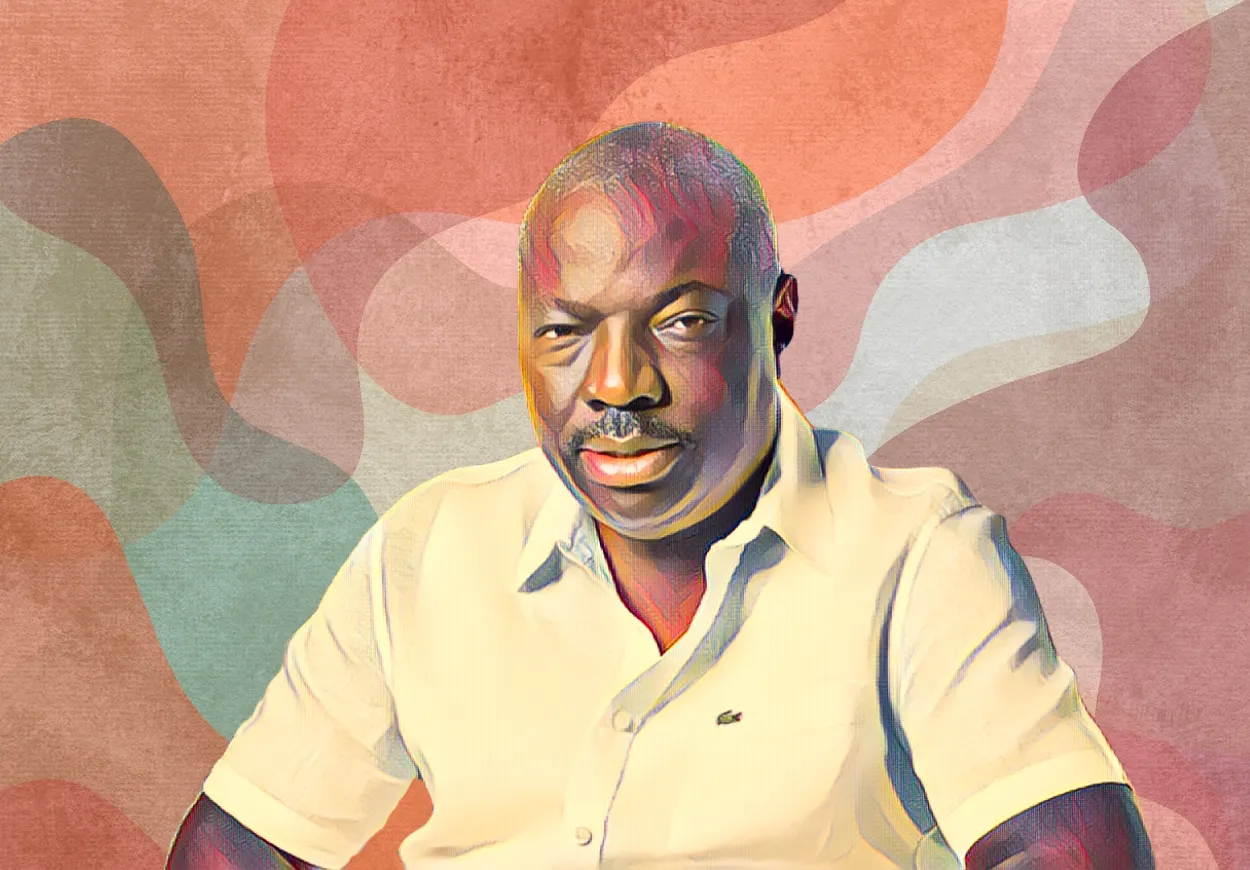
The name on the club tells you everything you need to know about how Bento Kangamba thinks about himself. Kabuscorp Sport Clube do Palanca, the football club he founded in a working-class neighborhood of Luanda in December 1994, takes its name from an acronym: Kangamba Business Corporation. Not the name of a patron saint, not the name of a neighborhood hero, not the name of a politician whose favor needed courting. His own name, embedded in the institution at founding, as a permanent statement of authorship. He was 29 years old, had been a soldier, had survived a criminal conviction, had been readmitted to the MPLA structures after the party briefly distanced itself from him, and was building the commercial infrastructure of a life that no one around him had yet fully recognized. The football club was the most public part of that infrastructure. The business empire behind the name was the part that would take decades to understand.
Bento dos Santos Kangamba was born on June 6, 1965, in Luena, in Angola's eastern Moxico Province, into a family whose politics were as clear as the landscape. His father was a known MPLA supporter in a region where the party's guerrillas operated through the eastern provinces of the country. The family owned assets, including trucks, that UNITA forces burned during the civil war, a loss that located the family firmly on the MPLA side of a conflict that was consuming the country's eastern interior and that would not formally end until 2002. Kangamba joined the MPLA at age 15. His academic career did not extend beyond secondary school. What the party gave him in place of further education was a structure, a network, and eventually a military career that would take him to the rank of brigadier in the Angolan Army before he transitioned entirely into commerce.
The transition was not clean. In his early military years, Kangamba was involved in logistics, and specifically in the unauthorized sale of meat and chicken from army supplies into the informal market. Street vendors who had paid him for goods that never arrived brought a court complaint. He was found guilty and served two years in prison. The conviction was damaging enough that the MPLA Central Committee, of which he was then a member, distanced itself from him at the time. What followed was the first of several recoveries in a career defined by the ability to rebuild after public disgrace. He was readmitted to the party structures, rose through the Luanda Provincial Committee and the Central Committee, and became, in the years that followed, one of the most visible MPLA figures in urban Luanda. The lesson from the prison years was not about caution. It was about the relationship between political standing and commercial opportunity, and about how quickly the former could restore the latter if properly managed.
The club that carried an empire's name
Kabuscorp was founded on December 5, 1994, in the Cazenga district of Luanda, from the informal football games that young residents of the Palanca, Rangel and Cazenga neighborhoods had been organizing on weekends. Kangamba recognized in those games something more valuable than sport: a mass of loyal, passionate, working-class Luanda residents who could form the human infrastructure of a political and commercial brand. He turned a neighborhood game into a formal club, gave it his business name, funded it through the revenues his diamond and logistics ventures were beginning to generate, and built it into an institution.
The commercial logic of the football investment was not primarily about ticket sales or broadcast rights. Those markets, in Angola's developing sports economy, were insufficient to justify the level of spending Kangamba brought to the club. The logic was influence: over the youth of Luanda's working-class neighborhoods, over the MPLA's grassroots mobilization networks in those same communities, and over the broader Angolan public sphere in which a man known as a football club owner occupied a different kind of social position than a man known merely as a businessman with government connections. The club was a brand vehicle. The name told you whose brand it was.
In 2008, Kabuscorp made its debut in the Girabola, Angola's premier professional football league, finishing 10th. Over the following five years, the club developed rapidly through aggressive recruitment and sustained investment. In 2012, Rivaldo, the 1999 FIFA World Player of the Year and 1999 Ballon d'Or winner, signed a one-year contract with the club, a signing that announced Kabuscorp's ambition to an international audience and brought the first global media attention to a club that most observers outside Angola had never heard of. Rivaldo's presence, however briefly, positioned Kangamba as the owner of a club operating at a continental level rather than a regional one.
The pinnacle arrived in the 2013 Girabola season, when Kabuscorp won the national title with a record-breaking 73 points from 30 matches, 22 wins, 7 draws and just 1 defeat, finishing 15 points clear of runners-up 1 de Agosto and ending the dominance of traditional powerhouses Petro de Luanda and Recreativo do Libolo. The club scored 53 goals and conceded 16 in a campaign of clinical authority that justified the years of investment Kangamba had poured into the squad. In 2014, Kabuscorp won the Angolan Supercup, defeating Petro de Luanda 3-1 in a single-match showdown at Estádio dos Coqueiros, adding to the Girabola title and qualifying the club for the 2014 CAF Champions League. It was the high-water mark of the Kangamba football project.
The empire behind the football club
The acronym in Kabuscorp's name refers directly to Kangamba Business Corporation, the conglomerate through which Kangamba operates businesses ranging from transport and logistics to diamond exploration. The diamond trade has been the most significant and most opaque component of the Kangamba commercial portfolio. Angola is one of the world's largest diamond producers, with the Catoca mine in Lunda Sul province among the largest kimberlite diamond mines on the planet. Access to diamond concessions and trading licenses in Angola requires proximity to the state and to the political structures that control licensing decisions. Kangamba's combination of MPLA seniority, military background and Luanda Provincial Committee standing provided exactly the kind of access that diamond-sector participation requires. The specific revenue figures from his diamond interests are not publicly disclosed, and no audited accounts of Kangamba Business Corporation are in the public domain.
A Angolan government list related to an asset repatriation initiative placed Kangamba's wealth at $203.7 million, a figure that ranks him among Angola's top 10 wealthiest individuals as of 2026 but that reflects the opacity of his financial structure rather than a verified audit of his holdings. The figure is consistent with his visible portfolio: the football club, the real estate and logistics businesses he operates across Luanda, the diamond trading interests in the Lunda provinces, and the political and commercial network he has built across three decades of MPLA activity. What the number does not capture is the extent to which his assets, like those of most commercially active MPLA figures in Angola, are structured across entities and relationships that do not surface in conventional financial reporting.
His real estate holdings are concentrated in Luanda, the capital city whose land market has been driven by the post-war reconstruction boom and by the concentration of Angola's oil and diamond wealth in a single urban center. He previously lived in the Palanca neighborhood for more than a decade before moving to a T4 apartment in the Novo Vida development, one of Luanda's newer residential areas, a relocation that mirrors the physical journey of Angola's elite from the old city to the planned developments that have absorbed the country's post-war prosperity. His logistics ventures, the commercial area in which he first built the networks that became his business platform, have expanded from the informal army supply chains of his early military career into organized transport and distribution operations serving both public sector clients and the broader Luanda commercial market.
The ban, the dissolution attempt and the political recovery
The years after the 2013 Girabola title produced a trajectory for Kabuscorp that tracked the broader tension in Kangamba's public life: between the ambition that drove the club's rise and the institutional problems that followed from operating at a scale his financial infrastructure could not reliably sustain.
FIFA instructed the Angolan Football Federation to order Kabuscorp to forfeit six points in the 2018 league season after the club defaulted on payment claims from Rivaldo, the player whose signing had announced the club's continental ambitions six years earlier. The Rivaldo dispute was compounded by a second penalty arising from the club's dispute with TP Mazembe, the Congolese club. The accumulated sanctions reflected a pattern of recruitment at a premium price followed by an inability to meet contractual obligations on schedule, a cycle that would define the club's administrative record through the late 2010s and into the 2020s.
On March 12, 2022, Kangamba publicly announced that Kabuscorp would forfeit its place in the Girabola and dissolve, citing the constant penalties from the Angolan Football Federation and FIFA as having made continued operation untenable. It was, for a man whose name was literally embedded in the club's acronym, a significant public admission of institutional failure. The dissolution did not ultimately proceed. The club competed in the second division, secured promotion, and finished fourth in the 2023-24 Girabola, qualifying for continental competition under a new coaching structure.
In 2023, a major corruption scandal involving Kabuscorp erupted when an audio recording was leaked in which a coach admitted to receiving payments from Kabuscorp representatives to influence match outcomes in the 2023-24 Girabola and the Angola Cup. The Angolan Football Federation investigated and ordered Kabuscorp relegated and issued Kangamba personally with a four-year ban from all football activities. The Luanda Provincial Court subsequently suspended portions of the FAF ruling, allowing Kabuscorp to continue in the Girabola while the broader accountability process worked through Angola's legal system. The intervention by the courts was noted by observers as evidence of the difficulty in enforcing anti-corruption measures in Angolan sports when the subjects of those measures have the political and legal infrastructure to challenge institutional decisions.
The MPLA machine and what comes next
Kangamba currently serves as the itinerant secretary of the MPLA's Provincial Committee in Luanda and as a member of the party's Central Committee, positions that locate him at the intersection of Angola's commercial and political elite at a moment when the government of President João Lourenço is pursuing a formal anti-corruption agenda that has already claimed several figures from the previous era of dos Santos-aligned business and politics.
The Kangamba story sits uncomfortably within that agenda. His political rehabilitation after the prison sentence of the 1990s, his military career, his MPLA seniority, his proximity to the former first family through his wife Avelina Escórcio dos Santos, who is the daughter of the elder brother of former President José Eduardo dos Santos, and his sustained presence in Angola's diamond and logistics sectors, all locate him within the network that the current anti-corruption drive is designed to examine. That he has not been among the figures prosecuted, despite his public profile and the confirmed wealth figure from the government's own repatriation list, reflects the complexity of Angola's political economy in the post-dos Santos era.
Kabuscorp is currently preparing for the 2025-26 CAF Confederation Cup campaign, with Kangamba's appointment of a new assistant coach announced ahead of the preliminary round ties against Kaizer Chiefs. The club's return to continental competition, five years after the dissolution announcement and two years after the match-fixing ban, is the most recent illustration of a pattern that runs through the entire Kangamba biography: the fall is followed by the recovery, the ban is suspended by the courts, the club that was supposed to dissolve is preparing to face a South African giant in African club competition. He named the club after himself. He had reasons for that.
The intelligence satisfies curiosity. The paid briefings satisfy strategy.
Every Monday, Elite subscribers receive an Investor Memo breaking down the deal, the structure and the positioning behind the week's most consequential African wealth story - the kind of analysis that doesn't appear anywhere else.
Twice a month, a Wealth Intelligence brief profiles a single billionaire's holdings, cash flows and expansion pipeline in detail no public source matches.
→ Executive ($25/mo): Daily newsletter + Deep-Dive Reports
→ Elite ($75/mo): Everything above + Investor Memos + Wealth Intelligence + Quarterly Analyst Briefings
Subscribe now