

Table of Contents
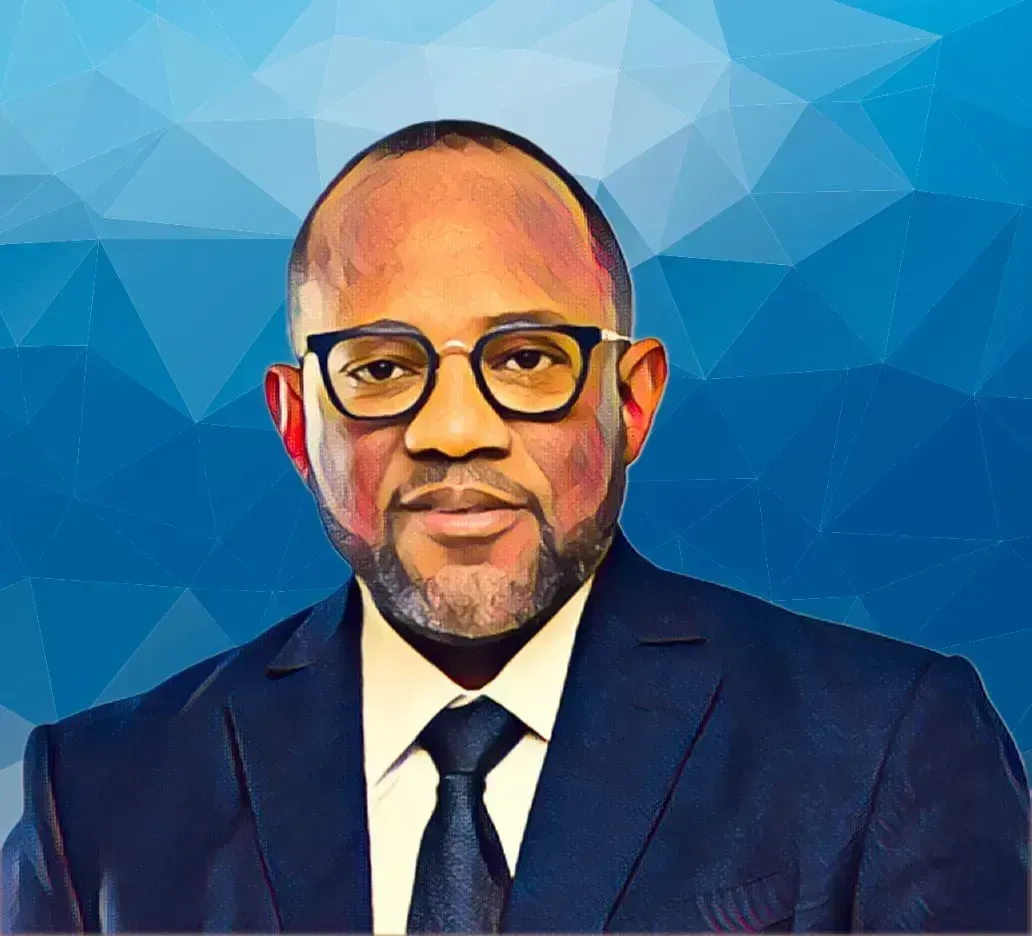
There is a particular irony in the fact that one of Angola's most ambitious industrialists grew up not in Luanda, the city of oil money and political networks, but in Huambo, a highland province in the country's center that spent most of his childhood under siege. The civil war that ravaged Angola from 1975 to 2002 hit Huambo with particular brutality. UNITA forces and the MPLA traded the city back and forth across two decades of fighting, leaving infrastructure destroyed and a population that learned to build with whatever was available because waiting for outside help was not a reliable strategy. Agostinho Kapaia grew up watching adults reconstruct what conflict kept destroying. When the war finally ended in 2002 and Angola began its post-war reconstruction, he was ready. He had been watching this problem his entire life.
Kapaia was born in Huambo and studied at London Business School, bringing back to a country that was learning to rebuild an international business education that most of his Angolan contemporaries had not acquired. Grupo Opaia SA was founded in August 2002 in Luanda, the same year the war ended and the same year Angola began the most intensive infrastructure reconstruction effort on the continent. The timing was not coincidental. Kapaia arrived in Luanda at the precise moment when the gap between what the country needed and what existed to deliver it was at its widest, and he built a company designed to close as much of that gap as possible.
He is the nephew of Antonio Mosquito, Angola's richest man, whose Grupo Antonio Mosquito conglomerate spans logistics, real estate, automotive distribution and mining and whose presence in the Angolan business establishment predates Kapaia's own by decades. The family connection provided context and network access that no London Business School degree alone could supply. What Kapaia did with that access was build something structurally different from what his uncle had built: not an empire organized around political proximity to the oil sector and the dos Santos establishment, but a diversified industrial conglomerate rooted in the sectors where Angola's population had the most acute unmet needs.
The decade nobody noticed and the national scale that followed
The first decade of Opaia was a consulting operation. There were no platinum-album moments, no dramatic contract announcements, no Forbes profiles. Kapaia was building the organizational architecture, the international partnerships and the sectoral credibility that would underpin everything that followed. He opened offices in Lisbon, São Paulo, Guangzhou and Miami, not because the money justified the overhead but because the access did, giving him procurement lines into European construction expertise, Brazilian agricultural knowledge, Chinese equipment manufacturing and American capital markets simultaneously.
From 2012 onward, Grupo Opaia began operating at national scale across Angola's provinces, and the pace of its growth has not slowed since. The portfolio that emerged from that decade of quiet preparation spanned civil construction, solar energy, drinking water systems, hospitality and tourism, agriculture, financial services and, eventually, automotive assembly and fertilizer production. Grupo Opaia's annual revenue reached $68.5 million in 2026, a figure that understates the company's economic footprint because most of its value sits in long-cycle project contracts whose revenue flows over multiple years rather than appearing in a single annual income line.
The agricultural division is the clearest illustration of the Kapaia commercial philosophy in practice. Opaia's farming arm controls more than 80,000 hectares of farmland and is Angola's largest cereals producer. Angola spent the civil war years and most of the post-war decade importing the bulk of its food using oil revenues, a structural dependency that made the country's food supply hostage to both the oil price and global grain markets simultaneously. Kapaia moved into agriculture not because it was the most profitable sector available to him but because it was the most strategically necessary, and because controlling Angola's largest cereal operation gave Opaia a platform from which every adjacent agricultural investment, including the fertilizer plant, had an immediate domestic customer.
The construction contracts and the scrutiny that followed them
The commercial engine that funded Opaia's agricultural and energy investments, and that first brought Kapaia to national and international attention at scale, was the construction division and its accumulation of public sector work.
Through its subsidiaries and consortia, Grupo Opaia secured approximately $1.3 billion in Angolan government contracts in the two years preceding May 2024. The portfolio covered a $350.8 million presidential decree award for 600 buses, a $357.5 million water treatment system, a $350 million fertilizer factory, a $125.5 million credit line for a pediatric hospital, and a $45.4 million contract for upgrades to the Luanda morgue. The breadth of the portfolio, spanning transport, water, health and industrial manufacturing, reflected the sectoral range that Kapaia had spent a decade building the capability to address. No Angolan private company had assembled a comparable multi-sector government delivery record in a comparable timeframe.
The scrutiny arrived alongside the contracts. Rafael Marques, director of anti-corruption platform Maka Angola, wrote to President João Lourenço questioning the bus contract, which was awarded through simplified presidential decree procedures rather than open tender. Marques cited a per-unit price of approximately $586,000 per bus against a market rate of approximately $271,100, and called for annulment on procedural grounds. Radio Angola noted the bus award was the second direct presidential award to Kapaia's group in under a year. Kapaia and Grupo Opaia have not been convicted of any wrongdoing in connection with any of these contracts.
The tension sits at the center of the Kapaia story without resolving it. He is building infrastructure Angola needs, in sectors left barren by three decades of civil war, at a scale and pace no comparable private operator has matched. He is doing so through a procurement environment where the distinction between competitive market access and politically facilitated advantage is genuinely difficult to draw, and where the pricing on certain contracts has attracted credible independent scrutiny. Both of those things are true simultaneously, and Angola's economic history offers no clean mechanism for separating them.
The fertilizer plant that anchors the next chapter
The most consequential single asset in the Opaia portfolio is not yet built. It is a fertilizer plant in Soyo, at the mouth of the Congo River on Angola's northern coast, that if completed at its planned capacity will represent the largest industrial investment of Kapaia's career and one of the most significant pieces of private industrial infrastructure in sub-Saharan Africa.
Afreximbank and Amufert SA signed a $1.4 billion credit facility to establish the plant, with Grupo Opaia as a strategic sponsor alongside Sonangol Natural Gas. Opaia holds a 90 percent equity stake in Amufert SA, the project vehicle. Afreximbank is serving as the Mandated Lead Arranger for the debt financing, with its Advisory and Capital Markets unit supporting equity raising. The plant's planned daily production capacity is 4,000 metric tons of ammonia and urea, with a total projected workforce of 4,700 people at full operation.
The investment logic is the same logic that drove the agricultural land acquisition, articulated at industrial scale. Angola produces natural gas. Angola has 80,000 hectares of farmland needing fertilizer. Angola currently imports virtually all of the fertilizer its agricultural sector requires, spending foreign exchange on a product whose primary input, natural gas, is available domestically in abundance. The Soyo plant converts that inefficiency into an industry: manufacture the fertilizer domestically, supply Angola's farms, export the surplus to a sub-Saharan African market that has its own structural fertilizer deficit. Kapaia has been building toward this logic since the first decade of Opaia's agricultural investment. The plant is the completion of a value chain that took 20 years to assemble.
The automotive complex opened in January 2026 in Luanda's Special Economic Zone reflects the same industrial logic applied to a different import dependency. The facility can assemble up to 1,000 buses and 22,000 light vehicles per year, including electric and hybrid models, and employed 1,500 young Angolans from its first day of operation. Angola has historically imported all of its vehicles. The complex, like the fertilizer plant, converts an import into a domestic industrial output, adding jobs, foreign exchange savings and local manufacturing capability simultaneously. Greenpower, the solar energy subsidiary within Opaia Ambiente, applies the same principle to electricity: assemble solar kits domestically, deploy them across the provinces the national grid does not reach, reduce the country's dependence on imported generator fuel.
The Huambo hotel, the southern Africa push and what the empire looks like from the inside
In Huambo, the province where Kapaia grew up watching conflict destroy what people built, Opaia owns Hotel Ekuikui, the largest hotel in the province, constructed with a $12 million investment financed through BAI bank, and positioned as the first property in a planned 20-hotel chain spanning every Angolan province. The hotel's location in Huambo rather than Luanda is the clearest signal of what distinguishes Kapaia's ambitions from those of most Angolan conglomerates: he is investing in the country's interior, in the places that were left behind by the oil economy, in the province that produced him.
Kapaia serves as president of the Angolan Community of Exporting and Internationalized Companies (CEEIA) and as vice president of PAFTRAC Southern Africa, regional positions that give him structured access to the trade and infrastructure networks his expansion plans require. On June 17, 2026, on the sidelines of the Global Tourism Forum Investment Summit in Luanda, he announced Opaia Group's entry into Mozambique, targeting construction, energy, water, industry and fertilizers, following a meeting with Mozambican President Daniel Chapo. He confirmed plans to open a local office and register a Mozambican subsidiary, stating the group would work alongside domestic partners rather than as a standalone foreign operator.
Kapaia told interviewers in 2012 that he wanted Opaia to be among the first Angolan companies listed on the stock exchange. The group's international office network across Lisbon, São Paulo, Guangzhou and Miami reflects a company being organized toward institutional scale. The fertilizer plant, if it reaches planned capacity, will generate recurring revenues that dwarf the project-based income of the construction division and create the kind of durable, compounding commercial foundation that transforms a successful conglomerate into a generational enterprise. The boy from Huambo who went to London Business School, came home to a country rebuilding from war, and decided to build the things Angola needed most is now closing in on the most consequential version of that original ambition. The plant is still under construction. The Mozambique office is not yet open. The automotive complex is just getting started. The chapter he described in January 2026 is still being written.
The intelligence satisfies curiosity. The paid briefings satisfy strategy.
Every Monday, Elite subscribers receive an Investor Memo breaking down the deal, the structure and the positioning behind the week's most consequential African wealth story - the kind of analysis that doesn't appear anywhere else.
Twice a month, a Wealth Intelligence brief profiles a single billionaire's holdings, cash flows and expansion pipeline in detail no public source matches.
→ Executive ($25/mo): Daily newsletter + Deep-Dive Reports
→ Elite ($75/mo): Everything above + Investor Memos + Wealth Intelligence + Quarterly Analyst Briefings
Subscribe now