

Table of Contents
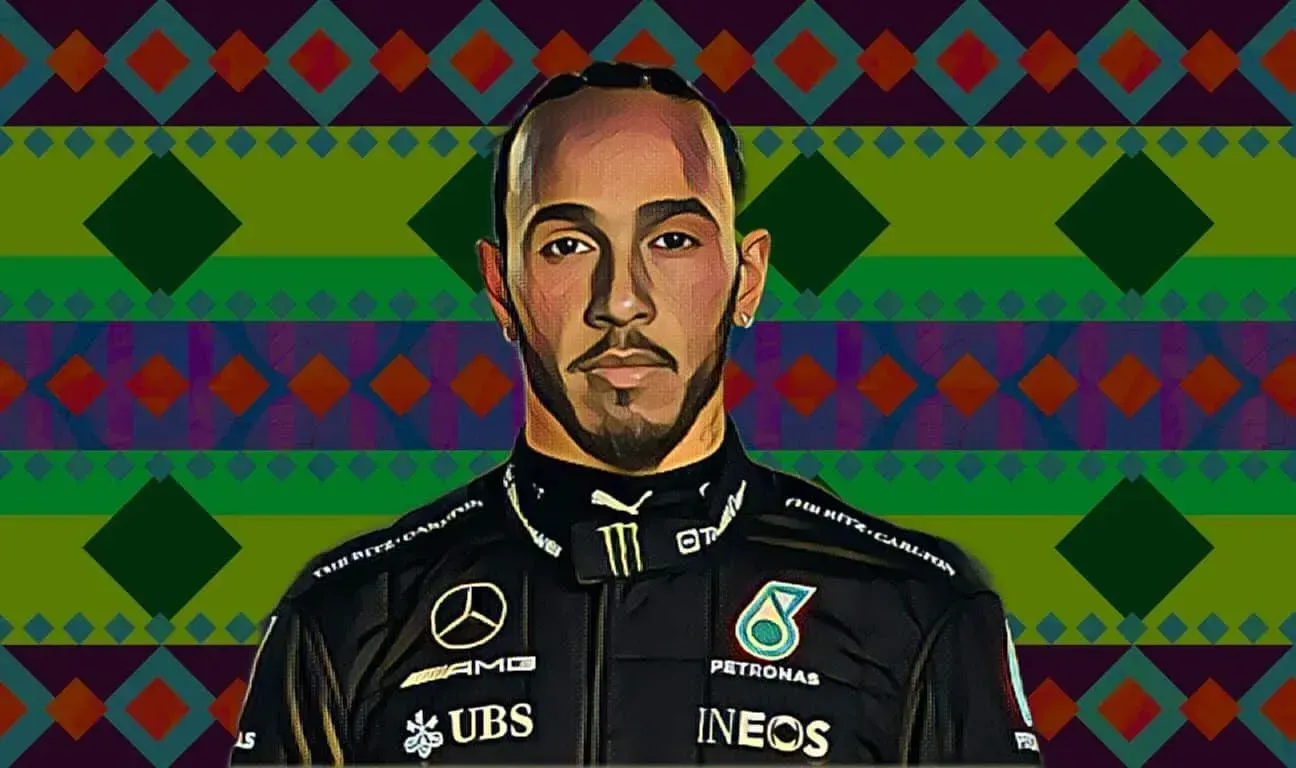
In September 2025, Sportico confirmed what the paddock had been quietly calculating for months. Lewis Hamilton had become the first Formula One driver in the sport's 75-year history to earn $100 million in a single calendar year. The figure arrived not from the racetrack alone but from the convergence of a record Ferrari contract, an endorsement portfolio that has only grown more powerful since his departure from Mercedes, and a film production company that co-produced a movie which earned $633 million at the global box office. The timing was ironic. His first season in the famous red car had been, by his own admission, a nightmare. Ferrari handed him machinery that was not yet built around him. He finished the 2025 season sixth in the drivers' championship, without a race win and without a title challenge. He also finished it richer than any racing driver who had ever lived.
That paradox sits at the centre of Lewis Hamilton's story in 2026. He is simultaneously the most commercially successful driver Formula One has ever produced and a man who joined Ferrari specifically because he believes there is still a race he has not won. Seven world championships. More wins, more pole positions and more podiums than any driver in the sport's history. A knighthood. A net worth estimated at $450 million. And yet at 41, he is still getting into a car on Sunday mornings and pushing to the absolute limit of human capability in pursuit of an eighth title that would make him the only driver in the sport's history to reach that number.
The tension between those two things, the unfinished business on the track and the extraordinary commercial machine he has built off it, is what makes Lewis Hamilton the most interesting financial story in motorsport.
The Stevenage kid who built the sport's most valuable personal brand
Hamilton was born on January 7, 1985, in Stevenage, a satellite town in Hertfordshire, England, to Anthony Hamilton and Carmen Larbalestier, who separated when he was two. He was raised primarily by his mother until age twelve, then moved in with his father, who had worked multiple jobs simultaneously, including as an IT contractor, a double-glazing salesman and a dishwasher, to pay for the karting career that began when Hamilton was eight years old. Anthony Hamilton at one point held four jobs at the same time, founding an IT company alongside his other work, all of it directed toward keeping his son on the track.
At ten years old, Hamilton walked up to McLaren team principal Ron Dennis at an awards dinner and told him he wanted to race for McLaren. Dennis wrote his number in Hamilton's autograph book and told him to call. Hamilton joined the McLaren and Mercedes-Benz Young Driver Programme three years later, at 13, in 1998. He was the first Black driver in the programme. He would spend the next decade becoming the most successful Black athlete in the history of motorsport, a distinction that has shaped not just his racing career but every business decision he has made since he understood that his platform was worth something.
His first Formula One season was with McLaren in 2007. He nearly won the championship as a rookie. He won it in 2008, his second year, in the most dramatic circumstances: crossing the line at the final corner of the final race of the season with the single point he needed. Six more championships followed, five of them with Mercedes between 2014 and 2020, a run of dominance that reshaped the sport and made him its global face at a moment when Formula One's commercial value was accelerating rapidly under Liberty Media's ownership.
The Ferrari deal that broke every record
In February 2024, Hamilton announced he was leaving Mercedes after 12 seasons and six world championships together to join Ferrari for 2025. The announcement sent shockwaves through the sport. It was the most consequential driver transfer in Formula One history, perhaps since Ayrton Senna joined McLaren in 1988. Ferrari had not won a constructors' or drivers' championship since 2008. Hamilton had never driven for them. The combination carried the kind of narrative weight that only exists at the intersection of sporting legacy and commercial calculation.
The contract that materialised is the most lucrative in the sport's history. Hamilton's base salary at Ferrari is confirmed at approximately $60 million to $70 million per year. Performance bonuses linked to race wins and championship positions push the total package to a reported $100 million in strong seasons. The deal runs for at least two years through 2026, with an option for a third year in 2027, giving a total confirmed contract value of approximately $210 million at base rates before bonuses. That figure is separate from Hamilton's personal sponsorship income, which his management has structured as independent commercial arrangements that Ferrari does not control.
The Ferrari contract also includes a provision that directs a reported 25 percent of certain salary components toward Mission 44, Hamilton's charitable foundation. That structure means Ferrari's investment in Lewis Hamilton simultaneously funds his salary and his philanthropy, a commercial arrangement as sophisticated as any in professional sport.
The 2025 season, his first at Ferrari, did not deliver the on-track results the partnership had promised. Hamilton finished sixth in the drivers' championship. The car's setup was configured around the characteristics of his predecessor Charles Leclerc rather than Hamilton's own driving preferences, and the integration between driver and machine that produces championship performances took the entire season to begin. He was candid about the difficulty. "A nightmare," he called it publicly. He arrived in 2026 having spent the winter working with Ferrari's engineers to rebuild the car around himself, with the new technical regulations that came into force this season providing a clean-sheet reset for the entire field.
Dawn Apollo Films and the $633 million movie
The most commercially significant venture in Hamilton's off-track portfolio is Dawn Apollo Films, the production company he founded in October 2022. Its first major project was the Formula One film released in the summer of 2025, starring Brad Pitt and directed by Joseph Kosinski, the same director behind Top Gun: Maverick. Hamilton co-produced the film alongside veteran Hollywood producer Jerry Bruckheimer in a production backed and distributed by Apple Original Films and Warner Bros. Pictures. The combination of Apple's streaming infrastructure and Warner's global theatrical distribution gave the film a release footprint that few sports productions have ever accessed.
The film grossed $633 million at the global box office, confirmed by Box Office Mojo as its final worldwide total, making it the highest-grossing auto racing film in history and the highest-grossing film of Brad Pitt's career in a leading role. Apple invested a reported $300 million in production and marketing, a commitment that reflected both the studio's belief in Formula One's growing American audience and Hamilton's capacity to lend the production authentic paddock access that no purely fictional production could replicate. The film earned four Academy Award nominations including Best Picture, the first sports film to receive that honour in years.
In February 2026, producer Jerry Bruckheimer confirmed at the Academy Awards luncheon in Los Angeles that a sequel had been greenlit at Apple Studios. Hamilton confirmed publicly that he had already attended script development meetings alongside Bruckheimer, director Joseph Kosinski and writer Ehren Kruger. "We had our first meeting maybe mid-to-late the second part of the end of the year," Hamilton said. "Me, Jerry, Joe talking about different ideas, different directions that we could go with the script." Dawn Apollo Films is now an active production company with a sequel pipeline and a broader content strategy that Hamilton has described as extending into television documentaries and other film projects.
Lewis Hamilton Ventures: the empire with a new name
In September 2025, Hamilton rebranded his commercial holding vehicle from Project 44 to Lewis Hamilton Ventures, a consolidation that brought his entire portfolio of businesses, investments and brand partnerships under a single named structure. Ross Connolly serves as Chief Operating Officer. Hamilton is Chief Executive Officer.
The portfolio under that umbrella is deliberately diverse and almost always values-led. Plus 44, his fashion and apparel brand named after the UK country dialling code, is the most visible consumer-facing brand in the portfolio, producing collections shown at Paris Fashion Week and positioned as a serious fashion entity rather than a celebrity line. Hamilton has collaborated with Dior and maintained long-running partnerships with Tommy Hilfiger, building a credibility in luxury fashion that is unusual for a racing driver.
Almave is the investment that reflects his personal convictions most directly. Launched in 2023 in partnership with Mexican spirits firm Casa Lumbre, Almave is a non-alcoholic blue agave spirit designed for the premium drinks market. French drinks giant Pernod Ricard invested in the company in 2024. The product is now available in Target stores across the United States, giving it mass-market retail distribution that most non-alcoholic spirits brands spend years trying to achieve. Hamilton has been plant-based for years and describes his investment in Almave as commercial alignment with personal values rather than celebrity endorsement.
NotCo, the Chilean food-tech startup that uses artificial intelligence to develop plant-based protein products, received investment from Hamilton as part of a broader food technology thesis running through his portfolio. TMRW Sports, the Tiger Woods-backed entertainment company that owns TGL, the indoor golf league, and was appointed as the NFL's partner for its new flag football league, counts Hamilton as an investor, placing him adjacent to two of the fastest-growing sports entertainment properties in the American market simultaneously.
Denver Broncos and the sports ownership strategy
In August 2022, Hamilton joined the Walton-Penner family ownership group that acquired the Denver Broncos NFL franchise for $4.65 billion, the most expensive sports franchise transaction in history at the time of its completion. His co-owners include Walmart heir Rob Walton, former US Secretary of State Condoleezza Rice, and Ariel Investments co-CEO Mellody Hobson. The acquisition was explicitly positioned by the NFL as an exercise in diversifying the sport's ownership base, which had historically been almost entirely white.
Hamilton has spoken candidly about why the investment matters to him beyond its financial characteristics. The representation dimension, his visibility as a Black partial owner of a major American sports franchise, was central to his decision. The Broncos had a strong 2025 NFL season, which appreciated the franchise's value since the acquisition. Hamilton's minority stake does not give him operational influence over the team's management, but it gives him a durable asset in one of the world's most commercially powerful sports leagues.
Real estate and the Monaco equation
Hamilton's property holdings span London and New York. He owns a four-storey mansion in Kensington, London, valued at approximately $25 million. He is a Monaco resident, a tax status that multiple reports estimate saves him approximately $27 million per year in UK income tax that would otherwise apply to his global earnings. Thirteen Formula One drivers live in Monaco for precisely this reason. It is the sport's most established legal tax strategy, and Hamilton has maintained Monaco residency throughout his peak earning years.
Mission 44 and the work that outlasts the racing
Hamilton founded Mission 44 in 2021 with a personal donation of £20 million, making it one of the largest initial endowments to a UK athlete foundation in history. The organisation focuses on improving access to education and employment for young people from underrepresented backgrounds in the United Kingdom, with a specific focus on Black and mixed-race students. It has partnered with Teach First to place Black educators in British schools, supported academic institutions to redesign their access programmes and funded the Hamilton Commission, a research initiative conducted with the Royal Academy of Engineering that investigated the structural barriers preventing Black people from entering British motorsport.
The Commission's findings have since informed diversity, equity and inclusion strategies at Formula One teams and at the sport's governing body, the FIA. That institutional reach, from a funded report to actual policy changes inside one of the world's most commercially sophisticated sports organisations, represents a philanthropic outcome that is more consequential than most celebrity foundations achieve in decades.
The second Ferrari year and what comes next
Hamilton described his 2025 Ferrari debut as a nightmare. The car was not configured to his driving preferences. He finished the year sixth in the drivers' championship without a win. He responded on social media in early 2026 with characteristic directness. "I'm re-set and refreshed," he wrote. "I'm not going anywhere, so stick with me. For a moment, I forgot who I was, but thanks to you and your support you're not going to see that mindset again. I know what needs to be done. This is going to be one hell of a season."
The 2026 Formula One season has brought entirely new technical regulations that reset the car performance hierarchy, a reset that Hamilton and Ferrari believe plays in their favour. Whether the eighth world championship materialises in 2026 or beyond, the commercial empire he has built operates entirely independently of what happens on Sunday afternoons. Dawn Apollo Films has a sequel to develop. Lewis Hamilton Ventures has a portfolio to expand. Mission 44 has a generation of underrepresented young people to educate.
At $450 million in net worth, earned entirely through performance, strategy and brand building from a starting point of a used go-kart that cost his father one month's income, Lewis Hamilton has already built something no racing result can take away.
The intelligence satisfies curiosity. The paid briefings satisfy strategy.
Every Monday, Elite subscribers receive an Investor Memo breaking down the deal, the structure and the positioning behind the week's most consequential African wealth story - the kind of analysis that doesn't appear anywhere else.
Twice a month, a Wealth Intelligence brief profiles a single billionaire's holdings, cash flows and expansion pipeline in detail no public source matches.
→ Executive ($25/mo): Daily newsletter + Deep-Dive Reports
→ Elite ($75/mo): Everything above + Investor Memos + Wealth Intelligence + Quarterly Analyst Briefings
Subscribe now