

Table of Contents
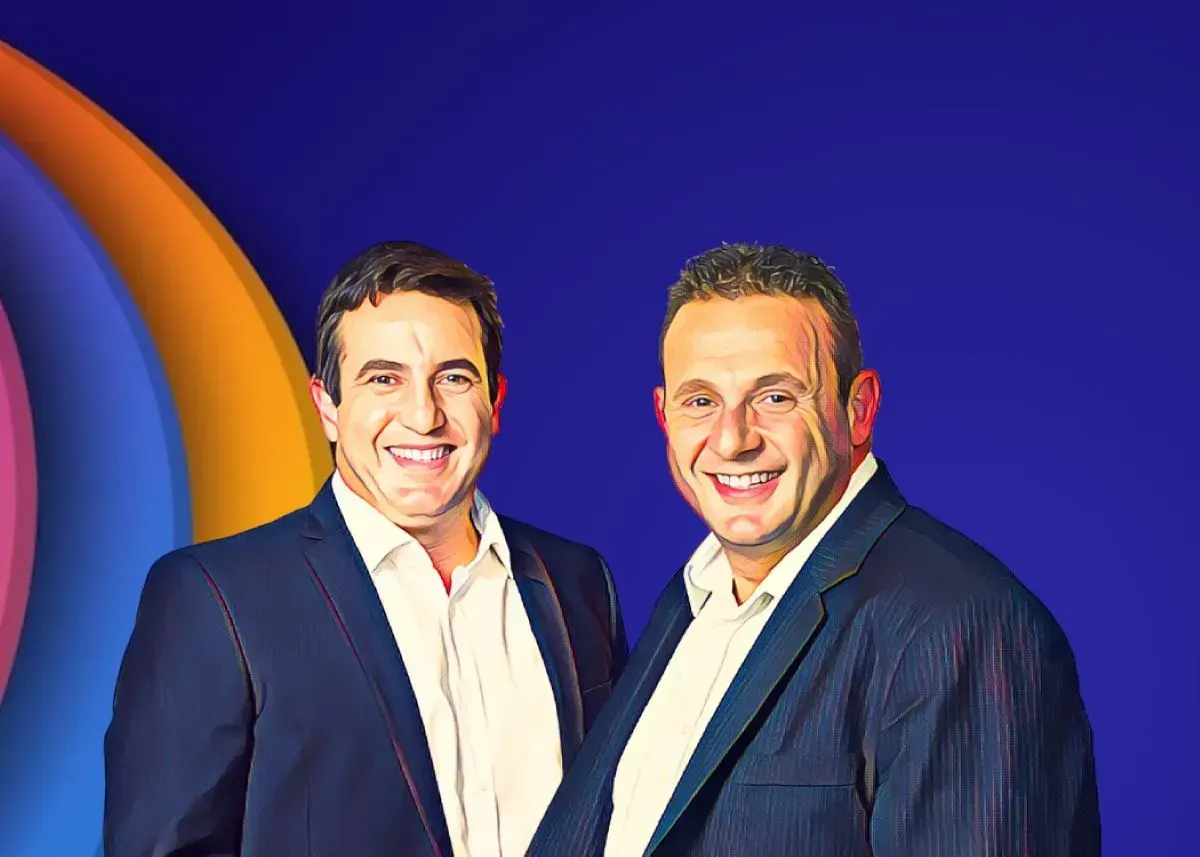
Blu Label Unlimited, the distribution group Brett and Mark Levy started by selling car radios from the boot of their car in 2001, reported a full-year loss of 4.9 billion rand, about $306 million, after marking down its Cell C shareholding to what the market says the mobile operator is worth.
The swing amounts to a 297% reversal on the prior year. It follows Cell C's listing last November, which valued the operator at 9 billion rand, below the figure Blu Label carried on its books. The write-down is an accounting adjustment rather than cash leaving the business.
Underneath it, the company made money. Stripping out the Cell C move, Blu Label posted net profit after tax of 677 million rand, roughly $42 million, on revenue of 9.4 billion rand. Core headline earnings came to 75.33 cents a share. Conversion uses 16.01 rand to the dollar.
Shareholders are being paid for the first time in nearly a decade. The board declared a final dividend of 10 cents a share, taking the total for the year to 53.56 cents including a 43.56-cent interim declared for the six months to November, which was the group's first distribution in eight years. It has also begun buying back stock.
A formal dividend policy was adopted on Aug. 25. It targets an annual payout of 30% to 50% of core headline earnings, excluding anything earned from the residual Cell C holding, delivered as dividends, buybacks or a combination. Separately, the group will pass on between 50% and 70% of any dividends it receives from Cell C, either in cash or by distributing Cell C shares of equivalent value.
The Cell C position remains the largest single thing on the balance sheet. Blu Label still holds 49.53% of the operator, worth about 4.31 billion rand against Cell C's current market value of 8.7 billion. Blu Label's own market capitalisation stands at 7.3 billion rand, which means the residual Cell C stake accounts for roughly 59% of what investors say the whole group is worth. That figure is a Billionaires.Africa calculation from the two market values.
Investors took the results poorly. The stock rose 0.24% to 8.32 rand in the hour after publication, then fell 3.97% to 7.99 rand. It has gained 46.22% over five years.
Cell C has been the defining problem of the Levy brothers' tenure. Blu Label paid 5.5 billion rand for its stake in 2017, put in a further 1 billion rand afterwards, and eventually wrote the carrying value down to zero. Listing the operator separately in November removed it from the group's accounts, cut the exposure and gave investors a clearer view of what the underlying distribution business earns.
The brothers described the year as transformational and said the separation had materially simplified the balance sheet and the investment case, allowing the group to concentrate on the platforms where it has scale and can generate cash.
What remains is a business built around everyday services: payments, financial services, data and energy, reorganised into seven groupings that combine physical and virtual distribution with a digital layer. Blu Energy secured a multi-year energy trading licence from the National Energy Regulator of South Africa during the year, allowing it to trade renewable power between municipalities, independent producers and end users.
Priorities for the coming year, according to the Levys, are to "generate cash, allocate capital with discipline" and act on opportunities already identified. They pointed to the group's procurement strength, data capability and distribution reach as the basis for trading through a weak South African consumer market.
The results land in the same week the group changes chairman. Larry Nestadt, who has held the role since the 2007 listing, retires at the year-end meeting, with Lindsay Ralphs taking over after being appointed chairman designate in February.
The intelligence satisfies curiosity. The paid briefings satisfy strategy.
Every Monday, Elite subscribers receive an Investor Memo breaking down the deal, the structure and the positioning behind the week's most consequential African wealth story - the kind of analysis that doesn't appear anywhere else.
Twice a month, a Wealth Intelligence brief profiles a single billionaire's holdings, cash flows and expansion pipeline in detail no public source matches.
→ Executive ($25/mo): Daily newsletter + Deep-Dive Reports
→ Elite ($75/mo): Everything above + Investor Memos + Wealth Intelligence + Quarterly Analyst Briefings
Subscribe now