

Table of Contents
MIDROC Gold Mine is building a plant in western Ethiopia capable of treating 1.25 million tonnes of ore a year, eight years after the government shut down the mine that carried the company's gold business for two decades.
The mine it lost was Lege Dembi, in the Guji Zone of Oromia. Ethiopia's Ministry of Mines suspended its ten-year concession in May 2018 following protests and a BBC Amharic investigation that reported chemicals used at the site were linked to birth deformities among local children. Lege Dembi had operated since 1998 as an open pit processing 1.6 million tonnes of ore a year.
The new plant sits in the Metekel Zone of Benishangul-Gumuz, a region bordering Sudan and South Sudan with substantial gold and other mineral deposits, and roughly 700 kilometres from the suspended site.
MIDROC has now ordered the machinery for it. CEMETC GmbH, an Austrian engineering firm headquartered in Enns, will manufacture, install and deliver the equipment, with completion expected within a year. Dula Mekonnen, deputy chief executive of MIDROC's mining sector, signed for the Ethiopian side and CEMETC chief executive Thomas Plochberger for the Austrian. CEMETC builds industrial technology for the cement and mining sectors and supplies production monitoring and efficiency systems.
MIDROC Investment Group announced the Metekel project in January 2025, committing more than 26 billion Ethiopian birr, about $200 million, to build a gold processing factory in the Bullen District. The area had been affected by ethnic violence in preceding years, and company representatives met senior regional government officials at Gelgel Beles before proceeding.
The environmental question at Lege Dembi has not gone away. The International Cyanide Management Institute, which administers a voluntary code for the safe use of cyanide in gold and silver mining, certified the site as compliant earlier this year, and MIDROC became a signatory to the code in February 2024. Ethiopian justice ministry officials separately told a United Nations committee that residents near the mine have been compensated for environmental damage and health impacts, while noting that the exact cause of the damage has not been established and attributed to the company.
Under a March 2018 licence renewal agreement, MIDROC was required to carry out cyanide decommissioning work costed at 98 million birr, with the money held in a blocked account at a state-owned bank and released in phases. That account now sits with Dashen Bank, in which MIDROC holds an interest, and contained 92 million birr as of August 2025 according to an audit report.
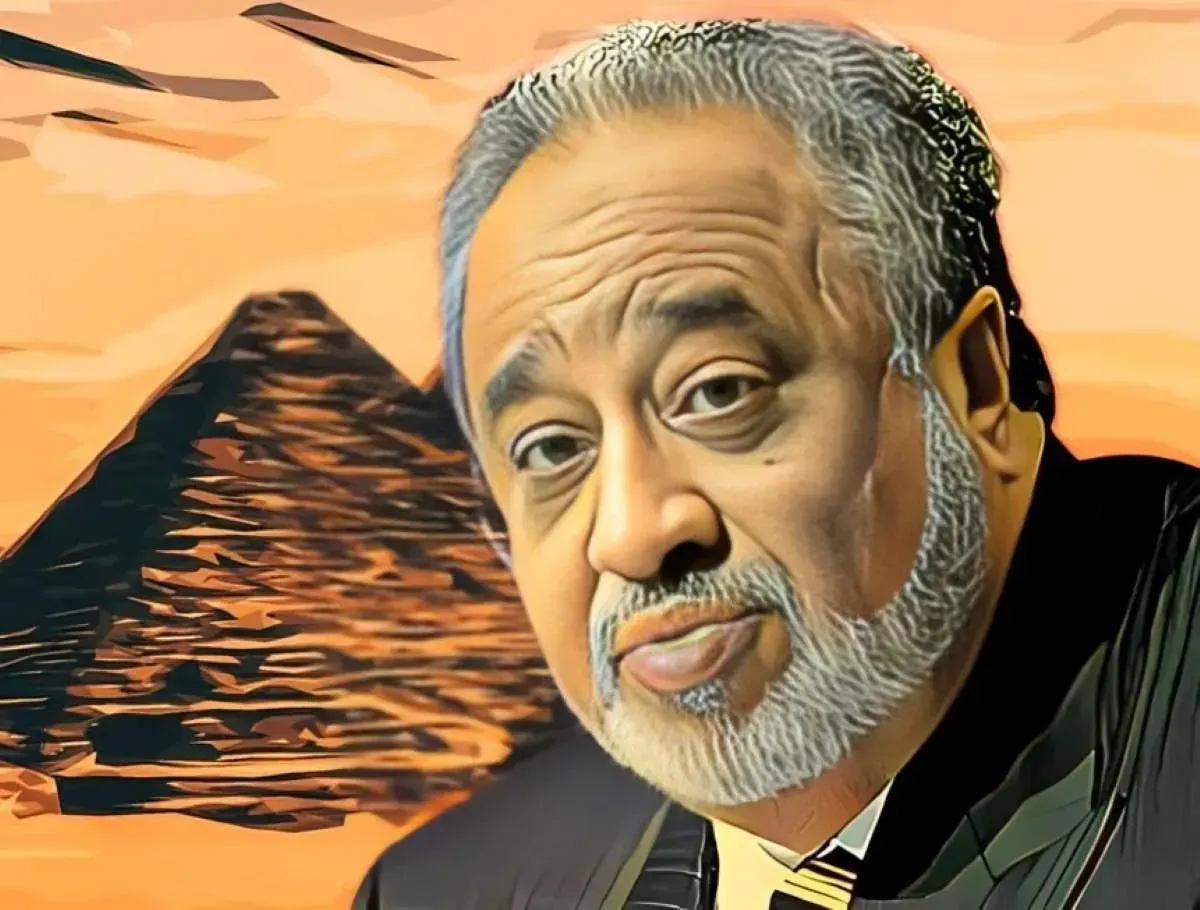
Al-Amoudi owns 98% of MIDROC Gold. He founded it in the late 1990s with his wife Sofia Salah Al-Amoudi and the Ethiopian government, with initial capital of $51.6 million, and the company acquired the Lege Dembi concession through privatisation in 1997 for $172 million. The remaining 2%, once held by the finance ministry, now sits with the Ethiopian Biofuel Corporation.
He was born in Dessie in Wollo Province to a Yemeni father and an Ethiopian mother, migrated to Saudi Arabia and took Saudi citizenship. He built his fortune through Corral Petroleum Holdings and MIDROC, which together employ more than 70,000 people, and his construction consortium won the contract to build Saudi Arabia's national underground oil storage complex in 1988. MIDROC Ethiopia, created in 1994, runs 74 group and affiliate companies across construction, real estate, mining, hospitality, aviation, financial services, oil and agriculture, and holds shares in Dashen Bank and Nyala Insurance.
Ethiopia has been courting foreign investment in mining as part of reforms intended to broaden its revenue base beyond agriculture. Gold ranks among the country's largest export earners, though output has been constrained by illegal mining and ageing equipment.
The intelligence satisfies curiosity. The paid briefings satisfy strategy.
Every Monday, Elite subscribers receive an Investor Memo breaking down the deal, the structure and the positioning behind the week's most consequential African wealth story - the kind of analysis that doesn't appear anywhere else.
Twice a month, a Wealth Intelligence brief profiles a single billionaire's holdings, cash flows and expansion pipeline in detail no public source matches.
→ Executive ($25/mo): Daily newsletter + Deep-Dive Reports
→ Elite ($75/mo): Everything above + Investor Memos + Wealth Intelligence + Quarterly Analyst Briefings
Subscribe now