

Table of Contents
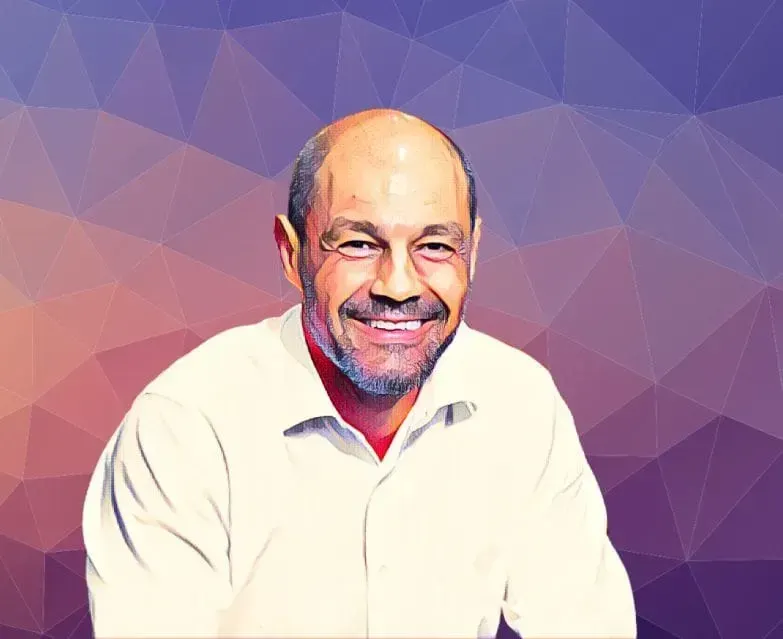
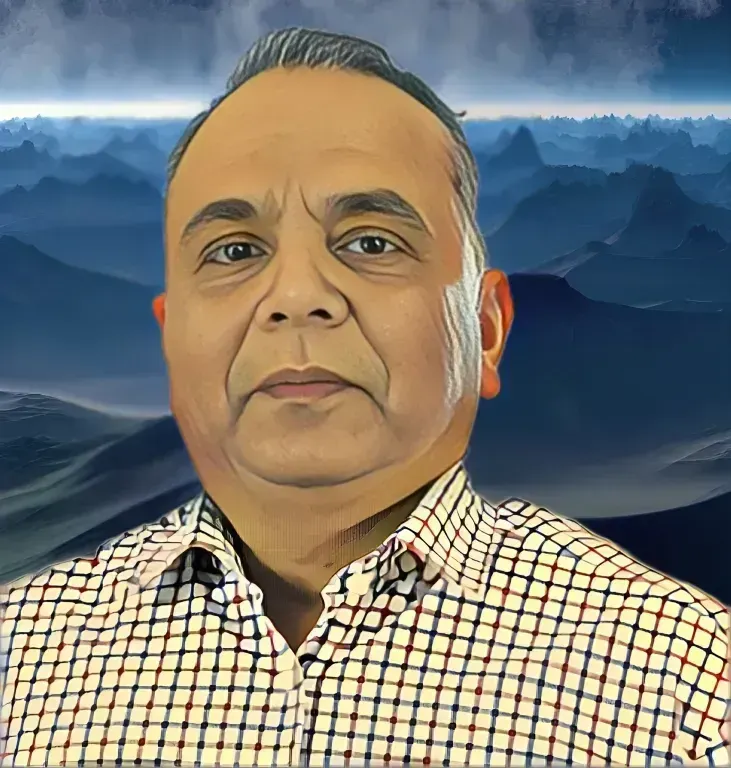
In 1992, a quiet young man from a small town in Kerala showed up at Wayside Supermarket in Lobatse, a border town in southeastern Botswana about an hour's drive from Johannesburg, with BWP200 in his pocket and a chartered accountancy qualification from the Institute of Chartered Accountants of India. He had been dispatched by the Gaborone office of the accounting firm Acumen, later known as Mazars, to help the supermarket's owner, Farouk Ismail, keep his books in order. A former bookkeeper who worked with him that year described the encounter bluntly: "A rather short man from India had come to help Farouk keep Wayside books in order." Nobody in that building had any particular reason to expect what would follow. Ramachandran Ottapathu, known across Botswana simply as Ram, is now the richest man on the Botswana Stock Exchange and the CEO of the largest grocery retailer in southern Africa outside South Africa.
The BWP200 detail is not incidental. Ottapathu himself has cited it publicly as the full accounting of what he brought to Africa, and it carries the same weight in the Botswana business community that the $7 pocket story carries in the Dwayne Johnson biography: a number small enough to verify the scale of everything that came after it. He arrived with less than the cost of a week's groceries in the town where he would eventually become the dominant grocery retailer. The distance between those two facts is the Ramachandran Ottapathu biography in its entirety.
He was born in Ollur, a small commercial town in Thrissur district in Kerala, India, known for its tile factories and wood industries, and for producing people who tend to leave. His family was poor. His father was a weaver. When Ottapathu was 10, his 17-year-old elder brother Balakrishnan died of a snakebite, and his father drifted into drinking and despair in the aftermath. The burden of the family shifted to Ottapathu. He studied hard, cleared his chartered accountancy examinations on the first attempt from the University of Calicut, and at a family function, met a stranger who offered him a job in Botswana. He reached Botswana in 1992. "Just like any other Indian," he later said, "for me, Africa and Botswana seemed like another world back then."
The Lobatse supermarket and the accountant who took over
Wayside Supermarket had been founded in 1986 by the Chopdat family in Lobatse, dealing initially in electrical appliances, particularly transistor radios and television sets, serving Zimbabwean traders who crossed the border to buy in bulk and exploiting the proximity to South Africa for sourcing. Farouk Ismail, who ran the operation, had built strong relationships with Zimbabwean traders and a reputation for reliable stock. By 1992, when Ottapathu arrived with his accounting qualification, the business was growing faster than Ismail could manage alone and needed financial discipline alongside operational energy.
Ottapathu did not stay an accountant for long. In 1992, recognizing that the retail market was controlled by South African chains and that a significant gap existed in value-focused grocery retail for lower-income consumers, the partnership pivoted: they stopped specializing in electrical appliances, added groceries and vegetables, and extended trading hours from 5 p.m. to 8 p.m. The strategy was simple and the market confirmed it immediately. More customers came. A second store opened in 1993. The first Gaborone store, Friendly Grocer, opened in 1999. The brand consolidated in 2003. By 2012, when Choppies listed on the Botswana Stock Exchange in the largest IPO in the exchange's history, raising BWP350 million in an offering oversubscribed by up to 400 percent, the company Ismail had founded and Ottapathu had transformed was Botswana's dominant grocery chain.
The expansion that followed the listing was regional in ambition and aggressive in execution. International expansion began in South Africa in 2008, Zimbabwe in 2013, Zambia and Kenya in 2016, and Tanzania and Mozambique in 2017. Choppies acquired 10 Spar stores in Zimbabwe for $22.5 million in 2013, establishing a distribution center in Harare that gave it physical infrastructure across a market of 15 million people. A secondary listing on the Johannesburg Stock Exchange followed in May 2015. At its peak, Choppies operated more than 200 stores across six African countries, employed over 11,000 people and generated annual revenue that crossed BWP9 billion in 2017.
The suspension, the accounting crisis and the return
What happened next is the most instructive passage of the Ottapathu commercial biography, and the one that has received the least proportional attention relative to the growth story that preceded it.
In early 2018, Choppies identified accounting irregularities in its financial statements, including errors in revenue recognition, inventory valuation and related-party transactions that had been approved by its long-time auditor KPMG in prior years. KPMG was replaced by PwC. The subsequent PwC audit faced months of delays. Choppies' shares were suspended on both the BSE and the JSE pending resolution of the discrepancies. And in May 2019, Ottapathu was suspended from his position as CEO on allegations of accounting irregularities raised by the incoming auditor. He was reinstated the same year after an internal review, returning as CEO and executive director in 2019 with his equity position and his operational role intact. MarketScreener records show his current CEO appointment running from 2019 to the present.
The recovery from that institutional crisis was not cosmetic. It required a fundamental strategic repositioning that Ottapathu has executed with the same commercial discipline that built the original business. Strategic divestments from South Africa, Mozambique, Kenya and Tanzania took place from 2020 onward, systematically withdrawing from markets where economic challenges, currency volatility, consumer spending shifts and operational inefficiency made sustainable profitability unavailable at acceptable risk levels. In November 2024, Choppies announced its exit from Zimbabwe, selling 30 stores to Sai Mart, completing the withdrawal from a market where government exchange rate policies and the growth of informal retail had made formal grocery operations structurally difficult.
The result of that multi-year consolidation is a leaner, more profitable and more focused business. Choppies' H1 2025 revenue rose 19.4 percent to $346.2 million, fueled by 26 new store openings, inflation-driven pricing and higher sales volumes across Botswana, Namibia and Zambia. Total assets grew 4.5 percent to BWP2.94 billion, while shareholders' equity surged 63.1 percent. Choppies' valuation has surged 25 percent over five years, 29 percent over one year and 21 percent over six months, reflecting investor confidence in a simplified operating model that concentrates resource deployment in markets where the company wins rather than spreading it thinly across markets where it struggles.
The portfolio beyond groceries
Ottapathu has always insisted that Choppies covers only 30 percent of the businesses he runs. The remaining 70 percent spans real estate, medical distribution, financial services and industrial operations, with the most commercially significant of these being the Far Property Company.
Founded in 2010 and headquartered in Gaborone, Far Property Company specializes in the ownership and management of real estate assets, with a portfolio of approximately 206 properties spanning Botswana, South Africa and Zambia, including warehouses, shopping centers housing Choppies outlets and commercial properties. The FAR acronym in the company's name stands for Farouk and Ram, cementing in the legal name of the real estate vehicle the same partnership that runs through the grocery business. Ottapathu holds a 28.02 percent stake in Far Property. The real estate and grocery businesses are deeply interrelated: Choppies stores frequently anchor Far Property centers, creating a commercial feedback loop in which the retail brand drives foot traffic to the landlord and the landlord provides the retail brand with favorable lease terms and strategic locations.
In July 2023, Choppies acquired a 76 percent stake in Kamoso Africa, a diversified consumer goods operation that added liquor stores, milling, grain packaging and water bottling operations to the group's portfolio. The Kamoso acquisition is the most important single deal since the 2015 JSE listing: it extends Choppies from a pure grocery retailer into a manufacturer and packager of the commodity goods it sells, reducing dependence on third-party suppliers for core categories and improving margin control across the value chain. Choppies plans to roll out hardware stores in Namibia and Zambia leveraging the Kamoso platform, extending the non-grocery revenue base that Ottapathu has been building since the accounting crisis forced a reconsideration of the group's long-term commercial architecture.
Monyglob, Choppies' financial services platform, is being expanded in Namibia and Zambia with the aim of growing nonretail revenue streams, moving the company toward the embedded finance model that South African and East African retailers have demonstrated can generate significant fee income from a customer base that already trusts the brand with its grocery spending. His son Balram Ottapathu serves as managing director of Kalahari Medical Distribution, the medical distribution arm of the family commercial portfolio, extending the Ottapathu footprint into healthcare supply chains. In India, he chairs Yogakshemam Loans Limited, a non-banking financial company registered with the Reserve Bank of India since 2000 and based in Anthikad, Thrissur, which provides gold, vehicle, term and business loans, maintaining a financial services presence in the home district he left more than three decades ago.
BWP200 in, $40 million and counting
The net worth figures attached to Ottapathu vary dramatically across sources, with some citing $40.9 million based on his listed equity stakes and others suggesting figures up to $580 million or $800 million that are not verifiable against any audited position. Billionaires.Africa's most recent confirmed calculation, based on BSE closing prices from January 30, 2026, places his combined stake in Choppies, Far Property and Afinitas at BWP447.03 million, approximately $40.93 million. That figure represents only the publicly traded component of a portfolio that also includes Kamoso, Monyglob, Kalahari Medical Distribution, Yogakshemam Loans and the various unlisted entities through which Ottapathu operates his non-retail businesses. The total is almost certainly larger. How much larger is not ascertainable from public filings.
What is ascertainable is the distance traveled. He left Ollur with no connections to Africa, a chartered accountancy certificate and the hunger of a man whose family had given him every reason to need the world to go right. He arrived in Lobatse with BWP200. He kept books for a supermarket owner. He noticed that the market for affordable groceries was undersupplied. He said so, pivoted the product mix, extended the trading hours, opened a second store, then a third, then a hundredth, then listed on two stock exchanges, crossed BWP9 billion in annual revenue, hit an accounting crisis, survived it, rebuilt the business leaner and more disciplined than it had ever been, and is now expanding into hardware, financial services and food manufacturing. He still wants to own a bank. That much, at least, has not changed.
The intelligence satisfies curiosity. The paid briefings satisfy strategy.
Every Monday, Elite subscribers receive an Investor Memo breaking down the deal, the structure and the positioning behind the week's most consequential African wealth story — the kind of analysis that doesn't appear anywhere else.
Twice a month, a Wealth Intelligence brief profiles a single billionaire's holdings, cash flows and expansion pipeline in detail no public source matches.
→ Executive ($25/mo): Daily newsletter + Deep-Dive Reports
→ Elite ($75/mo): Everything above + Investor Memos + Wealth Intelligence + Quarterly Analyst Briefings
Subscribe now