


Table of Contents
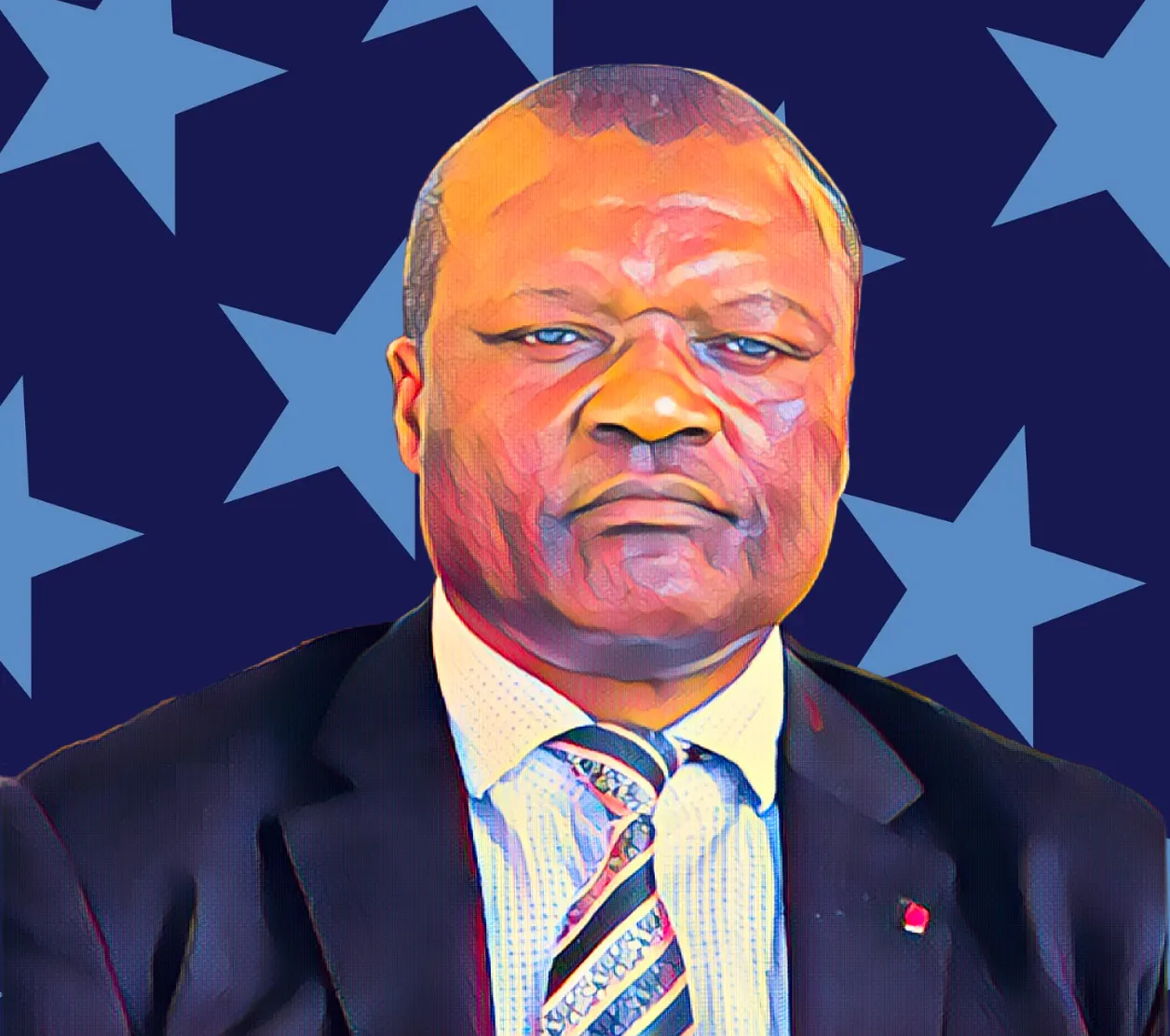
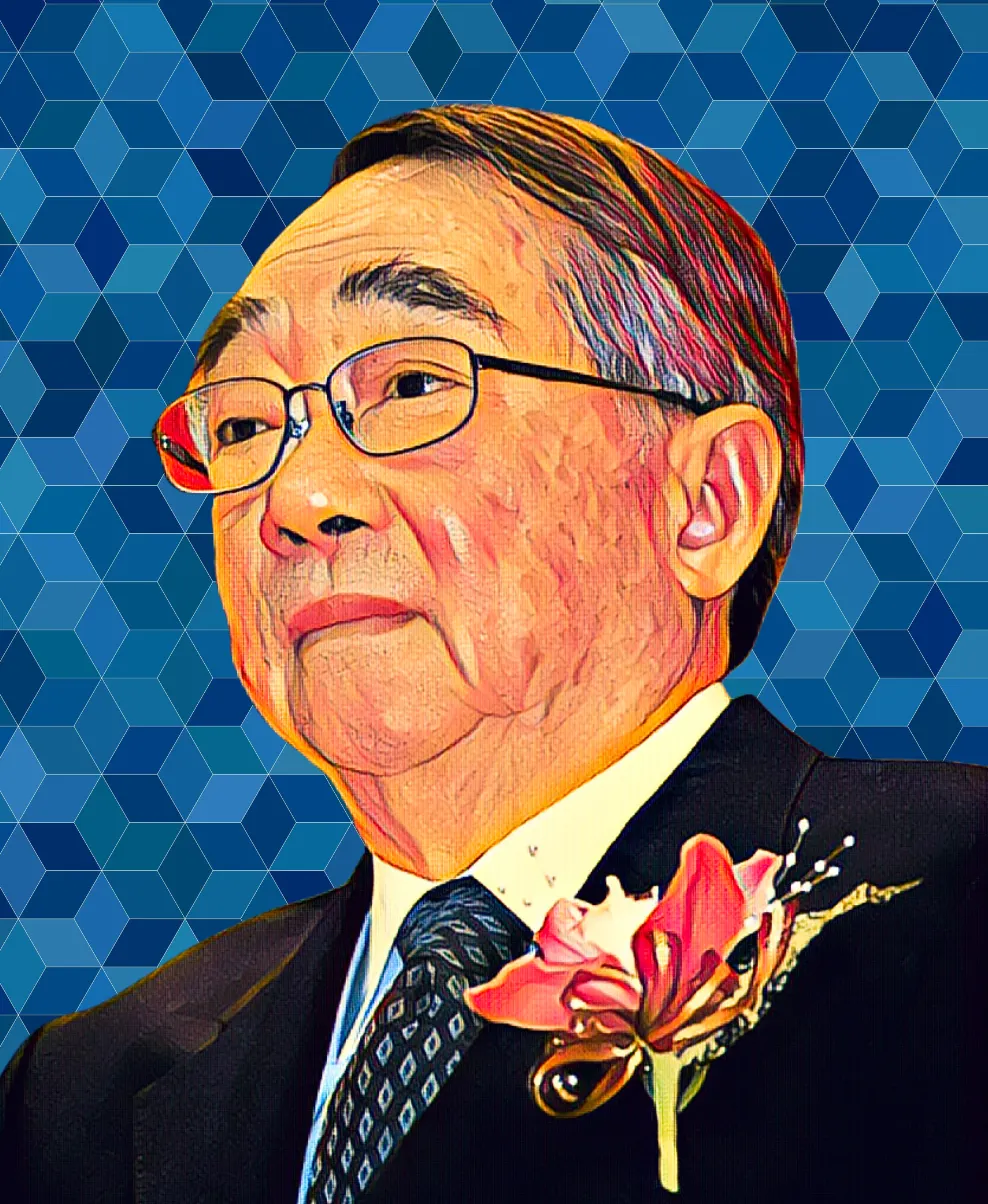
Poto-poto is the kind of neighborhood that produces people who leave, and occasionally produces people who use the leaving as the engine of something larger. It sits in the northern reaches of Brazzaville, a dense, working-class commune of unpaved streets and market stalls and churches and bars, the kind of place where ambition is common and the infrastructure to support it is not. Paul Obambi was born there on December 13, 1954, the son of a neighborhood rather than an institution, and he spent his childhood playing football barefoot on Poto-poto's streets and attending meetings of the Union of Congolese Socialist Youth, UJCS, the party youth structure that was, in the one-party Congo of the 1960s and 1970s, the primary available platform for a young man who wanted to matter. He was not wealthy. He was not connected by birth. What he had was the particular hunger of a boy who grew up watching how little separated the people who built things from the people who did not, and who decided, early, which side of that gap he intended to occupy.
The neighborhood shaped him in ways he has occasionally acknowledged and more often deflected. He has called Congo a country of jealous and lazy people, a remark that reads differently when you know it was made by a man from Poto-poto who watched his neighbors closely enough to understand the culture of envy that surrounds visible success in a place where success is scarce. He has said money hates noise, a principle he has invoked to explain his discretion about his wealth and that sits in some tension with the visibility of a commercial empire that now spans 11 countries, 6,000 outdoor advertising panels from Nairobi to Dakar, an iron ore mine, a port modernization contract in Douala, a beverages factory, a soap works, a telecommunications stake, a property company and a transit operation that began at the container yard in Pointe-Noire more than three decades ago. The noise is considerable. The empire is real.
He studied at Marien Ngouabi University in Brazzaville before specializing in economics and financial analysis at the International Center for the Development of Postal and Telecommunications Executives in Toulouse, eventually earning a doctorate in economics. He became a senior official at the National Office of Posts and Telecommunications, ONPT, rising to director level, before joining the Pierre Otto Mbongo Group, GPOM, in 1986, a conglomerate of 13 companies operating across Brazzaville, Pointe-Noire, South Africa and the south of France and specializing in fats, paint, maritime provisioning, computing and hospitality. He resigned from GPOM four years later, having absorbed from that institution both the structural understanding of what a diversified Congolese conglomerate could look like and the network of relationships that would make the next chapter possible.
The removals company, the soap factory and the first empire
In 1990, Obambi acquired the Congolese removals company DEMECO. He sold it immediately and used the proceeds to create Translo in 1992, a company specializing in oil equipment transit and container yard management at the port of Pointe-Noire. The petroleum transit business was the right sector at the right moment: the Republic of Congo's oil production was expanding through the early 1990s, the logistical infrastructure serving it was underbuilt, and a company with the right relationships and the right operational capability could insert itself into a supply chain whose economics were driven by the size of the oil industry rather than by the scale of the logistics operator. Translo was that company, and it became the first subsidiary of what Obambi was already thinking of as a group rather than a single business.
In 1994, as the Republic of Congo's privatization of state-owned enterprises gathered pace following the end of the Marxist-Leninist regime, Obambi moved decisively, acquiring the Savco soap factory, adding industrial manufacturing to the transit and logistics platform he had built from the DEMECO proceeds. The soap company's name was eventually absorbed into the group's own: Sapro, the name Obambi gave to the conglomerate and the former soap works, became the brand under which every subsequent acquisition and subsidiary would operate. Soap, transit, logistics, and then more. In 1994, Obambi also launched Media International, the outdoor advertising subsidiary, establishing a position in the communications sector that would become, two decades later, the foundation for one of the group's most ambitious acquisitions.
The expansion that followed over the next decade converted Sapro from a Congolese conglomerate into a multi-country platform. Sapro Boissons introduced the Délice brand of fruit juices to the Congolese market, the first company to offer fresh, natural juice in the country. Sapro Oil, established in 2006, entered the hydrocarbons sector directly rather than merely serving it through transit services. The group built partnerships with Air France, Bolloré, JCDecaux, Airtel, MTN, Attijariwafa Bank, RwandAir, BGFI Bank, Nestlé, Heineken and others, extending its commercial relationships across the most significant European and African commercial players operating in its markets. Sapro Group, established in 1992, operates across 11 countries on three continents, with subsidiaries spanning energy, construction, manufacturing and services.
The $350 million iron ore bet and the railway that would complete it
The most commercially ambitious project of Obambi's career, and the one that has attracted the most attention from international partners and international critics simultaneously, is the iron ore operation at Mayoko in the Niari department, approximately 300 kilometers northeast of Pointe-Noire in the Republic of Congo's interior.
In 2016, Sapro Group acquired the Mayoko iron ore deposit from South Africa's Exxaro Resources, in a transaction valued at approximately $350 million, adding one of the Republic of Congo's most significant undeveloped mineral assets to a portfolio that had previously concentrated on services, manufacturing and media. Exxaro had originally acquired the deposit by purchasing African Iron Limited in 2012. The acquisition gave Sapro Mayoko the rights to one of the largest iron ore reserves in central Africa, a deposit whose commercial potential depends entirely on the resolution of the transport problem that has defined it from the beginning: there is no efficient route to carry ore from Mayoko to the port at Pointe-Noire.
Obambi has spent years pursuing a solution to that problem in the form of a 412-kilometer railway from Mayoko to Pointe-Noire. SAPRO Mayoko SA partnered with Thelo DB in a $1 billion deal to build the railway track, a five-year construction program that would unlock the commercial value of the iron ore deposit by connecting it to a seaport and making large-scale export viable. Obambi told Bloomberg he was negotiating with a consortium of French banks to finance the railway project, a financing structure that, if completed, would represent one of the largest private infrastructure investments in the Republic of Congo's history. The railway negotiations have been underway for several years. No construction start date has been confirmed in the most recent available reporting.
In July 2026, Obambi won a tin exploration permit in Congo, through his separately held mining entity Plamex-Ressources, extending his personal extractive sector footprint into a commodity whose prices have been rising on the back of electronics manufacturing demand. Tin joins iron ore and hydrocarbons as the third mining category in the Obambi portfolio, a diversification across extractive commodities that mirrors the diversification he executed across service sectors in the 1990s and 2000s.
The outdoor advertising empire and the $74 million port deal
The two acquisitions that most dramatically expanded Sapro's geographic reach beyond Central Africa are the 2016 purchase of Global Outdoor Systems and the 2023 Douala port contract.
In 2016, Sapro Group acquired Global Outdoor Systems, GOS, the African leader in outdoor advertising based in South Africa, for approximately 50 million euros, outcompeting a field of more than a dozen candidates including international giants Lamar Advertising, Clear Channel and JCDecaux. The acquisition gave Obambi control of 6,000 advertising panels across 16 countries, from Nairobi to Dakar, converting Media International from a Congolese advertising operation into one of the largest outdoor advertising networks on the African continent. The GOS deal is the clearest expression of Obambi's regional ambition: he had been building an outdoor advertising business in Congo since 1994, and when the opportunity arrived to acquire continental scale at a single stroke, he moved faster than the international players who had not expected the competition.
In December 2023, Sapro Logistics Cameroon signed a $74 million agreement with the Autonomous Port of Douala to modernize port infrastructure and ease congestion, following a three-year selection process that Sapro won against undisclosed competitors. The deal is structured as a Build-Operate-Transfer arrangement with an estimated three-year construction timeline, with Sapro Logistics Cameroon committing to shoulder the entire $74 million investment independently, without financial support from the port authority or the Cameroonian state. The Douala port deal represents the extension of the logistics and port management capabilities that Translo built in Pointe-Noire in 1992 into West Africa's busiest port and the primary gateway for landlocked Cameroon, Chad and the Central African Republic.
The political proximity and its complications
The dimension of the Paul Obambi story that his commercial narrative consistently underplays but that every critical account of his career addresses directly is the relationship between Sapro Group's commercial success and its proximity to the political structures of President Denis Sassou Nguesso's government.
La Lettre du Continent described Obambi in early 2016 as the leading private operator in the Republic of Congo. The same assessment noted what every observer of Congolese political economy knows: that operating at that scale in that country requires a working relationship with the presidency. Obambi has consistently rejected any suggestion that his success is attached to his proximity to President Sassou Nguesso. "His reputation has been slightly tarnished on one or two occasions, but he has never been summoned by justice," Jeune Afrique noted in its 2014 profile, quoting Obambi himself with some mischief. The Panama Papers, published in 2016, identified Sapro Oil's involvement through a Malta-registered entity, XOIL Energy Limited, connected to the Congolese hydrocarbons sector and overlapping with figures linked to the Sassou Nguesso political network. Obambi has not been charged in connection with these disclosures and no criminal proceedings arising from them have been confirmed in the public record.
He has presided over the Chamber of Commerce, Industry, Agriculture and Trades of Brazzaville since 1997, an institutional role that places him at the apex of the Republic of Congo's private sector formal representation and that involves regular direct engagement with the government on questions of economic policy and investment regulation. He was made a Chevalier of Senegal's Ordre national du Lion in 2005 and a Grand Officer of the national Order of Merit of the Republic of Congo in 2006, state honors that reflect the degree to which his commercial career has been intertwined with the political establishment across its entire duration. He appeared on a ranking of the fifty leading African managers in 2007. He is photographed regularly alongside President Sassou Nguesso and describes the relationship as that between a businessman and a head of state, not between a patron and a client. In the Republic of Congo, that distinction has always been difficult for external observers to verify.
What Sapro is worth and what comes next
Sapro Group was valued at over FCFA 500 billion in terms of capitalization as of the mid-2010s, equivalent to approximately $900 million at the exchange rates of that period, and Afriqaaa describes the group as having reached a valuation of $1 billion by 2015. Multiple sources place Obambi's personal net worth at approximately $1 billion, a figure that reflects the combined value of the Sapro Group's manufacturing, logistics, outdoor advertising, mining and energy subsidiaries across 11 countries, alongside his personal stakes in the Azur Telecom telecommunications venture. No audited public accounts for the privately held group are available to verify this figure, and the iron ore project's value depends substantially on the railway financing and construction that has not yet been confirmed.
Obambi told a journalist that his ambition was to create an investment bank before listing on the Abidjan regional stock exchange, a statement that reflects the scale of commercial sophistication he was already contemplating in the early 2010s. The BRVM listing has not materialized. The investment bank has not been announced. What has materialized is the tin exploration permit, the Douala port contract, the Mayoko iron ore operation, and the outdoor advertising network stretching from Nairobi to Dakar. The boy who grew up barefoot in Poto-poto playing football on unpaved streets and attended socialist youth meetings in a one-party state has built the most diversified private commercial empire in the Republic of Congo's history. Money may hate noise. The empire makes plenty of it regardless.
The intelligence satisfies curiosity. The paid briefings satisfy strategy.
Every Monday, Elite subscribers receive an Investor Memo breaking down the deal, the structure and the positioning behind the week's most consequential African wealth story — the kind of analysis that doesn't appear anywhere else.
Twice a month, a Wealth Intelligence brief profiles a single billionaire's holdings, cash flows and expansion pipeline in detail no public source matches.
→ Executive ($25/mo): Daily newsletter + Deep-Dive Reports
→ Elite ($75/mo): Everything above + Investor Memos + Wealth Intelligence + Quarterly Analyst Briefings
Subscribe now